.png)
The best upsell opportunities in ecommerce are the moments that create a head tilt and the “wait… that actually makes sense” feeling.
They’re less about pressure and more about timing, relevance, and customer engagement. A good offer should feel like it belongs inside the customer journey, whether it appears on product pages, the cart page, checkout, the thank-you page, or in a follow-up email marketing flow.
Maybe it feels too obvious, but we promise it's not too “easy”, and you’re not “missing something.” For shoppers, you want it to feel like a no-brainer bundle or upsell.
And with customer acquisition costs only going up, the game isn’t just getting more traffic anymore. It’s about making every visit count and turning every checkout into a bigger win.
What is an ecommerce upsell?
If you’ve ever added something to your cart and immediately been shown a bundle, upgrade, or “buy more and save” offer, you’ve already seen ecommerce upselling in action.
Upselling is a strategy brands use to increase average order value (AOV) by encouraging customers to purchase a higher-end version, larger quantity, or upgraded option of a product they’re already interested in. Since the customer already has purchase intent, the upsell feels more natural and relevant.
And the best upsells feel like a smart deal.
Instead of framing the offer as spending more, brands position it as getting more value. For example, an apparel brand might offer: “Add another item and get 15% off your order.”
For customers, that feels like maximizing savings. For brands, it’s an easy way to increase revenue in a single transaction.
Upselling is often confused with cross-selling, but they work differently. Upselling focuses on upgrading the original product, while cross-selling recommends complementary products related to the purchase.
Think of it this way:
- Upselling: “Want the premium version?”
- Cross-selling: “Want something that goes with it?”
You can also think of add-ons as the small, practical extras that support either sales technique. If someone buys a camera, a memory card is a natural add-on. If someone buys an appliance, an extended warranty may be a useful upgrade. If someone buys skincare, recommended products like toner or moisturizer can turn one item into a complete routine.
Why upsells are effective in ecommerce
Upsells work well in ecommerce because they grow revenue without constantly increasing acquisition spend.
Instead of going out and finding new customers (which gets more expensive every year), upselling helps you get more value from the customers you already have.Especially the ones who are already actively shopping. They’ve clicked, browsed, added to cart… so they’re already halfway there.
And that matters more than ever. According to Statista data, customer acquisition costs have risen by 60% over the past five years, and there’s no real sign of that slowing down.
So the question becomes less about “How do we get more traffic?” and more about “How do we make each visit more valuable?”
Upsells show up at the right moment when intent is already high. A customer has something in their cart, and instead of interrupting the experience, you enhance it. Maybe it’s a higher quantity discount, a better version of the product, or a “Complete the look” suggestion that makes the original purchase even better.
Platforms like Aftersell build these opportunities across the entire journey: from cart, to checkout, to post-purchase.
With this, brands can layer in multiple opportunities to increase AOV, rather than relying on a single moment to convert. So even after someone checks out, a one-click post-purchase offer keeps the momentum going without needing extra traffic.
And then there’s personalization… which isn’t really optional anymore. Customers expect brands to understand what they want based on behavior, purchase history, or even where they came from. When upsells are personalized, they stop feeling random and start feeling helpful.
In fact, 71% of consumers expect personalized experiences, and companies that get it right generate 40% more revenue than average players, so do with that information what you will.
Better personalization can also support customer lifetime value, or CLV, because the relationship does not end after one order. When customers feel like your recommendations are useful, they are more likely to come back, subscribe, upgrade, and build customer loyalty over time.
How to identify the best upsell opportunities
Creating upsell opportunities comes from data, rather than guesswork. Successful ecommerce brands look for patterns in what customers naturally buy together, upgrade, or add to cart. Once these behaviors are clear, they turn them into simple, well-timed offers that feel intuitive.
Analyze products customers actually buy together (and what that’s telling you).
One of the easiest ways to find strong upsell opportunities is to spot patterns: look at what customers are already buying together and use that information.
Start by identifying products that show up together in the same order, or trends that appear on a customer’s second or third purchase. These combinations often reveal natural pairings, such as skincare products used as part of a routine or apparel items bought together to create an outfit.
Tools like Aftersell and AI systems such as Rokt Brain help take this further by using real-time data to match each shopper with the offer they’re most likely to act on. Rokt Brain continuously analyzes:
- which offers customers engage with
- which offers they ignore
- which patterns correlate with conversion across similar customer profiles
And uses that data to match the best offer to each individual customer. You can see in the examples of Rokt Thanks below how offers differ across brands, products, and shoppers.
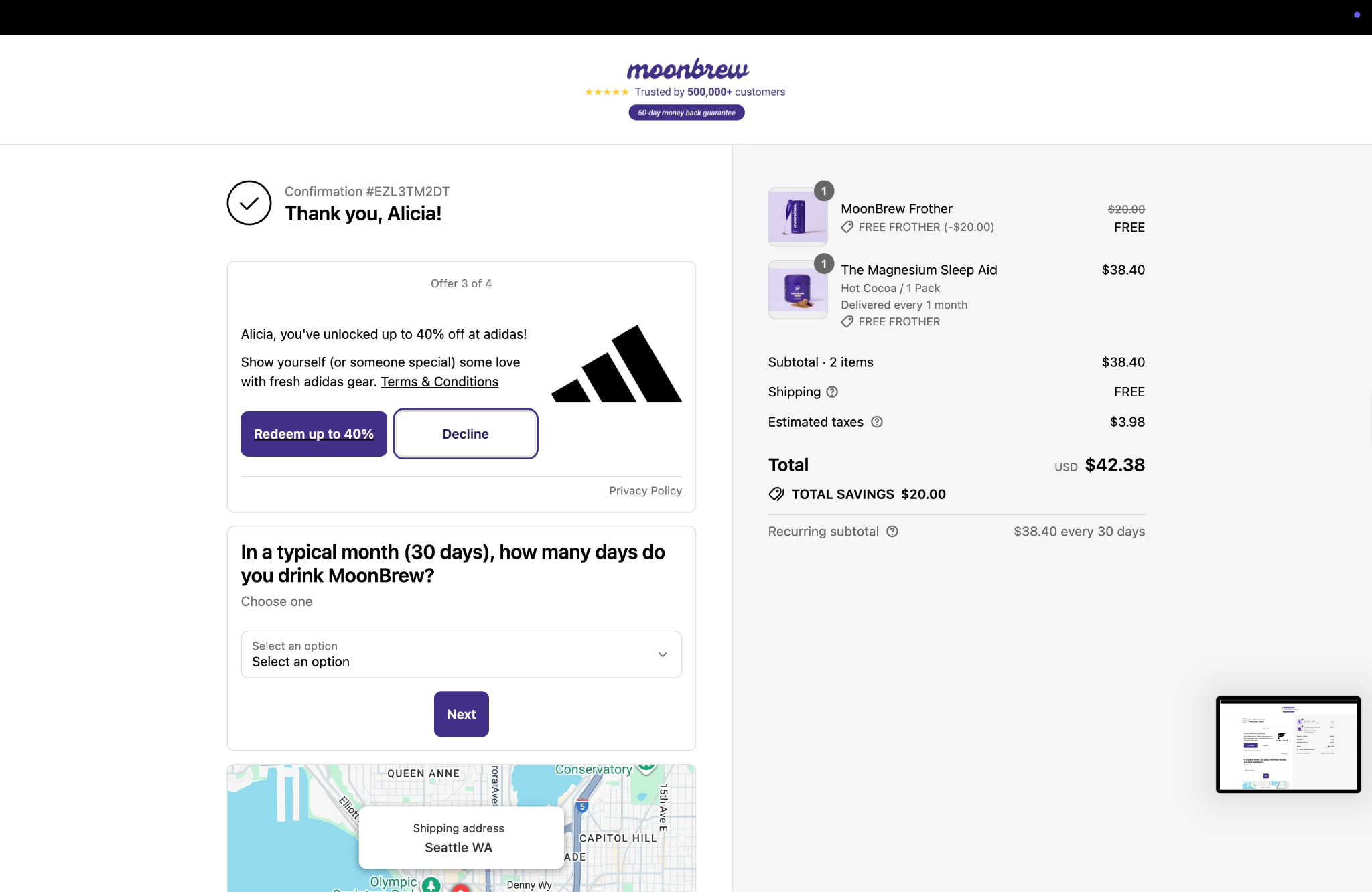
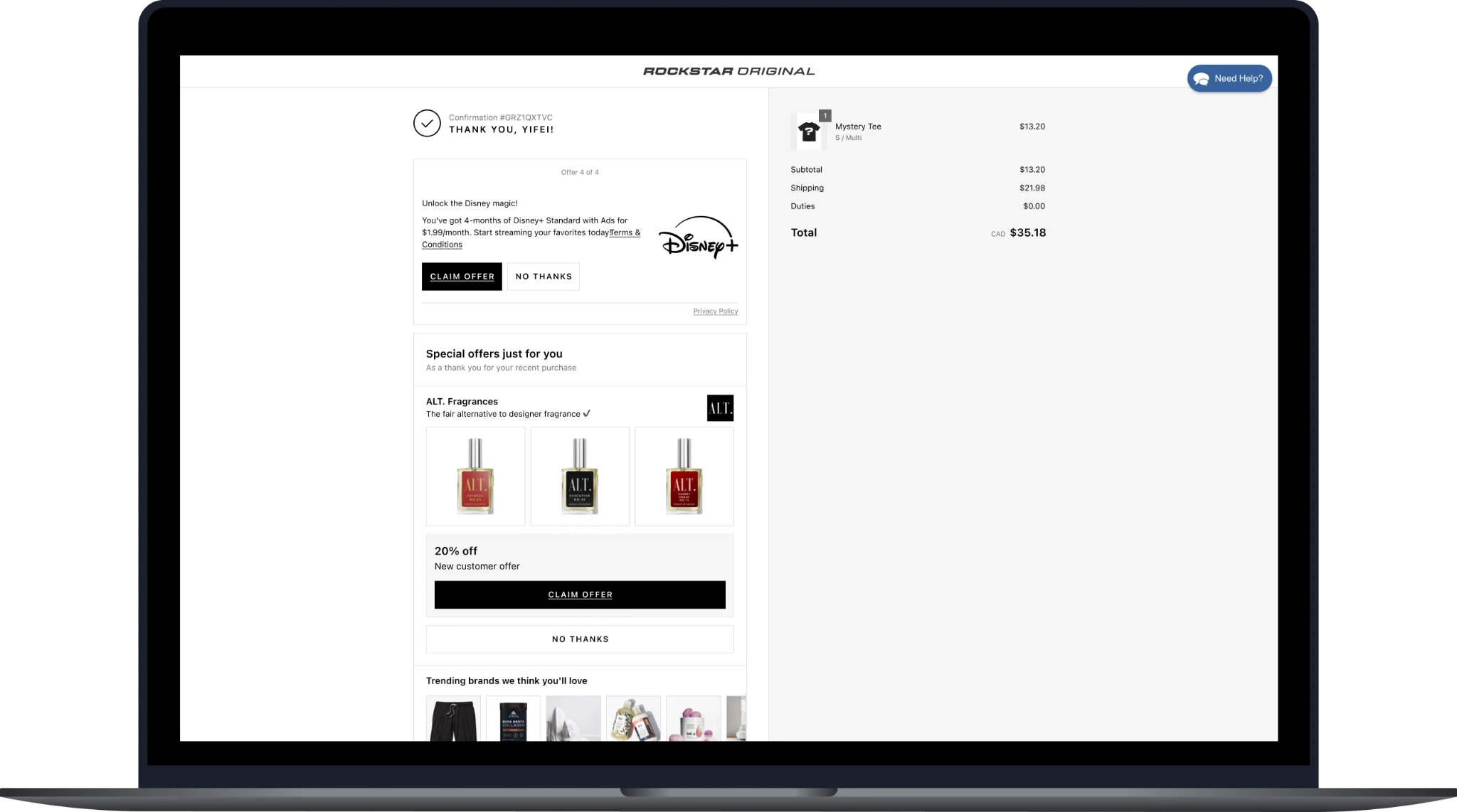
A simple way to think about it is: what do customers already expect to go together? Candles and lighters, shoes and socks, shampoo and conditioner are built-in shopping logic. When you surface those pairings at the right moment, the upsell feels genuinely helpful.
This is where “frequently bought together” logic, product recommendations, and product bundles can do a lot of heavy lifting. Instead of asking customers to hunt for complementary products themselves, you surface the most relevant combination when they are already making a buying decision.
Segmentation also matters here. New customers and returning customers behave differently, so they should see different offers. New buyers might respond better to starter bundles, while returning customers might want replenishment or upgrades.
Find the missing piece products that complete the bundle
Some of the strongest ways to create upsell opportunities in ecommerce come from items that naturally round out a purchase. These are the classic “complete the look” or “you might also need this” moments that feel like meaningful recommendations.
The logic is simple.
This strategy solves a need the customer hasn’t fully thought through yet. Even if someone isn’t actively looking for another item, the right suggestion can feel obvious once it’s shown. For example, if a customer is buying a pair of sweats, suggesting a matching sweater is the perfect upsell opportunity.
Let it be known completion-based upsells only work when the added product clearly fits with the original purchase. Without overwhelming the customer, this strategy works to subtly enhance what they already decided to buy.
Let’s take GrooveLife, they initially struggled with poor product targeting and couldn’t consistently match customers with higher-value add-ons like belts or wallets. After switching to Aftersell, they implemented smarter product matching that helped surface the right complementary items.
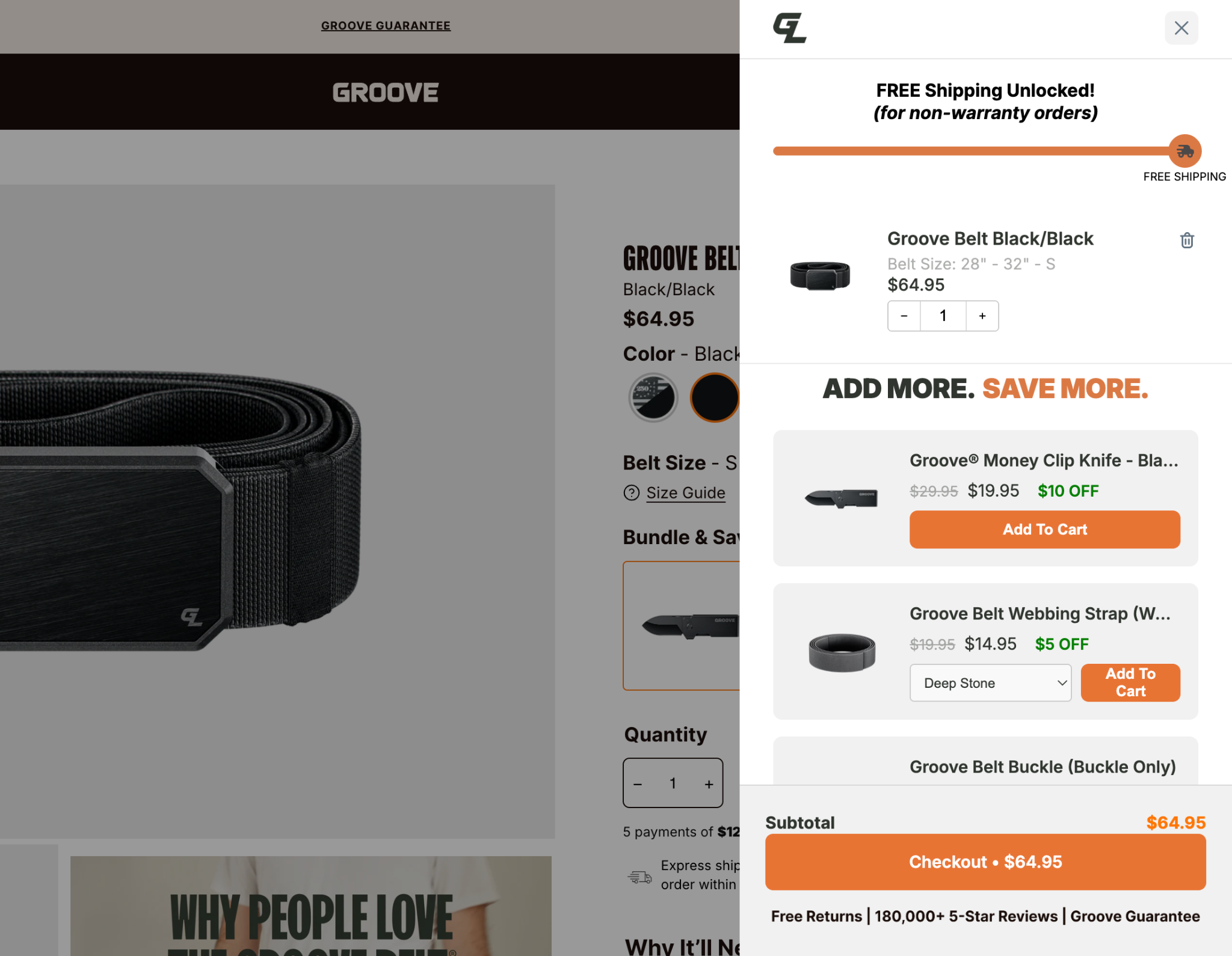
The result was stronger conversion rates and higher AOV, driven largely by smaller accessory add-ons in the $15–$20 range that paired well with larger purchases.
Segment customers by how ready they are to buy
Not all customers respond to upsells the same way, so treating them like they do is not the best strategy. Buying intent plays a big role in how receptive someone is to an offer.
A first-time customer is often more cautious. It’s more likely that they’d respond better to simple, low-risk upsells like small add-ons that increase value. It might be a mini product, a sample, but it's likely something low risk.
A repeat customer who has already interacted with your brand a few times is usually more open to premium upgrades, since they already have that trust built with you.
You can group customers by factors like:
- First-time vs. returning status
- Cart value
- Or whether they’re subscribed or part of a loyalty loop.
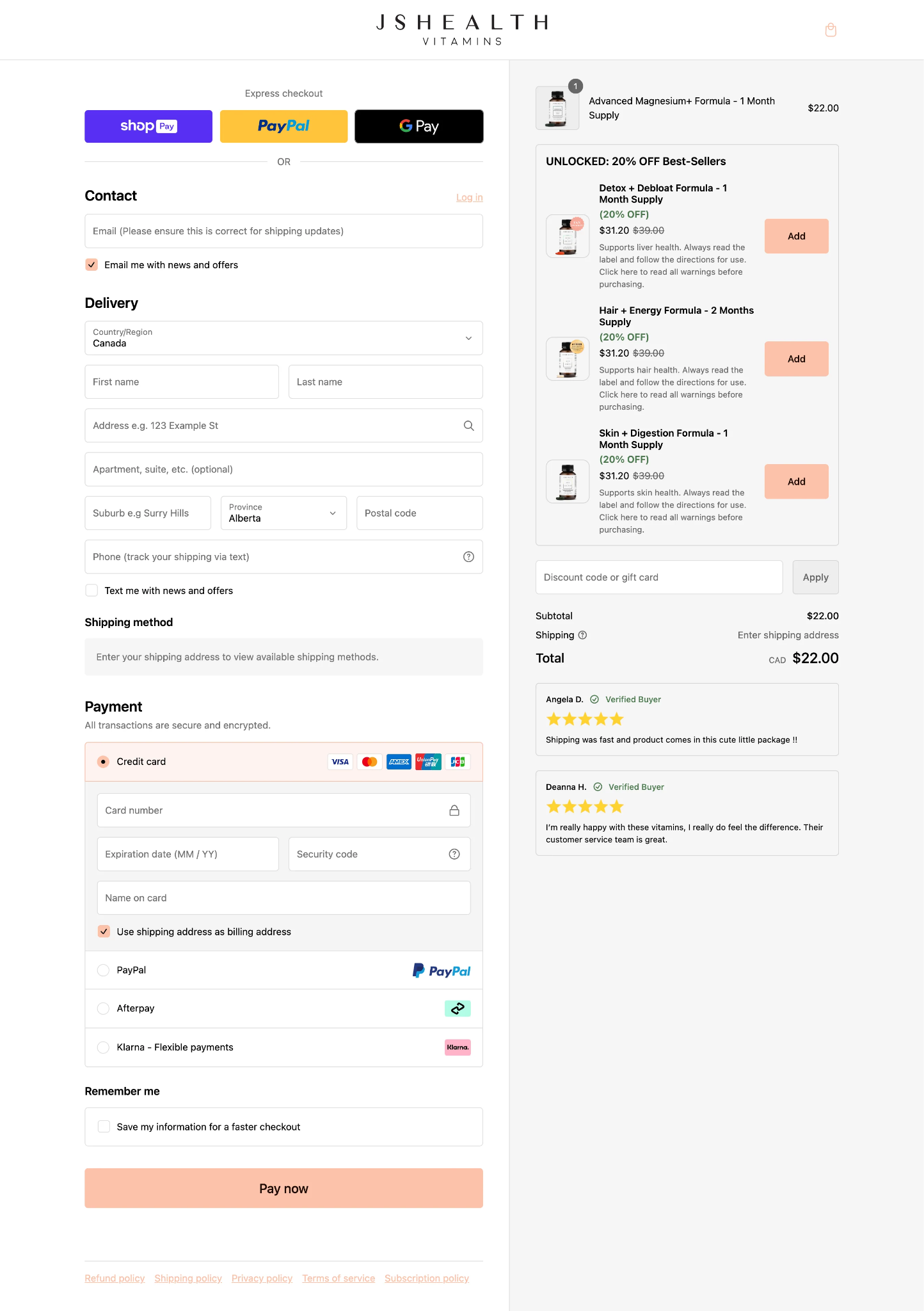
Instead of using static upsells for everyone, Aftersell uses machine learning to dynamically adjust recommendations at cart, checkout, and post-purchase based on real-time behavior and purchase data, taking the guesswork out.
A first-time buyer might need social proof before accepting a higher-end product, while a loyal customer may be ready for subscription upgrades, a larger product bundle, or a limited-time offer tied to something they already love.
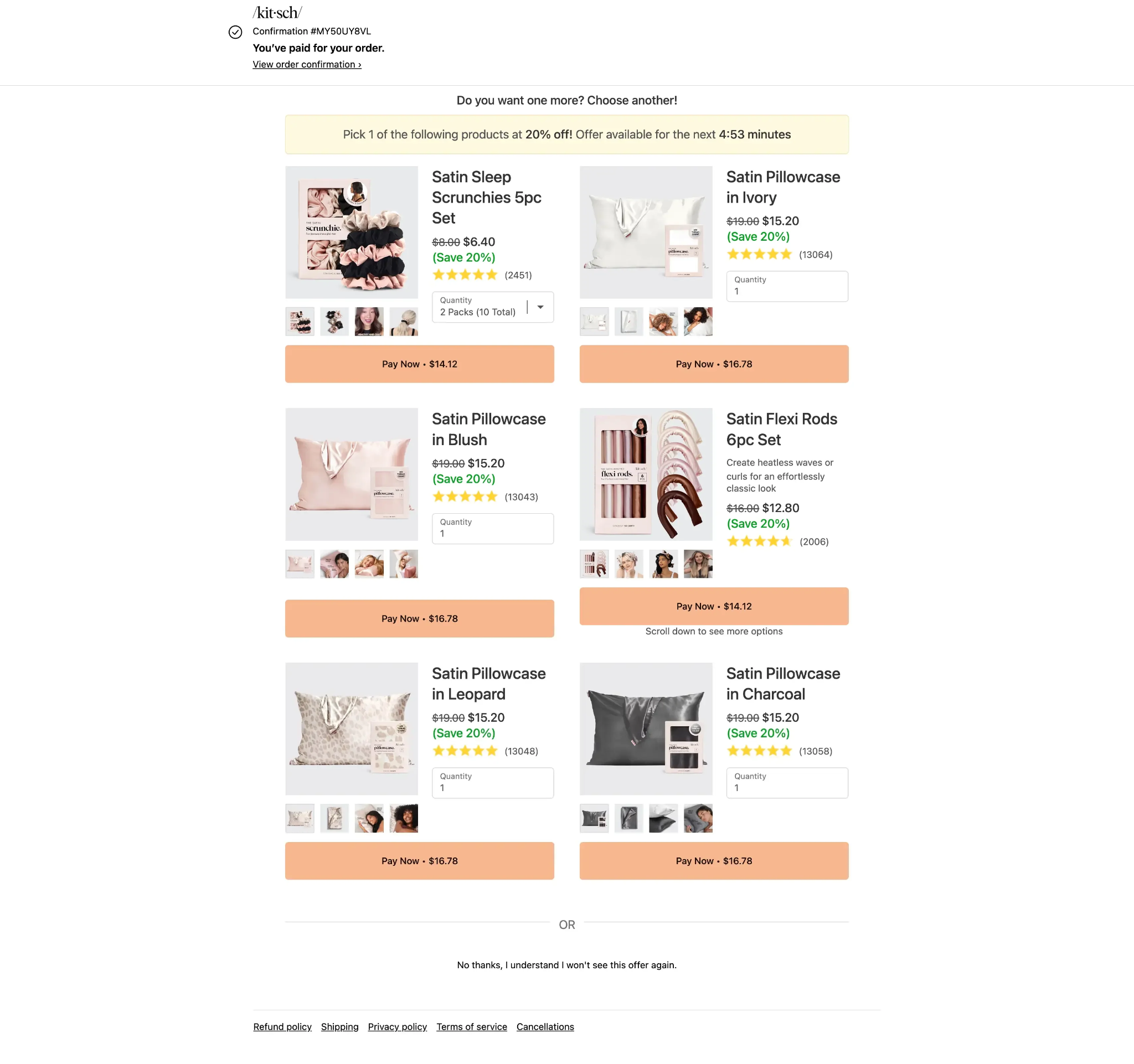
The best upsell moments to plug into your ecommerce flow
Upsells can show up in a few different places, and each one hits a little differently. You’ve got cart upsells, checkout nudges, and even post-purchase offers that pop up after the order is done.
What works best really depends on your product, your audience, and how your shopping experience is built.
One-click post-purchase
Post-purchase upsells are among the smoothest ways to increase revenue because the hardest part is already done: the customer has checked out.
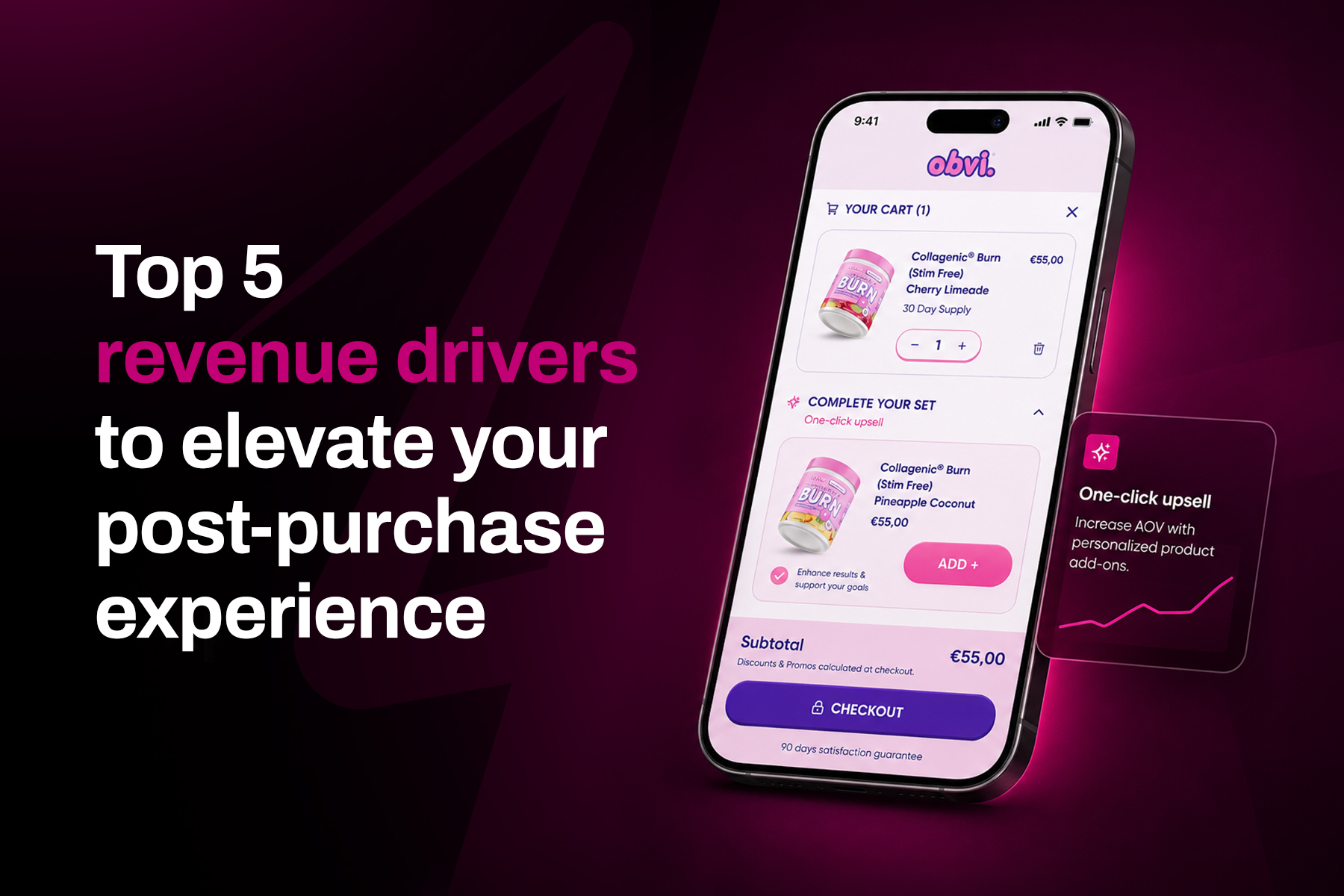
The magic is in the one-click upsell experience. Customers are shown a relevant add-on immediately after purchase, and they can accept it instantly without re-entering payment details or restarting checkout. It really can’t get easier, and you’re catching people at their high after they’ve purchased something.
Upsell ecommerce and cross-sell strategies like this can drive 10–30% of total ecommerce revenue, while multiple optimized offers in the cart can increase revenue by up to 20x.
A strong example is Kind Patches. They originally used Aftersell to clear inventory, but quickly saw they could increase AOV without touching checkout conversion by using post-purchase offers. By leveraging Aftersell Smart Funnels, they automatically tested and surfaced the highest-converting offers per shopper.
In just 90 days, Kind Patches saw their revenue climb by 112%, with cart upsells converting at 8.5%, turning small add-ons into a seriously meaningful revenue driver.
No-brainer cart and bundle upsells
Bundling is one of the easiest ways to get customers to naturally add more to their order. The trick is that you’re not really asking them to “buy more,” you’re just showing them what already fits together.
You’ve probably seen “frequently bought together,” “complete the set,” or “you may also like” in your cart suggestions before. This is what we’re talking about, less sales-y and more like a helpful shortcut to getting the full experience.
Timing is power. The cart is one of the highest-intent moments in the entire journey. I.E the perfect moment to test bundles and see which combinations actually make sense in real buying behavior.
This works especially well in categories like apparel, beauty, home goods, electronics, and wellness, where products naturally complement each other.
A strong example comes from Grüns. They took cart upsells a step further by introducing a subscription offer right at checkout, giving customers 25% off if they upgraded immediately. And they didn’t stop there.
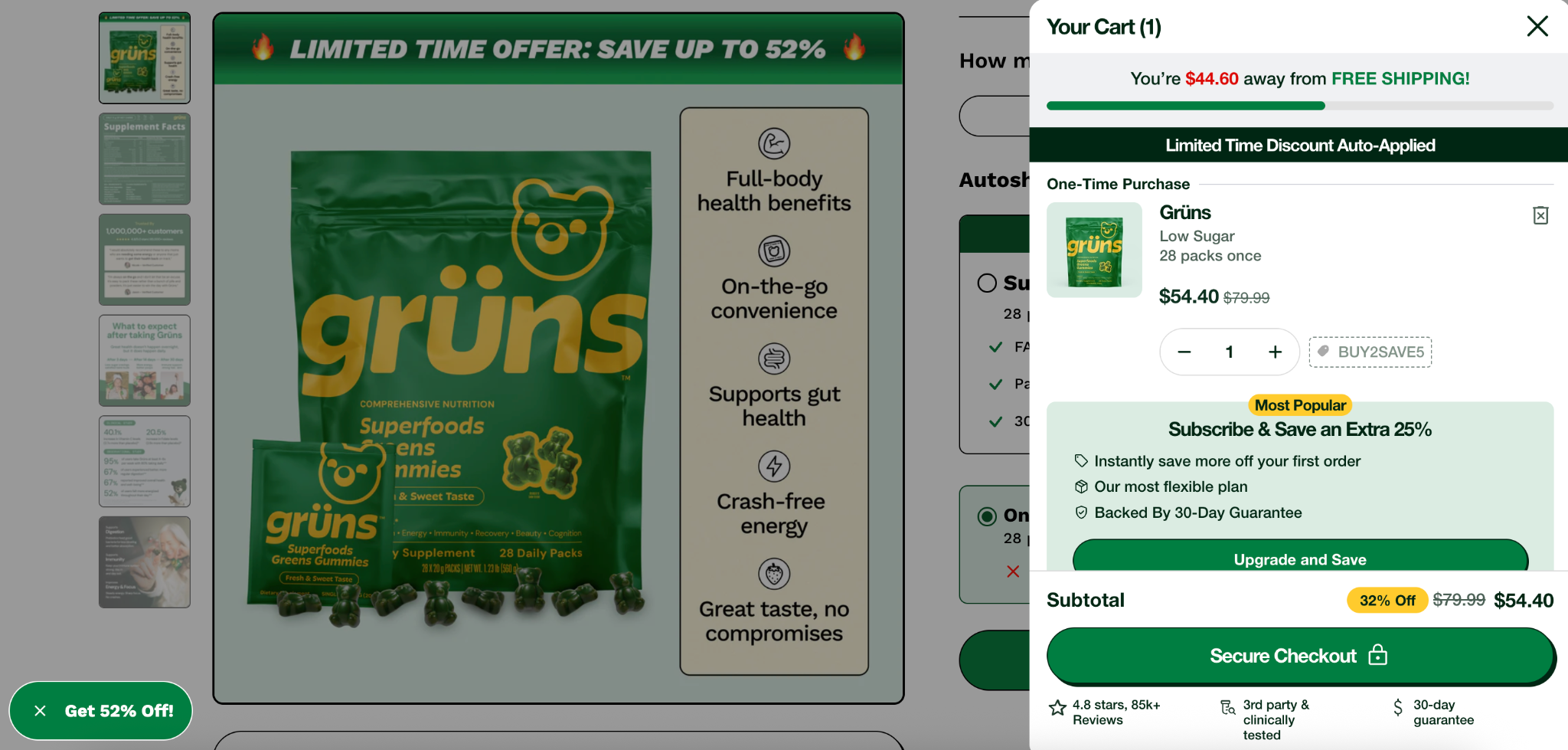
If customers skipped the offer, it reappeared post-purchase as a second chance to subscribe. This simple layered approach garnered a meaningful share of customers who upgraded from a 4-week plan to a quarterly subscription after completing their order, turning one-time buyers into longer-term subscribers.
Make “add one more” feel like the smartest decision
Here we’re talking about giving customers a simple trade: buy more, save more. Think “Buy 2 get 1 free” or “Add one more and get 15% off.”
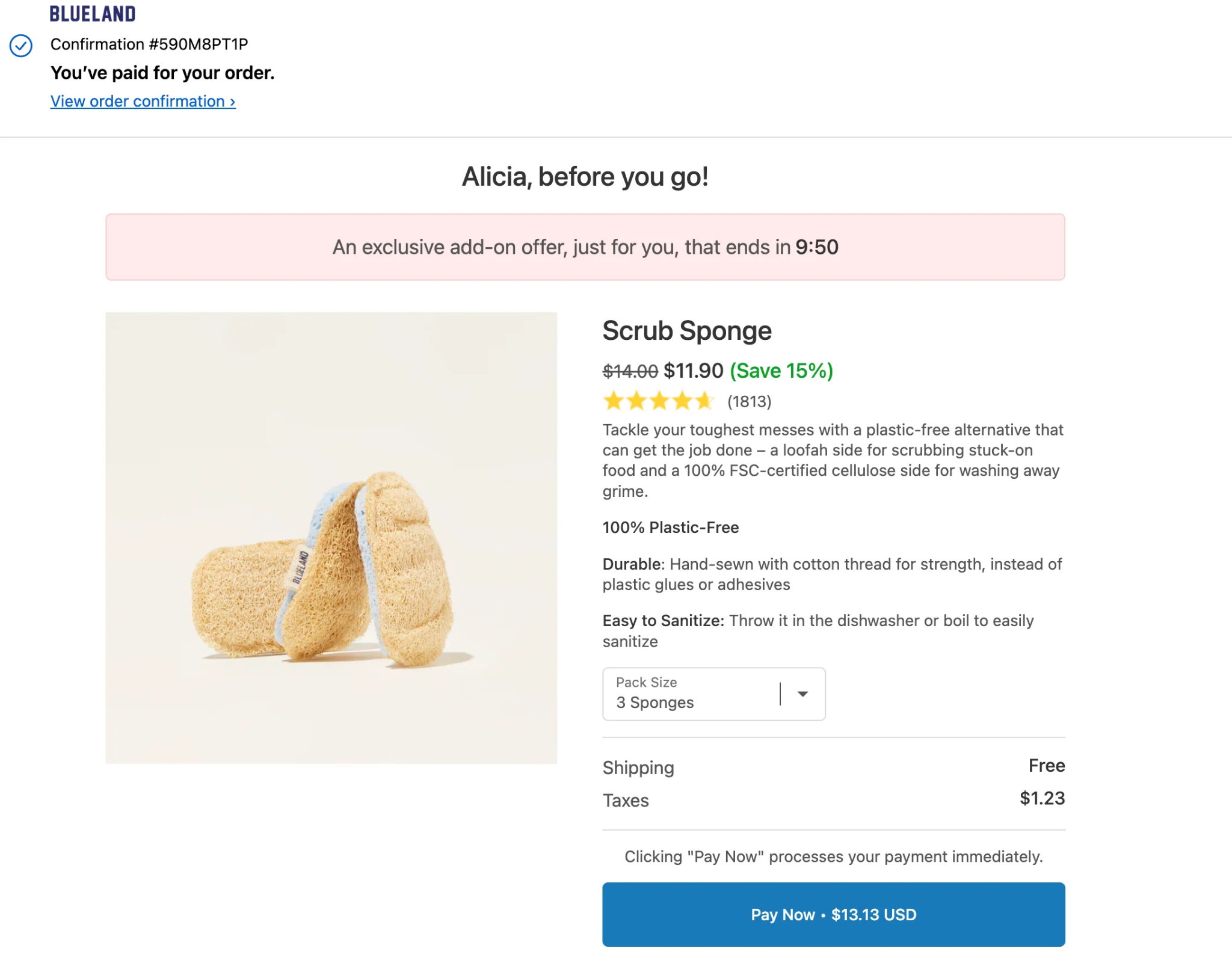
They work especially well for apparel, beauty, and CPG brands where repeat use is natural and stocking up just makes sense.
When combined with add-ons, subscriptions, or product recommendations, the impact compounds. Aftersell data shows up to 4.3x higher RPV with add-ons + subscriptions + upsells, and 2x higher AOV with add-ons + recommendations + upsells compared to single upsell ecommerce offers.
Thank you page recommendations
The purchase doesn’t have to end at “order confirmed.” In fact, the thank you page is one of the most underrated spots to increase AOV.
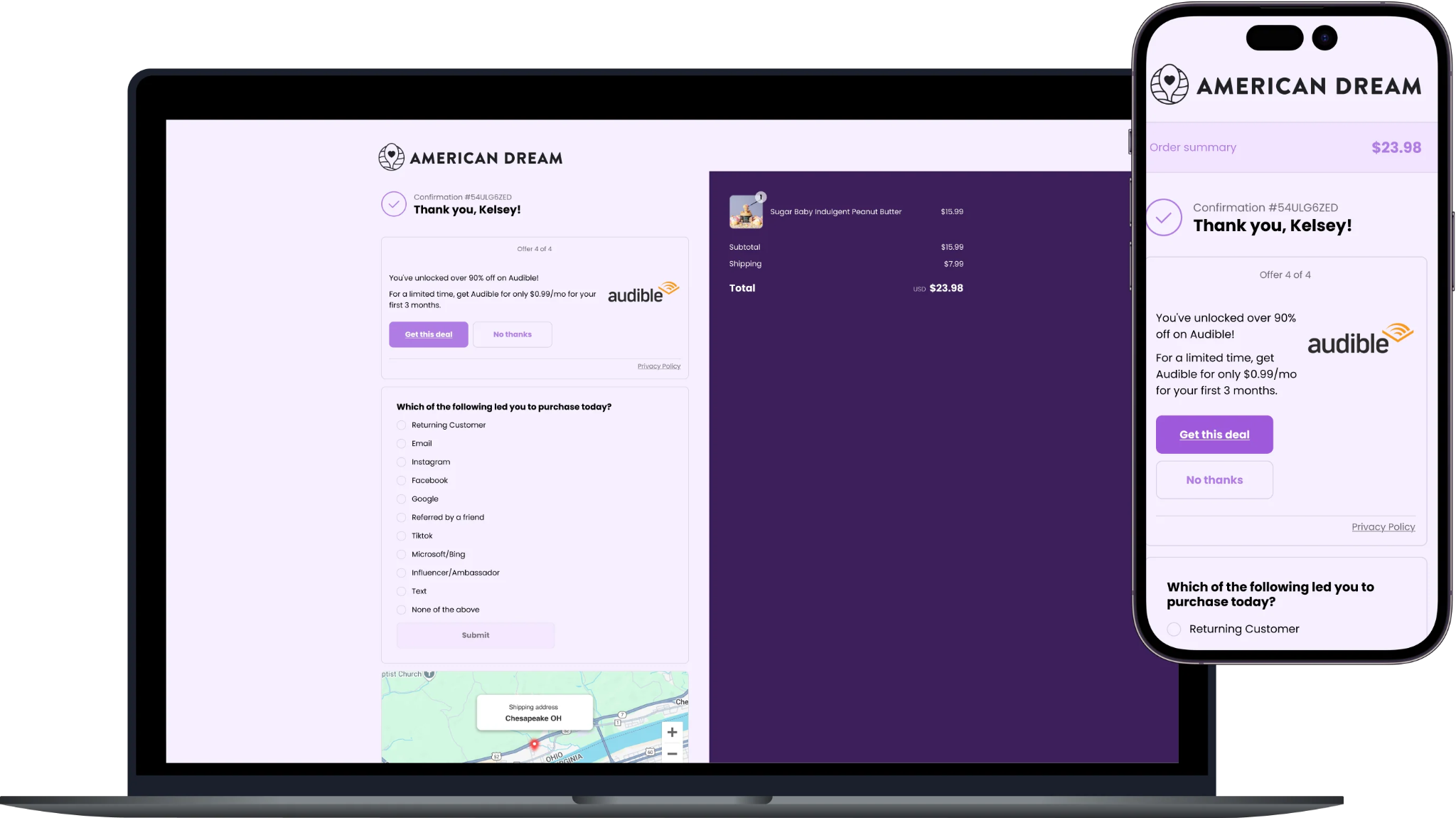
And it matters more than most brands think. 93% of consumers say the post-purchase experience is important, which means this moment is still very much part of the shopping journey.
This is where you can keep things simple: a single, well-timed offer can go a long way. Think limited-time add-ons, subscription upgrades, or exclusive post-purchase deals that feel like a bonus rather than a pitch.
According to Aftersell’s recent industry report, by focusing on primary upsells and single-product information offers, you can aim for higher conversion rates and revenue efficiency.
The key is timing and ease. Think about it: wouldn’t you feel better about purchasing if adding something to your order is just an easy “yes”?
Whether it’s a last-minute cross-sell or an upgraded version of what they just bought, the thank you page is your quiet AOV booster working as your Hail Mary.
Create upsells that work for your ecommerce brand
The best upsells are built from your own data. When you look at historical purchases, browsing behavior, and what customers naturally come back for, patterns start to show. And that’s where the real opportunity is.
The goal is simple: make the offer feel like an obvious next step. If someone is buying a skincare cleanser, show them what completes the routine, such as a moisturizer, toner, or serum. When the upsell matches intent, it’s genuinely helpful.
Relevance is everything here. A good upsell aligns with what’s already in the cart and with what the customer is trying to achieve. Add a bit of urgency, like a limited-time bundle or an instant discount, so the value is hard to ignore.
And don’t underestimate combinations. Multiple upsell touchpoints across the journey can compound fast. In fact, multiple upsells in the cart can increase revenue by up to 20x, especially when using three upsell widgets instead of one.
The takeaway is straightforward: place upsells where intent is highest and make them feel like part of the experience. This means intentional placements in cart, checkout, and post-purchase.
Aftersell helps brands do exactly that, using AI to surface the right products at the right time and turn every purchase into a higher-value moment.
Don’t wait. Book a demo today.
Recommended Reading
.jpg)