Let’s get personal.
Not the “braiding each others’ hair at a sleepover and swapping secrets” kind of personal. But as an ecommerce brand, you need to get a little personal with your customers if you want to grow your business.
And these days, AI is one of the best methods to get personal through AI-powered product recommendations. The main appeal of these types of recommendations is that they:
- Deliver a tailored experience for customers that mirrors Amazon
- Drive revenue growth with your current customer base
Personalized recommendations can also influence customers at every purchase stage.
That strategy is what many teams now call AI personalization: using artificial intelligence, machine learning, and customer data to tailor product discovery, offers, and personalized content to each shopper.
For ecommerce brands, it can mean the difference between a generic storefront and a shopping experience that actually responds to user behavior in real time.
The rise of AI and personalization
Ecommerce personalization has evolved alongside the rise of AI. This has effectively changed customer acquisition and product discovery.
Nobody’s walking all the way to the store anymore without doing a little research first. And AI platforms are quickly becoming the place where customers go to discover new products.
AI traffic to U.S. retail websites on Black Friday increased 805% in 2025 compared to 2024, thanks to the rise of AI-driven shopping experiences.
Since companies providing personalized experiences generate a whopping 40% more revenue than competitors, you can’t afford to skip out on personalization.
Generative AI is also changing how shoppers ask for help. Instead of typing “black boots” into a search bar, customers can ask AI agents, virtual assistants, or chatbots for “comfortable black boots for a winter trip that work with straight-leg jeans.” That kind of natural language processing (NLP) helps brands understand intent, not just keywords.
What all this shows, too, is that AI tools are driving those personalized experiences to consumers. Tools like ChatGPT are helping deliver tailored products and recommendations for each unique user prompt.
So whether you’re using it yet or not, AI is already a valuable channel for revenue and brand discovery.
The exciting news: it’s easier than ever to place your products exactly where discovery happens. Shopify is building an infrastructure with ChatGPT for ecommerce brands to sell on AI channels. This means a broader reach for your brand and more choice for your valued customers. A true win-win.
What are personalized product recommendations with AI?
Personalized product recommendations allow retailers to provide tailored suggestions that anticipate a customer’s needs. It’s a conversion and customer experience strategy that delivers results.
At a technical level, personalized product recommendations are powered by recommendation algorithms that analyze signals such as browsing and purchase history, cart contents, user profiles, demographic information, and past customer engagement.
From there, machine learning algorithms can predict which products, bundles, or offers are most likely to resonate with each shopper.
Collaborative filtering looks at patterns across shoppers. If customers with similar behavior bought the same products, the system can recommend items that worked for that group.
Content-based filtering focuses on the product itself. If someone views linen pants, for example, the system may recommend similar fabrics, colors, categories or styles.
Hybrid recommendation systems combine multiple methods, including collaborative filtering, content-based filtering, and other hybrid methods, to make recommendations more accurate and scalable. This is the same broad idea behind the recommendation engines used by Netflix and other streaming services, just applied to ecommerce products instead of shows and movies.
Add in AI-powered recommendations through funnels and data analysis, and you have yourself a winning strategy.
Aftersell’s Smart Funnel makes hybrid recommendations easy
Aftersell’s Smart Funnel delivers AI-powered recommendations on post-purchase upsell offers. By analyzing your customers’ cart data, purchase history, and segments, you’ll get real-time shopping signals for you and your customer.
Smart Funnel automatically shows the most compelling post-purchase offer for each shopper. It uses AI algorithms to optimize every step of the customer journey, so you can grow average order value (AOV) without extra effort.
Another bonus? It shows offers way before any manual funnels and can easily outperform them.
Aftersell’s industry-leading AI and machine learning models will also continuously analyze your store’s performance data and customer behavior.
Bottom line—Smart Funnel makes upselling faster, smarter, and more effective for you.
Why traditional recommendations aren’t enough
You can manually create your own product recommendations by segmenting products and collections using a rule-based system in Shopify. The issue is that it’s hard to scale, especially with a large catalog.
Think of the countless number of SKUs and customers that exist in the world, and you’ll realize how difficult it actually is to manually match up each person with their perfect product.
Manual recommendations also fall short because static upsell offers, or bundles, can get outdated fast. You have to keep up with inventory, product changes, and generic products that may not excite your customers.
And serving the same product or offer to customers every time they shop with you, regardless of context, is just… bland. Uninspired. (“Groundbreaking,” as Miranda Priestly would drawl.)

Traditional recommendation logic can also miss nuance. Two customers might buy the same cleanser, but one may be building a full routine while the other is replacing a single product.
AI personalization can use deeper user behavior patterns to decide whether cross-selling, upselling, “frequently bought together” bundles or a simpler replenishment offer makes more sense.
You’re not out here trying to blend into the millions of other brands. You’re trying to stand out.
The biggest payoff of AI-powered recommendations
In a world where Amazon dominates in customer service, AI and personalization strategies, people now expect that level of personalization across all their online shopping.
Think of their “Recommended products” and “Recommended based on your cart” suggestions—sometimes almost supernaturally predicting your needs before you know it yourself.
But it’s not all for show. Amazon attributes 31% of its revenue to its recommendation engine that suggests products based on users’ browsing and purchasing behaviour.
Acquiring new customers is also expensive. At the low end, ecommerce brands are paying roughly $53 per new customer. At the high end, it’s over $90.
And customer acquisition costs (CAC) keep rising. It’s more important than ever for ecommerce brands to maximize current traffic and increase their customers’ AOV.
Personalized product recommendations through upsell offers can help maximize each customer—without additional acquisition costs. The goal is to target customers with the exact products they’re looking for.
When done well, AI-powered recommendations can support higher conversion rates, stronger customer engagement, and better customer retention. They can also lift average order value by helping shoppers discover products they may not have found on their own.
5 best places to use AI recommendations on your site
Good personalized recommendations can push customers to buy more at every stage of their journey.
So what area of your site works best? Depending on your needs, this ranges from product pages, in-cart offers, at checkout, post-purchase or thank you pages. Or maybe all of the above.
Remember: while an upsell offer doesn’t have to be in every single placement, you should experiment and learn which are the most effective for your customers.
Product pages
This is the most common place for personalized recommendations. Most ecommerce brands frame upsell and cross-sell offers as “complete the look” or “frequently bought together.”
Here’s an example from Dynamite, which has a “Shop the look” content block on product description pages:
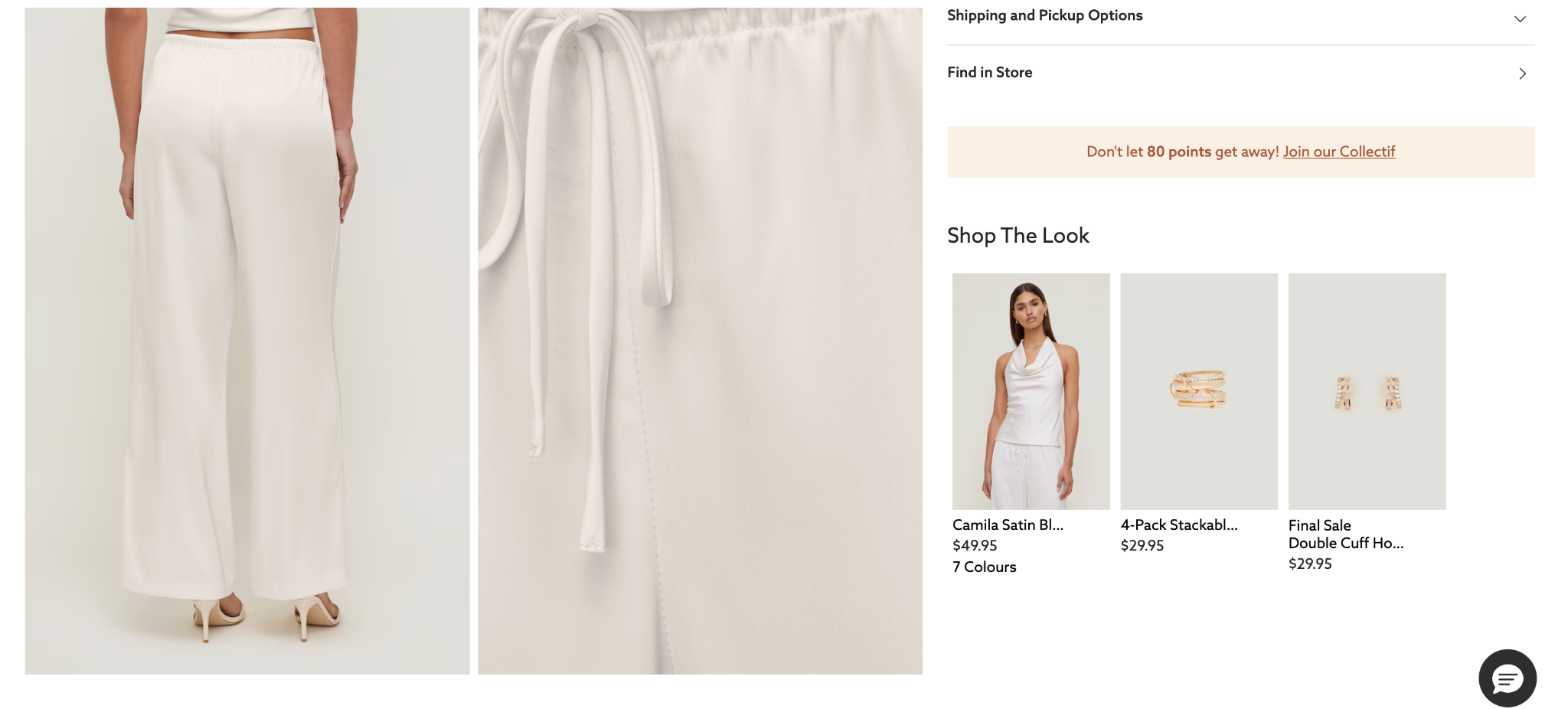
At this stage, customers are evaluating products and usually pretty receptive to recommendations. Think new sandals with a new dress, or a matching moisturizer and cleanser combo.
In-cart offers
These offers happen in a high-intent area where customers are already placing items in their cart. Personalized recommendations here can help boost AOV without interrupting the checkout flow.
Here’s an example from Kind Patches. These cart offers are built with Aftersell and contribute to the brand’s additional $0.29 of pure profit per transaction. Check out the full story here.
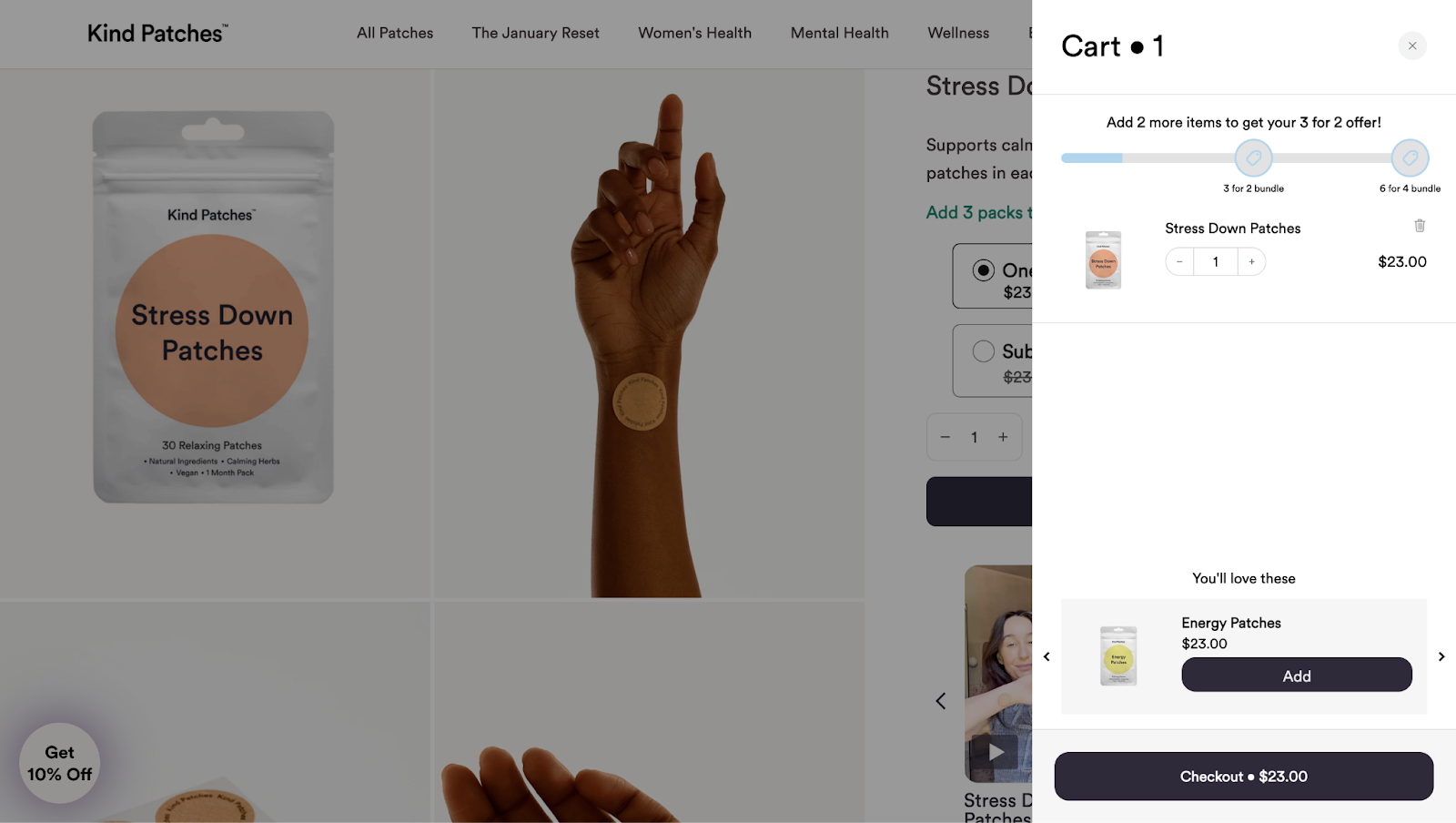
While many ecommerce brands offer a static upsell to all customers, we recommend a dynamic upsell offer based on what a customer has in their cart and their total amount. Remember: it’s all about personalization.
Multiple upsells in the cart can also increase revenue by up to 20x.
Checkout page
This page is focused on maximizing revenue. The key at the checkout page is to keep offers simple enough for customers to easily add to their final order.
Check out this example from Mugsy, which shows how customers can unlock a free belt once they meet a certain threshold in the cart.
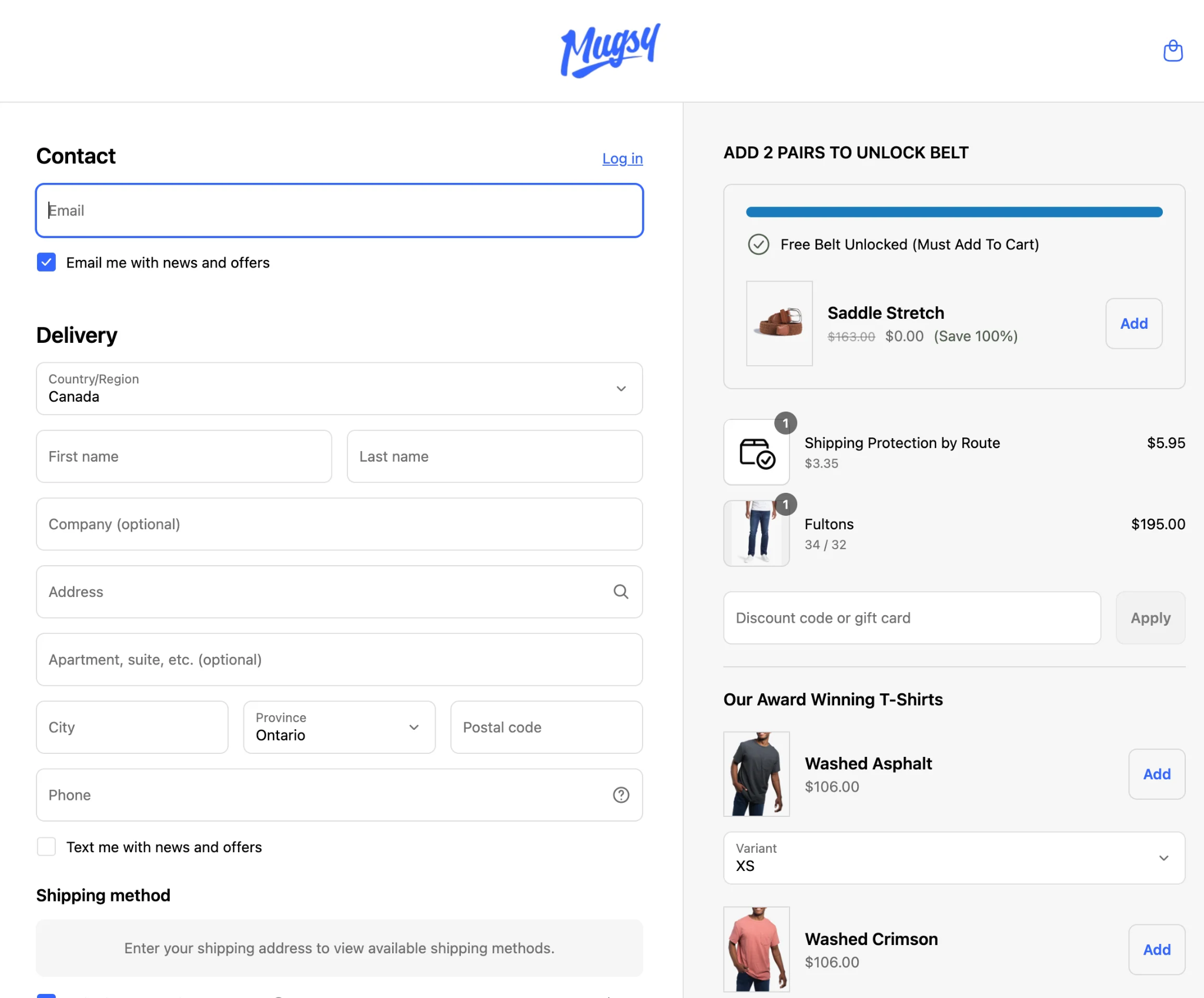
This can be subscription signups, last-minute add-ons, or complimentary products. The trick is to keep it seamless without disrupting the customer from checking out.
Post-purchase upsells
If you’re looking for a seamless way to present customers a one-click offer immediately post-checkout, look no further.
Aftersell’s Smart Funnel runs automatically and shows the most enticing post-purchase offers for each customer. This means you don’t need to update rules or track metrics daily. The AI handles optimization behind the scenes so your team can focus on bigger marketing strategies.
HexClad actually ran 50+ A/B tests with Aftersell’s post-purchase upsell feature to refine which offers should show in the flow. After the test, their optimized offers drove $2.4M in incremental post-purchase revenue. (Full case study here.)
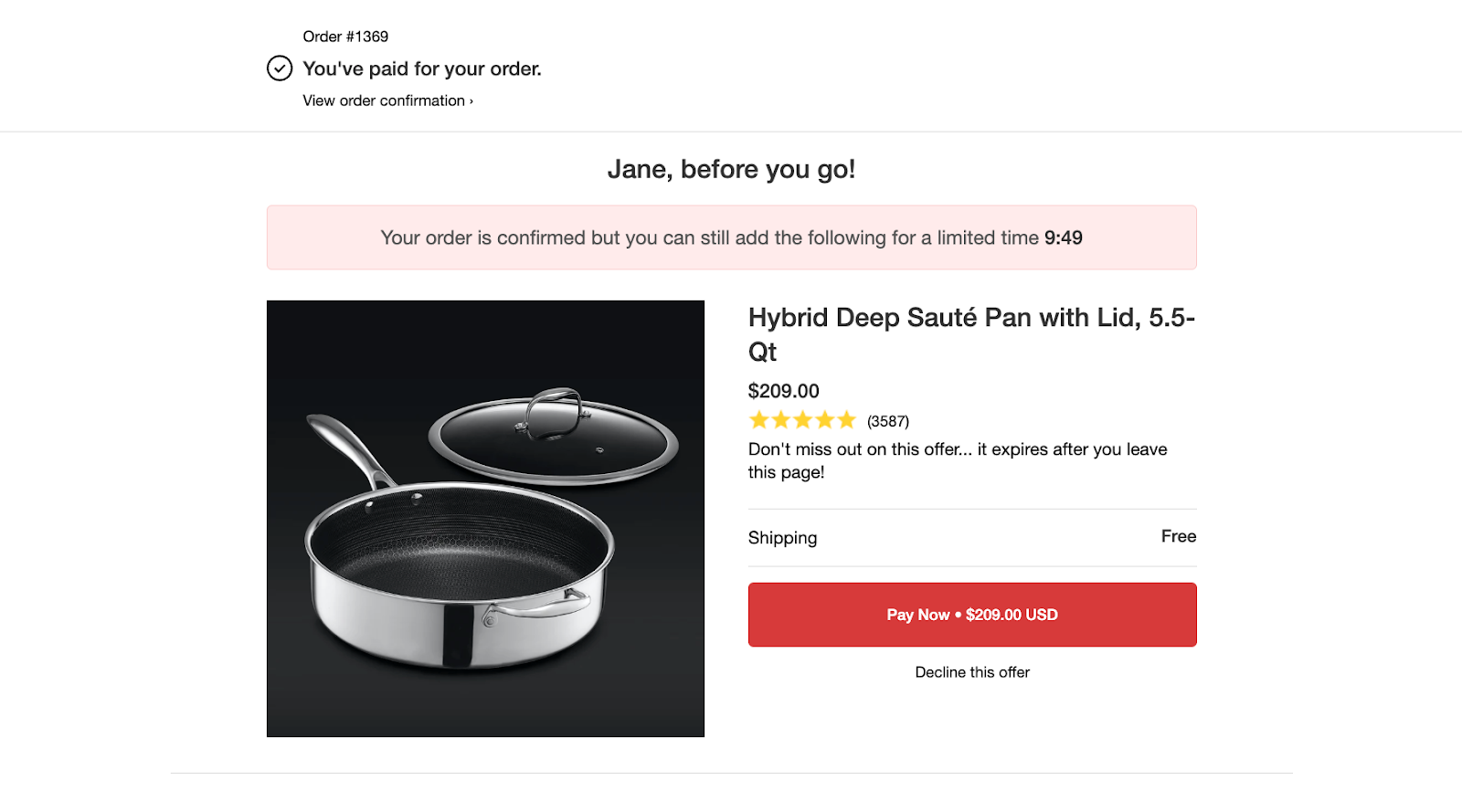
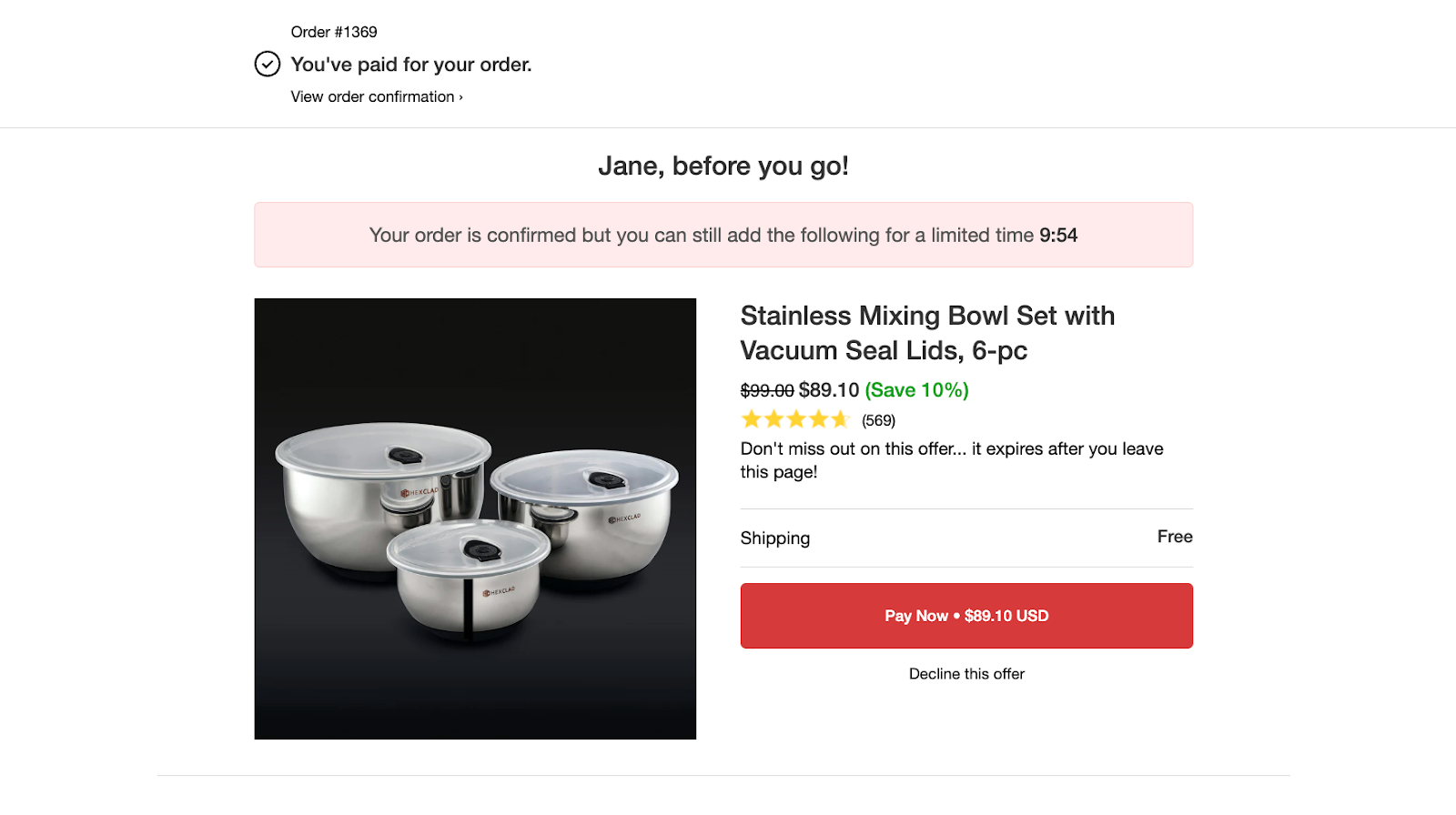
You also get the best of both worlds: the ease of automation and the control of manual strategy. All this is designed to make upselling a natural, profitable part of the shopping experience.
Thank you page
The thank-you page is a low-risk yet highly engaged place to make a final strategic attempt to present personalized recommendations to customers who have already checked out.
The offers you place here can be a mix of product upsells from your own catalog, or unique offers from external brands that earn you a kickback. That’s what Moonbrew did with Adidas using Rokt Thanks.
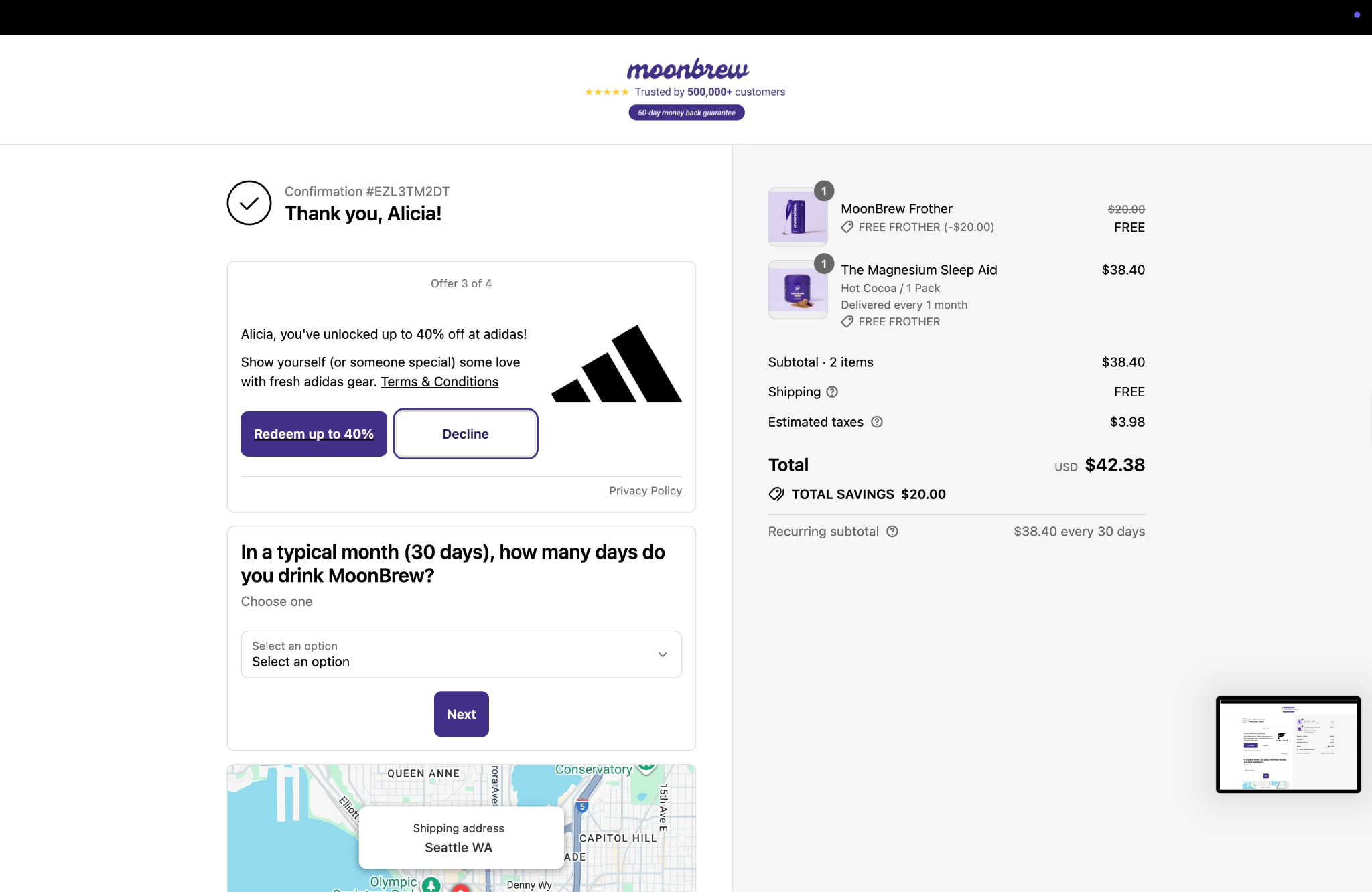
With Rokt Thanks, you can turn your post-purchase thank you page into pure profit. Use it to show customers personalized, brand-safe offers after checkout.
Create better ecommerce experiences with AI
To sum up: personalized product recommendations, powered by AI tools, offer significant opportunities for your brand. They can help you:
- Drive growth
- Maximize your customer base
- Deliver a more personalized shopping experience
All this without spending additional revenue, too.
See the difference for yourself. Book a free tour of Aftersell tailored to your brand today.
Recommended Reading
.jpg)