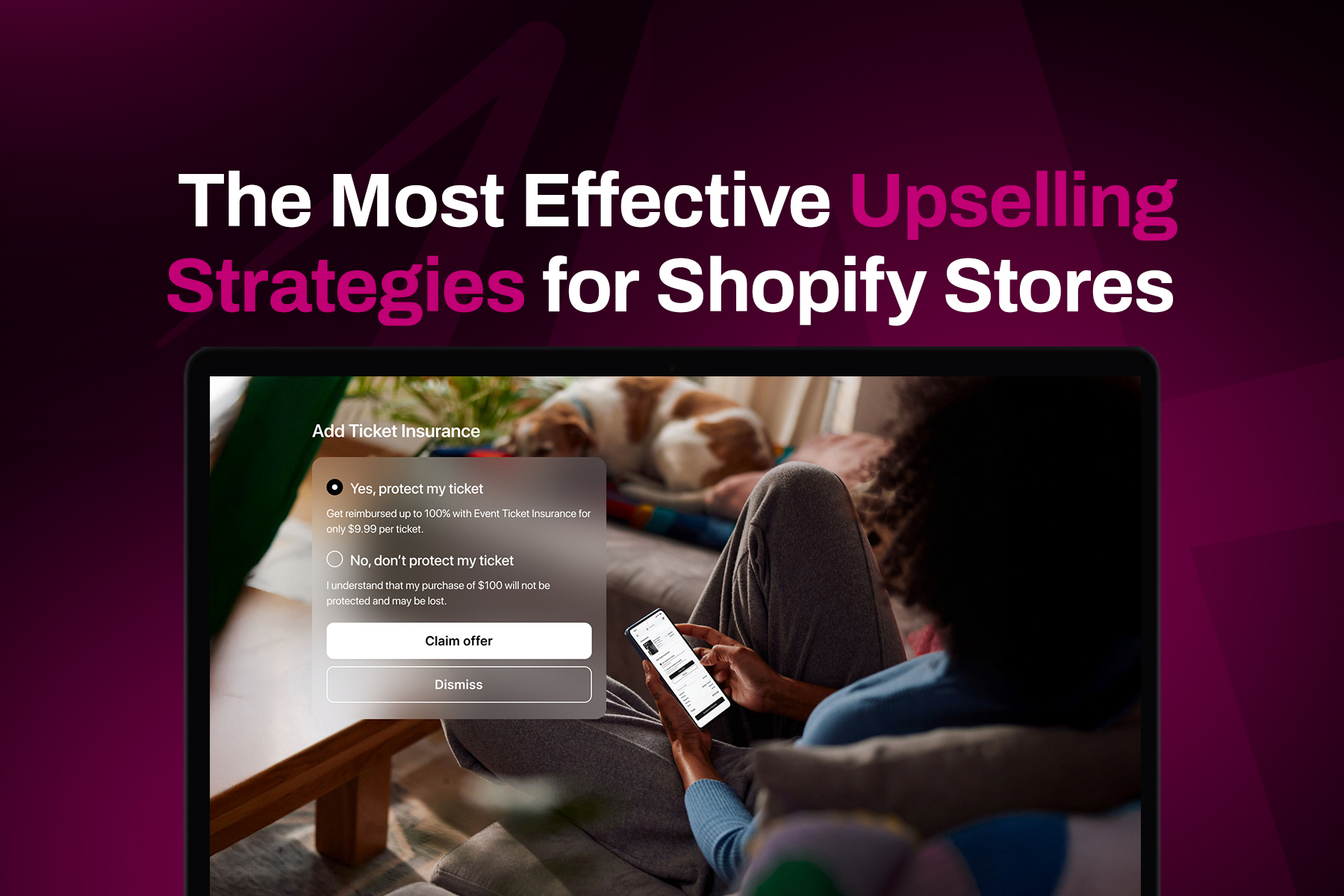
Want to drive up your revenue? We know it’s an easy ‘yes,’ and it's usually followed by a side-eye and a lot of ‘how?’
For many ecommerce brands, successful upselling and cross-selling quietly drive 10 to 30% of total revenue, enough to actually make a difference. And when customer acquisition costs keep climbing, and competition is only getting louder, squeezing more value from each hard-won customer isn’t optional anymore.
When done thoughtfully, maximizing average order value can increase customer lifetime value by 20 to 40%, strengthening profit margins long after checkout.
One of the most effective ways to unlock that value is simple in theory and powerful in practice: offering upselling opportunities that meet customer’s needs exactly where they are in their buying journey.
Continue reading to learn how to avoid making upselling feel like selling more, and instead make it feel like better service and a stronger customer experience.
Upselling Is About Value, Not Pressure
What is upselling? Upselling is a sales technique that encourages shoppers to upgrade to a higher-priced or higher-end option, add add-ons, or enhance what they’re already purchasing to increase the overall value of the sale.
You know when you buy a coffee, and they always want to upsell you on a sweet treat? It’s often hard to resist. But you’re already there, so why not also have a cranberry bliss bar? That is the energy we are channeling.
Upselling is about meeting a customer at the moment they’re already leaning in. They’ve decided to buy; now you’re simply showing them a premium version, upgraded version, or relevant product that adds value to the original purchase.
Psychologically, this moment matters:
- The customer has already signaled intent and crossed the hardest threshold: deciding to purchase.
- Customers are far more open to upselling offers when they align with real pain points.
- When done well, upselling builds trust and customer satisfaction without disrupting flow.
This is why upselling as a sales tactic works just as well for existing customers as it does for new customers.
Upselling vs. cross-selling
Upselling and cross-selling often get used interchangeably, but they’re more like cousins than twins. Both are about growing the basket, yet each has unique differences that work in distinct ways.
Upselling: encouraging customers to upgrade to a premium version of a product. The customer already knows what they want, and you’re simply showing them the better version.
For example, picture someone browsing TVs. They’ve landed on a solid mid-range model, but you can nudge the customer towards a higher-end version with additional features.
Tip: This strategy works best when you have tiered product offerings, warranties for high-value purchases, and behavioral signals such as customers viewing multiple product pages.
Cross-selling, on the other hand, is about completing the story and suggesting complementary or related products to increase the purchase size.
Think about someone buying a new phone. With their purchase, they probably need a case, a screen protector, and maybe wireless earbuds. And not to distract from their purchase, but as logical companions.
Cross-sell when your products naturally complement each other based on shopper data of what other customers frequently purchase together.
8 effective upselling strategies for Shopify stores
Each of the eight strategies below engages customers at the right time, turning small upgrades into meaningful revenue gains while protecting conversion rate and the bottom line.
1. Premium product upgrades
Premium upgrades are the most natural form of upselling because the customer is already halfway there. They’re interested, and your job is to show them what better looks like.
To make that decision feel effortless, the best upsell experiences remove friction rather than add pressure:
- Side-by-side comparisons let shoppers scan differences at a glance.
- Linking to upgrade product pages on lower-tiered products for seamless discovery.
- Clearly highlight value differences (features, benefits, quality).
- Show "Most Popular" or “Fan Favorite” social proof badges on upgrades to reassure the shopper they’re not choosing alone.
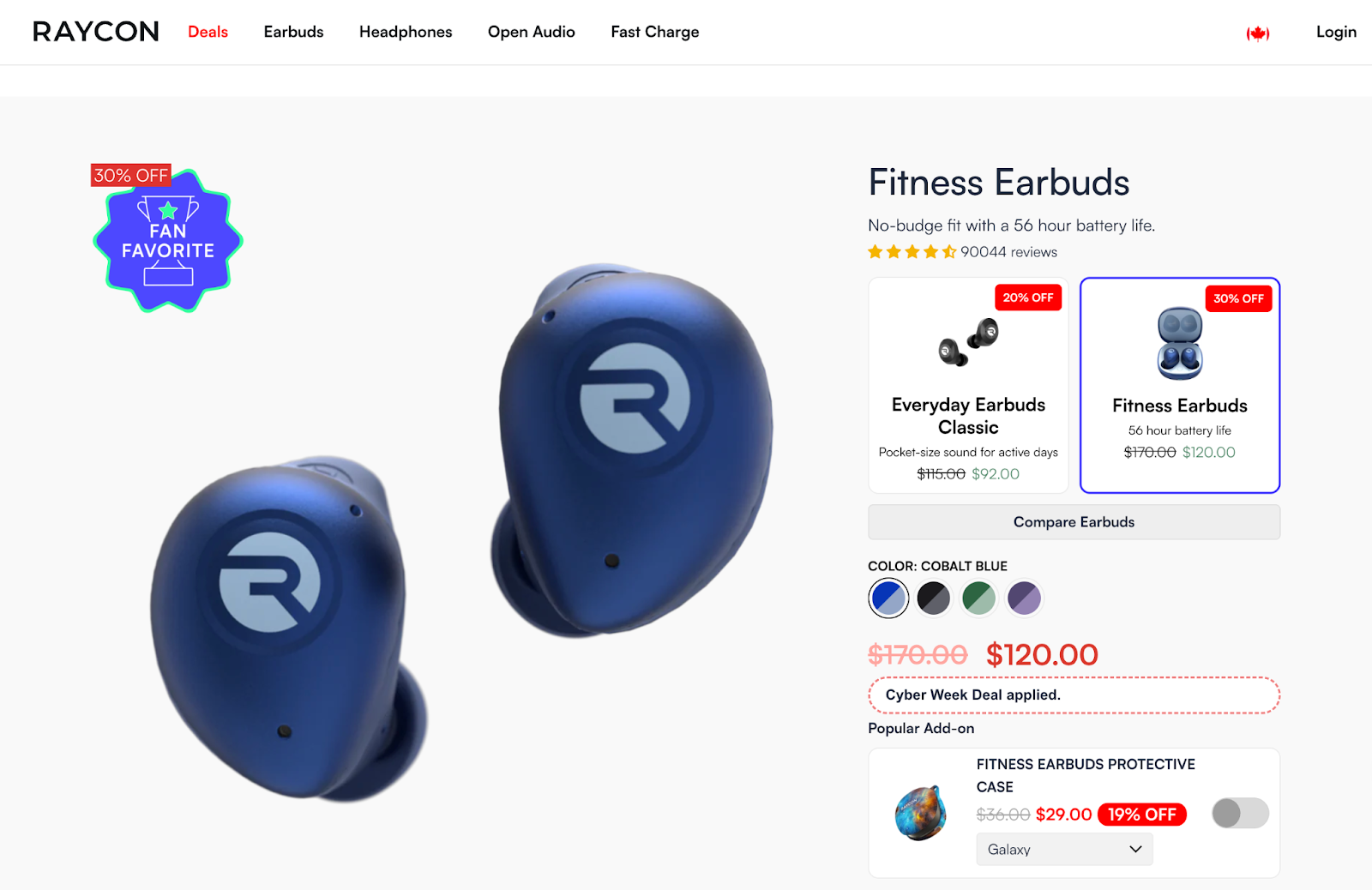
Here's how Raycon, a leader in consumer electronics, partnered with Aftersell to improve its upsell strategy.
On the Everyday Earbuds Classic page, the brand invites shoppers to view the upgraded options. Shoppers are guided directly to the Fitness Earbuds, where premium features like a 56-hour battery life are front and center. The result feels less like a sales push and more like a helpful suggestion at exactly the right moment.
2. Pre-packaged bundles
Product bundles tell a simple story: everything you need, already figured out. Instead of asking shoppers to build the perfect combination themselves, you hand them a ready-made solution that’s thoughtfully grouped and priced to feel like a win.
While bundling is often framed as a cross-sell tactic, it doubles as a powerful upsell opportunity by elevating the initial purchase. A single product becomes a complete set, and best-sellers turn into starter kits.
Just like that, the customer’s purchase is bigger and more intentional than buying one item alone, increasing AOV.
And here’s how to bundle effectively:
- Include additional products that naturally belong together.
- Bundles should offer a modest incentive (typically 10 to 20% off individual prices) that rewards the customer for committing.
- Displaying total savings front and center removes any guesswork.
- Use “Frequently Bought Together” signals reassure shoppers that others have made the same choice.
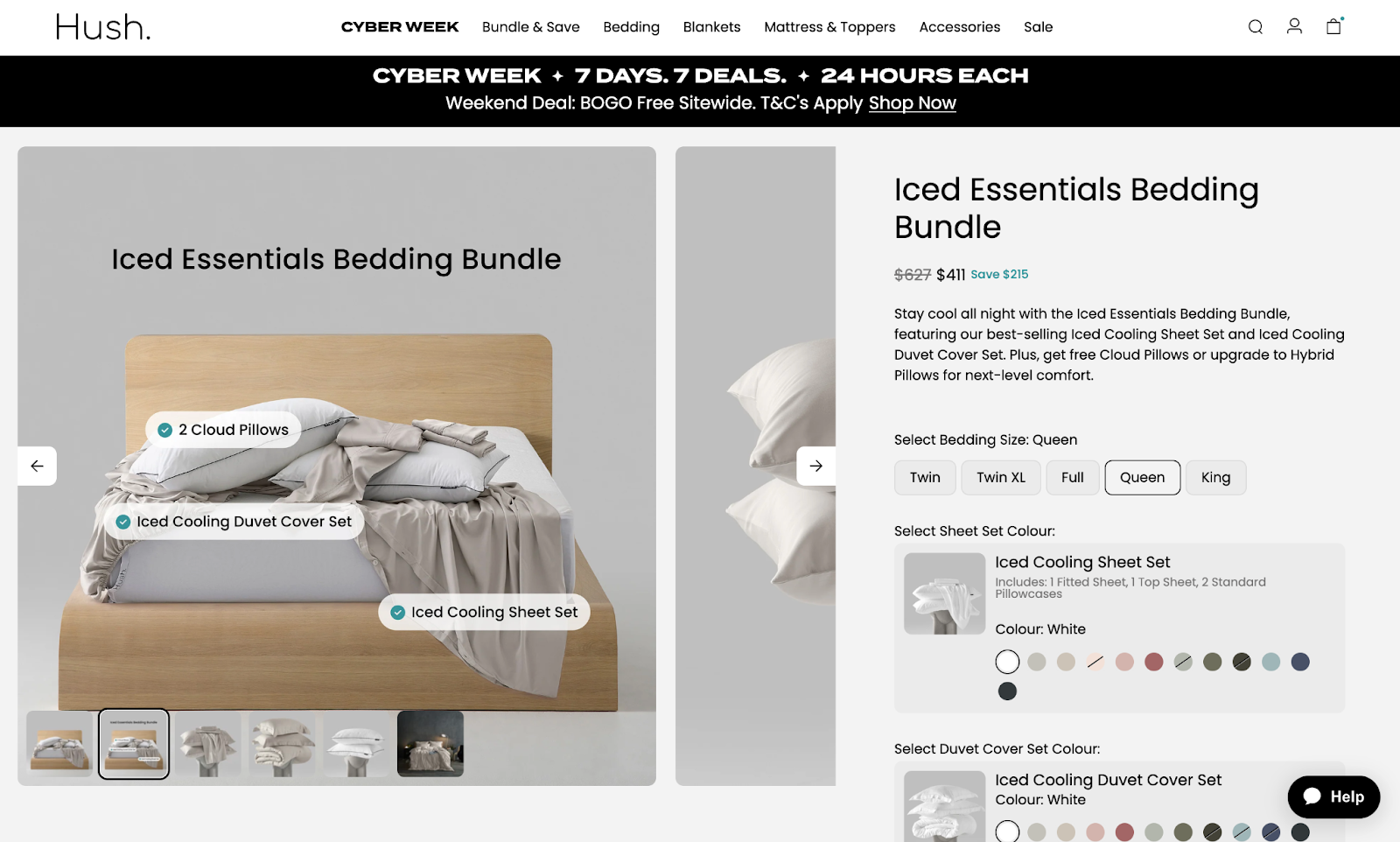
Take Hush, for instance, the sleep and wellness brand puts this strategy to work by leading its navigation with a simple promise: Bundle and Save. Instead of starting with individual pillows or sheets, customers are guided toward complete bedding sets.
- On the Iced Essentials Bedding Bundle page, the value is immediately clear with $215 in savings, no calculator required.
- By pairing this upselling strategy with A/B-tested upsell and downsell flows, Hush turned convenience into conversion, increasing its overall conversion rate by 10%.
3. Customization or personalization
Customization turns a product into someone’s product. It’s a natural upsell strategy that invites shoppers to customize products for a higher price.
For many brands, this often shows up as small but meaningful upgrades: a monogram pressed into leather, an engraved message, a made-to-order option, or thoughtful gift wrapping.
Adding monograms, gift notes, or custom finishes transforms a product into something unique, strengthening customer relationships and customer loyalty.
This type of upsell shines in gifting moments. When a customer is buying for someone else, customization makes the purchase memorable and cannot be replicated off the shelf. That’s why customization performs especially well for items such as jewelry, apparel, home décor, and stationery, where individuality and sentiment matter as much as function.
To make customization feel exciting rather than intimidating:
- Make the experience simple and visual.
- Shoppers should be able to see what they’re creating through live previews or mockups, understand exactly what’s changing, and know what to expect.
- Set clear expectations for extended delivery times.
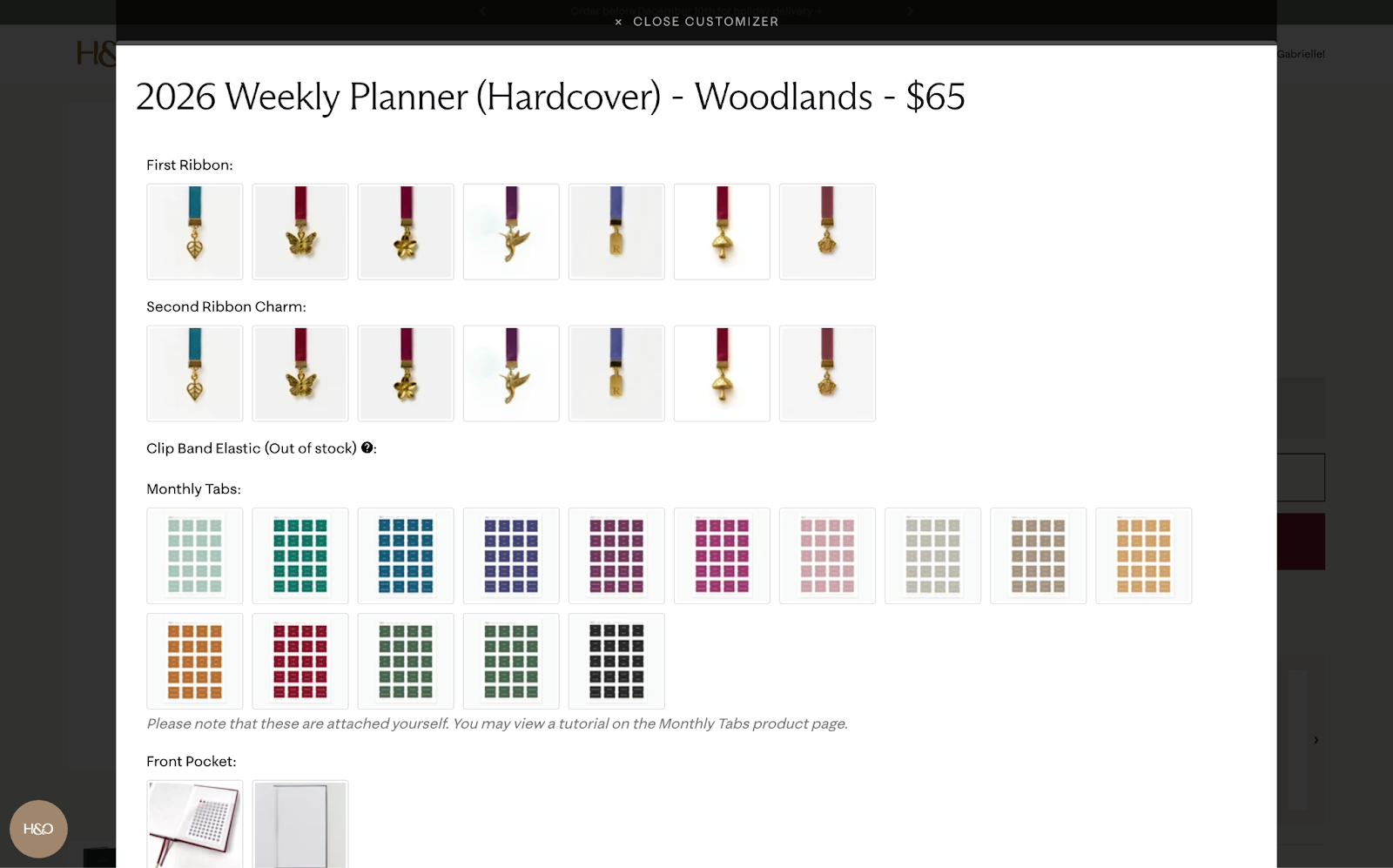
Hemlock and Oak, a premium stationery brand, does this with their planners. Customers can open a dedicated “Customizer” window and build their agenda piece by piece, adding ribbon charms, monthly tabs, and pockets along the way.
4. Extended warranties or protection plans
Protection plans are a low-effort upsell product that removes risk from an expensive product purchase, simply making the purchase decision feel safer.
These upsells work because the commitment is small and the reassurance is big. With low friction, customers know they’re covered if something goes wrong during shipping or after delivery. A one-click choice that quietly removes anxiety from the purchase.
This strategy is especially effective for high-ticket or fragile items such as electronics, appliances, custom products, and anything that is irreplaceable if damaged. When the stakes are higher, reassurance matters more.
Here are ways implement it flawlessly:
- The key is timing and clarity. Protection should appear at the point of highest purchase intent, in the cart, at checkout, or immediately post-purchase.
- Have a clear explanation of what’s covered and how it helps to solidify legitimacy.
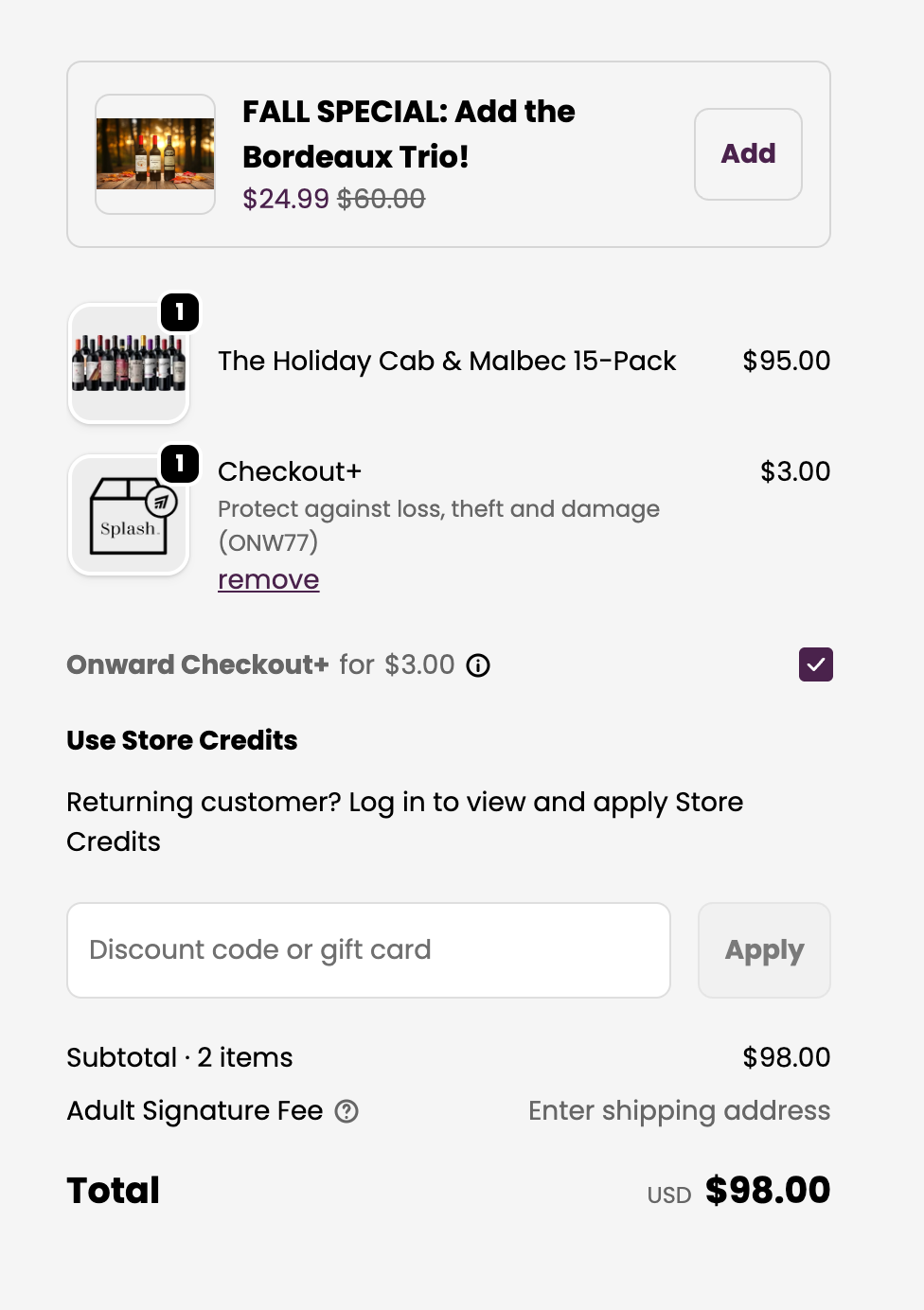
Splash Wines is a great example that puts this into practice seamlessly. As customers check out their wine bundles, they’re offered the option to protect their order against loss, theft, and damage. They make the upsell feel like more of a safeguard, ensuring the wine arrives exactly as it should, rather than an extra cost.
5. Shipping thresholds
One of the most common upselling strategies is offering free shipping when customers add more items to their cart. It’s not about the extra items; it's about not paying for delivery.
Shipping thresholds work because they tap into loss aversion. Paying for shipping feels like a loss, while adding one more item feels like a savings. A $15 add-on suddenly makes sense when it eliminates the shipping fee entirely.
How to make this strategy work:
- The goal has to feel attainable. Visual cues, like progress bars, turn that feeling into momentum, creating a clear objective: you’re almost there.
- The goal should truly be attainable, typically 20-30% above current average order value.
- Suggest complementary products that naturally bridge the gap.
- As the cart updates, the experience should update in real time, reinforcing progress.
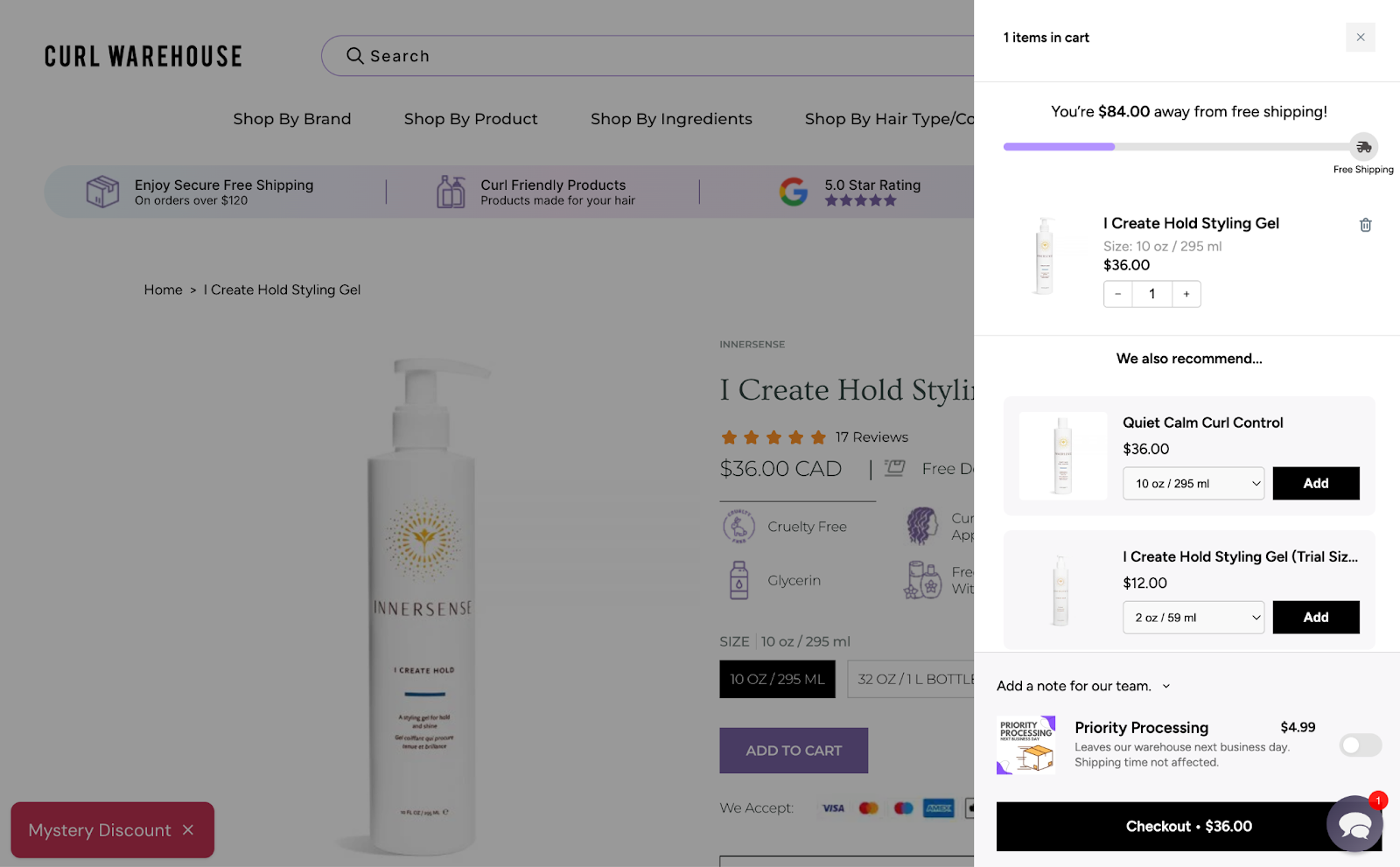
Curl Warehouse executes this cleanly by displaying a progress bar directly in the cart, showing customers exactly how close they are to free shipping. Complementary products appear with one-click add-to-cart options, making the final step toward the threshold feel easy and almost inevitable.
6. Bulk or volume-based discounts
“Buy more, save more” taps into a familiar instinct: if you’re going to need it anyway, you might as well get a better deal. It’s the same logic that makes bulk retailers like Costco so effective and compelling.
Adding more units increases the transaction size, but it also reframes the purchase as a smart move. Especially budget-conscious customers feel like they’re beating the system: spending a little more now to save later, stocking up instead of coming back.
That’s why this strategy works especially well for consumables. Shopify stores that sell supplements, vitamins, coffee, tea, and household essentials fit naturally into repeat routines. They’re typically non-perishable, low-friction to buy in multiples, and come with predictable demand.
With strategy, clarity is everything:
- Shoppers should see exactly how much they save at each tier.
- There should be a clear signal indicating the best-value option.
- Quantity selection should feel effortless, whether through dropdowns or simple +/- buttons that make scaling up intuitive.
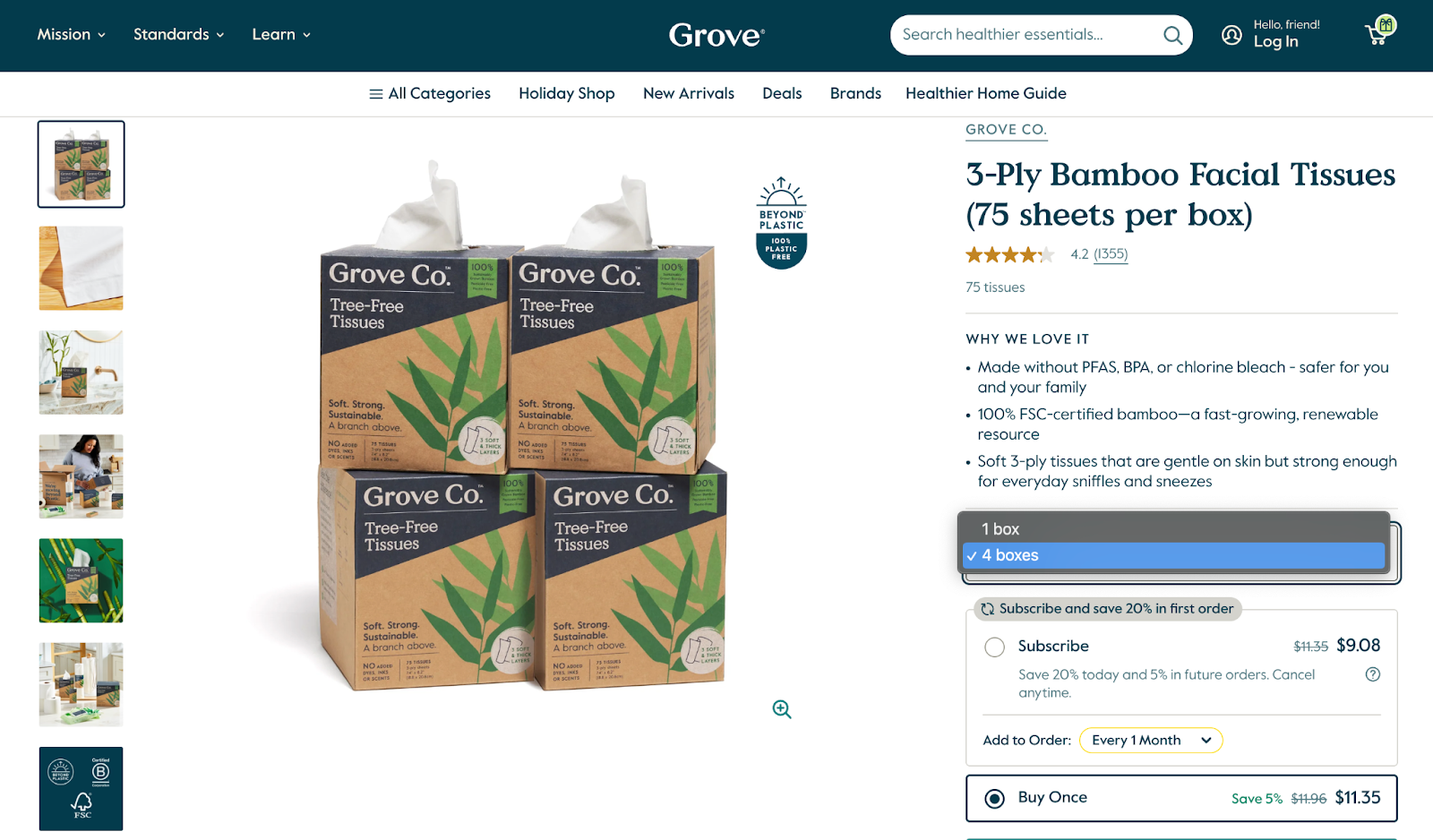
Grove Collaborative executes this seamlessly via their online shop. The retailer of sustainable home and personal care products allows customers to compare a single tissue box to a four-pack, making savings immediately visible. By the time they land on the bulk option, shoppers clearly know that buying more means saving 5% on their purchase.
7. Upselling through subscriptions
When a shopper chooses to subscribe, the value compounds on both sides:
- Brands gain predictable revenue, lower acquisition costs, and longer-lasting relationships.
- All while customers enjoy convenience, savings, and the peace of mind that they won’t run out of what they rely on.
What starts as a one-time buy becomes an ongoing exchange built on trust.
The most effective subscription upsells feel optional, flexible, and transparent:
- A small but meaningful incentive, typically 5–15% off, gives shoppers a reason to consider subscribing without feeling locked in.
- Clear delivery frequency options.
- Easy and flexible cancellation options.
- Reminders before each charge reinforce control and credibility, not pressure.
- Visibility matters too. When they appear naturally across the journey, on product pages, in the cart, at checkout, and post-purchase, they meet the customer when the timing feels right.
This strategy works especially well for products people use regularly, including consumables, pet supplies, food and beverage, health and wellness, and beauty and personal care items.
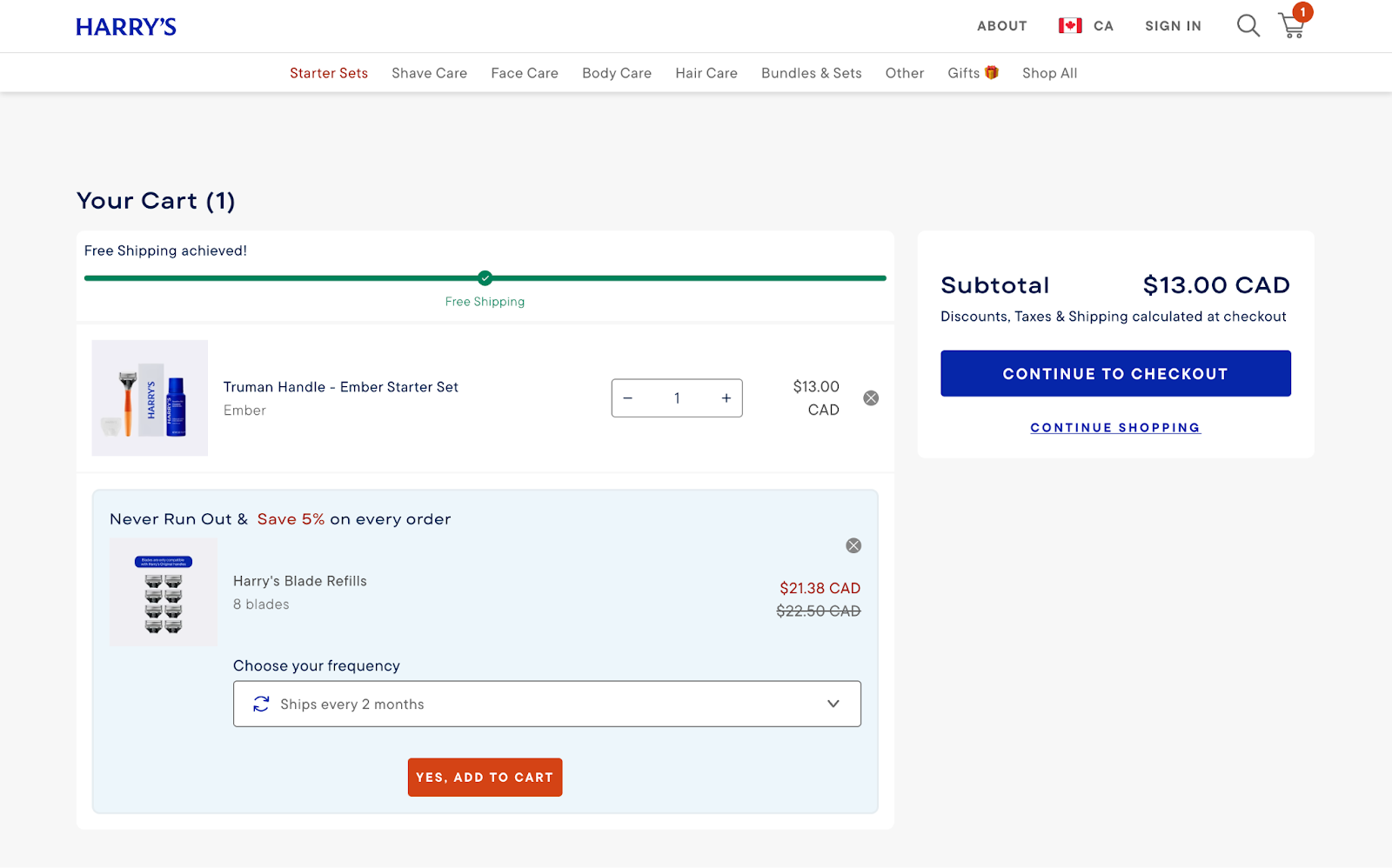
How does this look IRL? Harry’s prompts shoppers to subscribe to razor blade refills directly in the cart. Customers already have a starter bundle, so the offer is a straightforward way to save 5% on every order.
8. Third-party post-purchase add-ons
The order confirmation page is often treated as the end of the journey, but it’s actually a perfect place to introduce value without pressure.
Third-party post-purchase add-ons monetize this moment by displaying relevant offers from trusted brands on the thank-you page. Instead of pushing more of your own inventory, you give customers the option to engage with complementary services, all with a single click.
Tools like Rokt Thanks make this seamless. Here’s how it works:
- Display AI-powered offers from well-known brands such as Nike, Disney+, or HelloFresh that appear after checkout, ensuring the original sale stays untouched.
- Rokt Pay+ further extends value by rewarding merchants for offering popular payment options such as Shop Pay, PayPal, Apple Pay, and Google Pay.
- For the customer, nothing feels intrusive. They can accept an offer or move on instantly.
- And the brand gets incremental profit with every interaction. Typically earning $0.30 to $0.50 per transaction with zero inventory risk, zero implementation cost, and no impact on conversion rates.
With Aftersell, here is how third-party offers and payments are enabled:
- Available through the Rokt Thanks and Rokt Pay+ features.
- Brands can control which partners appear and set category preferences.
- Real-time AI analysis matched offers using thousands of data points.
- Performance and revenue are tracked directly in the dashboard, making optimization straightforward.
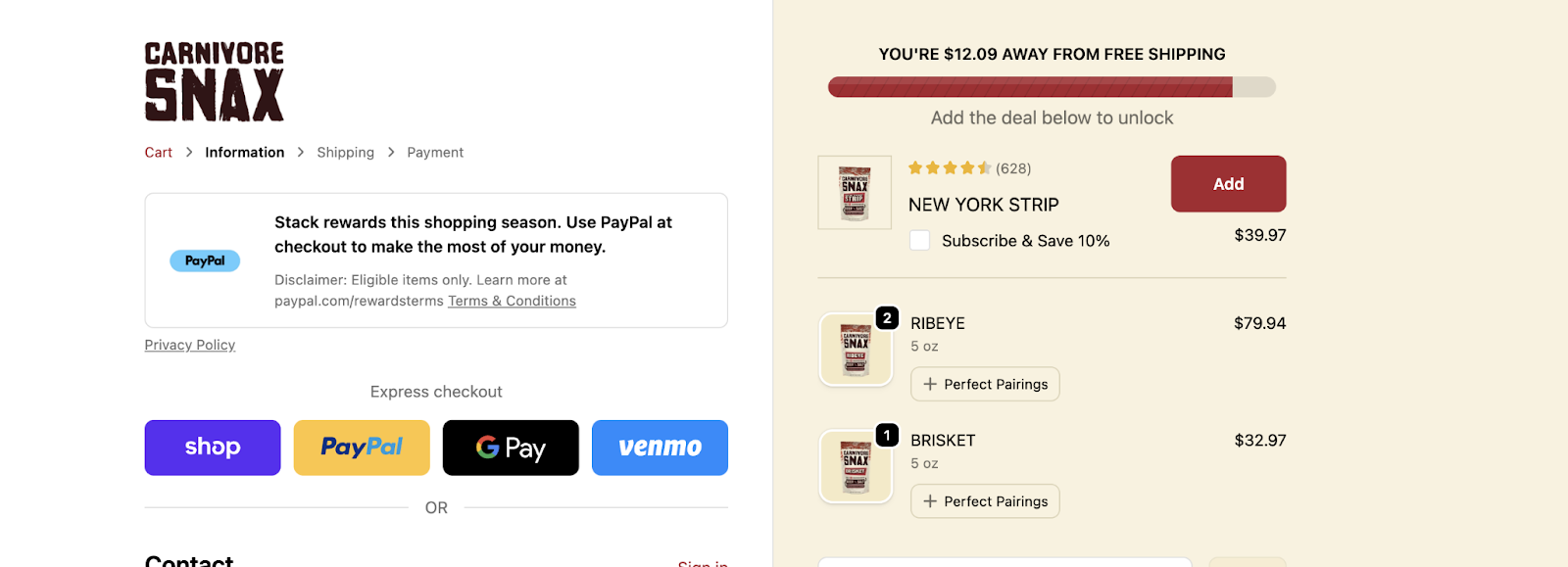
Carnivore Snax implemented Rokt Thanks and Rokt Pay+, generating $4,500 in incremental revenue, averaging $0.15- $0.16 in profit per transaction, and seeing no drop in conversion rate. Often, the most effective upsells don’t ask customers to buy more; they simply help them notice what’s already relevant.
How to upsell a customer on Shopify
Successful Shopify upselling combines smart timing, clear value, and low-friction execution across the buying experience.
1. Upsell at the right time and place
Upselling isn’t about what you offer; it's about when you offer it. The same suggestion can feel helpful or intrusive depending on where the customer is in their journey.
Pre-purchase, curiosity is high, and decisions are still forming. Product pages and carts are ideal for surfacing premium upgrades, bundles, or customization options.
At checkout, intent peaks. The customer is ready to commit, making this the moment for low-friction add-ons such as shipping upgrades, warranties, or small complementary items.
After purchase, pressure disappears, and an upsell opportunity opens up. The thank-you page is uniquely powerful because the sale is already complete. Complementary products, subscriptions, or related items can be introduced with zero risk to the original conversion.
When each offer appears in the right place, upselling starts feeling like part of a well-designed experience.
2. Make it relevant and easy for the customer
The best upsells simply make sense in the moment. Relevance does most of the convincing, and ease does the rest.
When acceptance is frictionless, decisions feel effortless. One-click add-ons, warranties, or upgrades remove hesitation by keeping the customer in flow.
Focus on learning what works best. Start by A/B testing one or two strategies at a time, then scale the best-performing strategy.
Upselling isn’t a one-and-done setup. Customer behavior shifts, seasons change, and context matters. Continuously testing different products, placements, and messaging ensures your offers remain relevant and avoid repetition.
3. Leverage the right tools
Great upselling strategies also depend on the right infrastructure. Upselling shouldn’t require a large sales team or complex workflows. The best tools remove friction and smart decisions, without overcomplicating things.
Aftersell is built specifically for high-converting post-purchase upsells, turning the thank-you page into a seamless extension of the checkout experience:
- One-click acceptance. Customers can say yes without re-entering payment details, and their add-on is instantly fulfilled alongside the original order.
- AI-powered recommendations do the heavy lifting. Automatically suggesting the most relevant upsells based on real purchase behavior.
- Advanced targeting. Add another layer of precision, allowing offers to adapt based on cart value, customer type, products purchased, or custom tags.
- Built-in A/B testing. Makes it easy to compare products, messaging, and offers.
- Real-time analytics. Show exactly how each upsell impacts conversion, revenue, and ROI.
Tools shouldn’t complicate the experience. They should complement the upselling process to adapt and improve with every order.
Final thoughts on the upselling strategy
Great upselling doesn’t feel like a pushy salesperson. It feels like helpful guidance.
Whether online or in-person, the goal is added value—not pressure.
At the end of the day, consumers want to feel supported, not sold to. Upselling, when done right, creates a seamless experience instead of layering on top of the journey.
Read more about Aftersell here.
Ready to start? Try Aftersell free for 30 days and implement high-converting upsells in minutes.
Recommended Reading
.jpg)