Your checkout is the beginning of a whole new revenue journey that can help increase your AOV. And we have data-backed tips to maximize the 4 stages of your ecommerce checkout flow and make the most of high-intent customers.
A stronger checkout process can also help you optimize conversion rates, reduce abandoned carts, and create a better user experience across your ecommerce website.
And with more online shoppers than ever before, every ecommerce business has to make online shopping feel simple, trustworthy, and worth completing.
Today’s most successful brands aren’t just pumping more money into acquisition ads. They’re maximizing their existing experiences by:
- Optimizing overlooked areas of the customer journey, like checkout flows
- Treating checkout as a revenue journey that doesn’t end when a customer buys
Why? Because the checkout flow presents a unique opportunity to maximize your highest-intent customers. By optimizing every step in the checkout flow, you can increase AOV and revenue.
We’ll show you just how easy it is. But first, let’s talk about:
- What an ecommerce checkout flow is
- Why it matters
- The 4 key ecommerce checkout flow stages and how to maximize them
- The power of personalization for your strategy
- How checkout design, payment options, shipping options, and post-purchase offers all influence your bottom line
What is an ecommerce checkout flow?
An ecommerce checkout flow is a series of steps a customer takes as they add items to their cart and complete their purchase on your site.
For an online store, this includes everything from reviewing the shopping cart to entering a shipping address, billing address, payment information, and preferred payment method.
Think of these steps like the typical heroes’ journey. Luke Skywalker didn’t instantly jump from Tatooine to destroying the Death Star (he was way too busy whining about picking up power converters from Tosche Station). There were key steps he had to take to complete his journey.
Your customers are a lot like Luke, just maybe on a smaller scale. Their typical journey might look like:
- Adding items to their cart
- Moving to the checkout page to enter payment details
- Choosing a shipping method and seeing shipping costs upfront
- Selecting from payment methods like credit card, Apple Pay, PayPal, or another preferred payment method
- Clicking purchase
- Moving to the order confirmation page
- Exiting the page, as the transaction has ended
The biggest brand winners in 2026 are not just optimizing their landing pages, or focusing only on homepage conversion rate optimization (CRO). They’re optimizing the checkout flow and each of these stages with as much care and attention as a landing page.
That also means reducing unnecessary form fields, enabling autofill on mobile devices, offering guest checkout, and avoiding forced account creation when it creates friction.
Example: David Protein’s unique cart experience
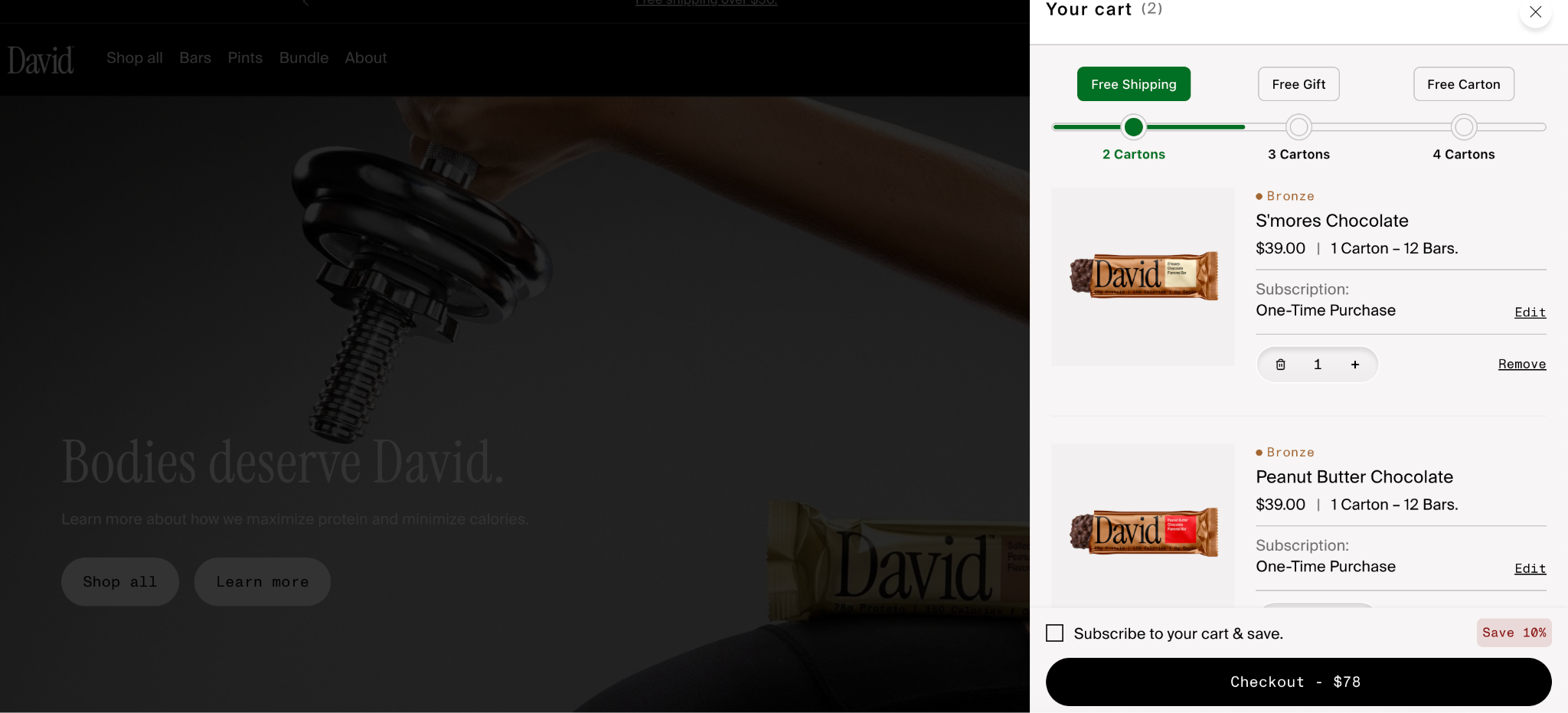
David Protein customers experience a truly unique cart. It delivers a progress bar with incentives unlocked as they add more items, like free shipping or free products.
This kind of progress indicator gives shoppers a clear reason to keep building their order without making the checkout experience feel pushy.
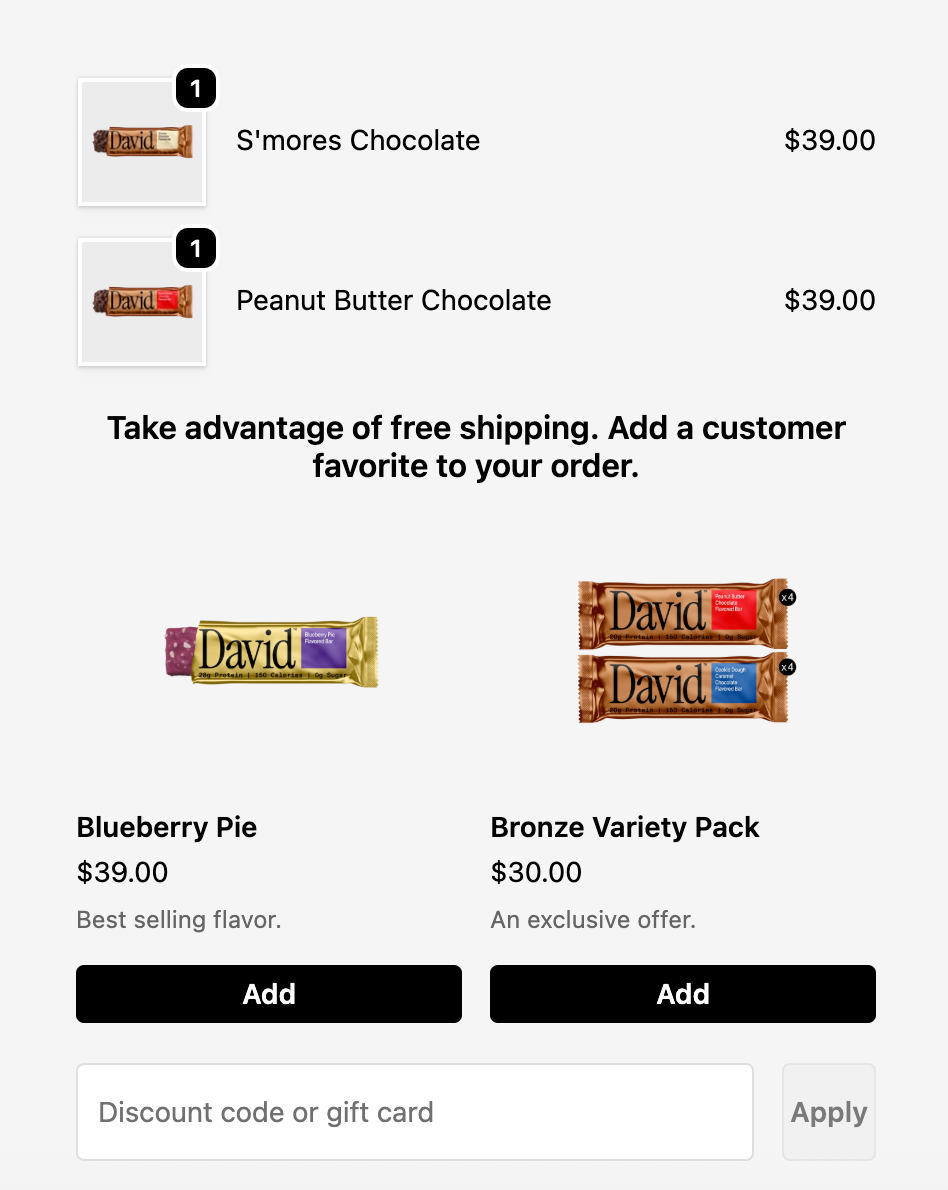
As they move to the checkout page, they're targeted with unique cross-sell and up-sell offers, and reviews from customers. This is all intended to generate a higher order value from that one customer.
Post-purchase, there are also retention touchpoints that invite customers to join a subscription program.
Why is an ecommerce checkout flow important?
Customers at the checkout already have a strong intent to buy.
An ecommerce checkout flow presents an opportunity to capture more revenue from these high-intent customers. They already trust your brand, so they can find value in those cart, upsell and post-purchase offers.
Essentially, you’re maximizing one transaction in the checkout flow. Making the most of your existing customers is also way more cost effective than generating more traffic and trying to convert new customers.
The checkout page is also where small usability issues become expensive. If shoppers cannot easily understand pricing, shipping costs, validation errors, or which payment methods are accepted, they may leave before completing the purchase.
Baymard Institute research consistently shows that checkout friction is one of the biggest reasons shoppers abandon carts, so even small improvements can have a measurable impact.
Another bonus? Getting more value from existing customers allows you to build a truly sustainable community of loyal brand supporters.
4 key stages in your ecommerce checkout flow, and how to maximize them
Checkout flows are no longer stagnant. They’re optimizing with every customer and looking at their behavior, including what’s in their cart, purchase history and acquisition channel.
But while checkout flows are revenue-generating touchpoints, the key is they do this without distracting customers or disrupting the checkout experience.
From the moment a customer adds an item to their cart to the thank-you page, each stage is important. They’re all opportunities to increase customer lifetime value (CLV) and average order value (AOV) without increasing acquisition costs.
Let’s dive more into each stage below.
1. Cart
The average shopping cart abandonment rate globally is 77.81%, so you can already see why it’s important to optimize this step.
Once a customer adds an item to their cart, the checkout flow begins. It’s the first opportunity to communicate to customers the added value they can get.
The cart experience is essential in making sure customers move through the process. Also essential is to reduce any friction or doubt that can cause cart abandonment.
Key strategies
- Cart progress bars
- Cart recommendations
- Cross-sell and upsell offers
- Product bundling
Pro tip: Ecommerce brands vary in how they present value at this stage. Keep track of whether any strategies move the needle and increase your AOV or if your cart needs further optimization.
Aftersell solutions
Aftersell delivers a number of AI solutions to help optimize your checkout flow.
For the cart, Aftersell Cart's machine learning model can analyze cart contents and purchase patterns to surface the most relevant add-on at the moment of highest intent. It delivers:
- AI recommendations
- In-cart add-ons with one-click (so customers stay on the path to checkout)
- An incentivized rewards bar
- As many cart configurations as you need in the backend
Case studies
Flamingo
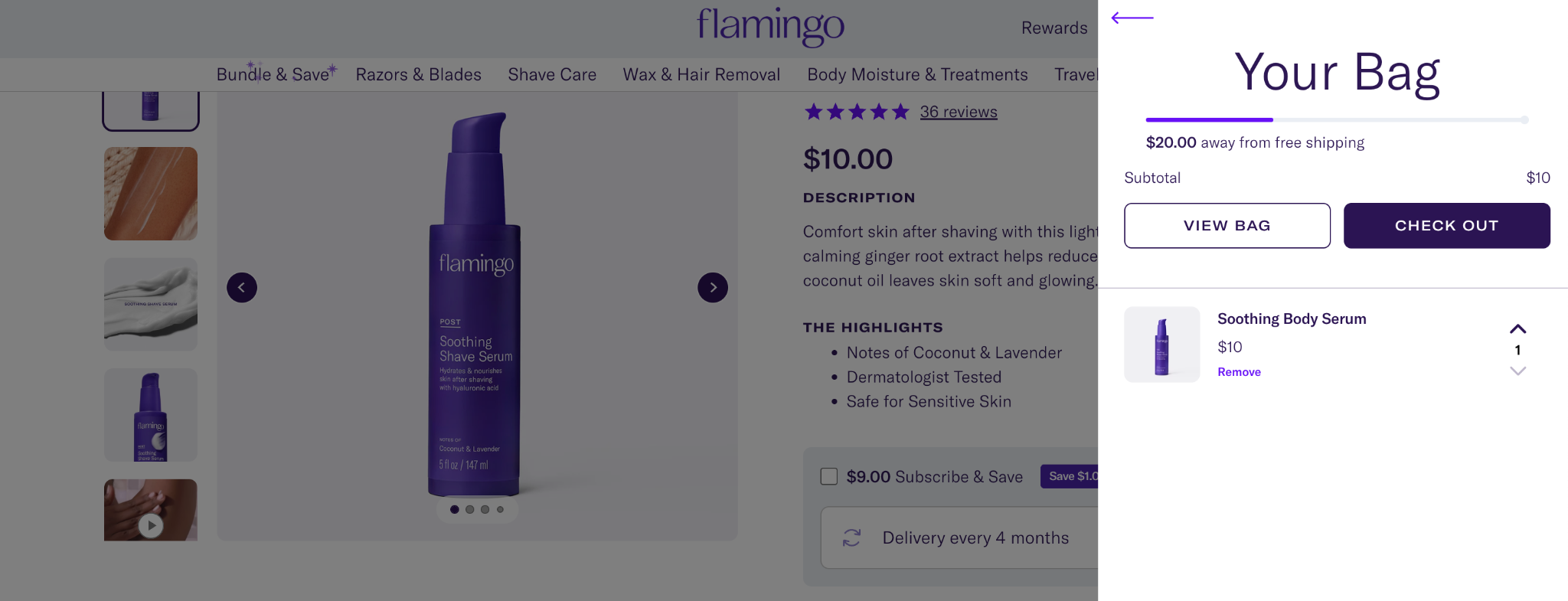
Personal care brand Flamingo shows progress bars to encourage customers to increase their cart value and unlock free shipping. That way, it’s helping to increase AOV while delivering on an essential service. Everyone loves free shipping, after all.
Cozy Earth
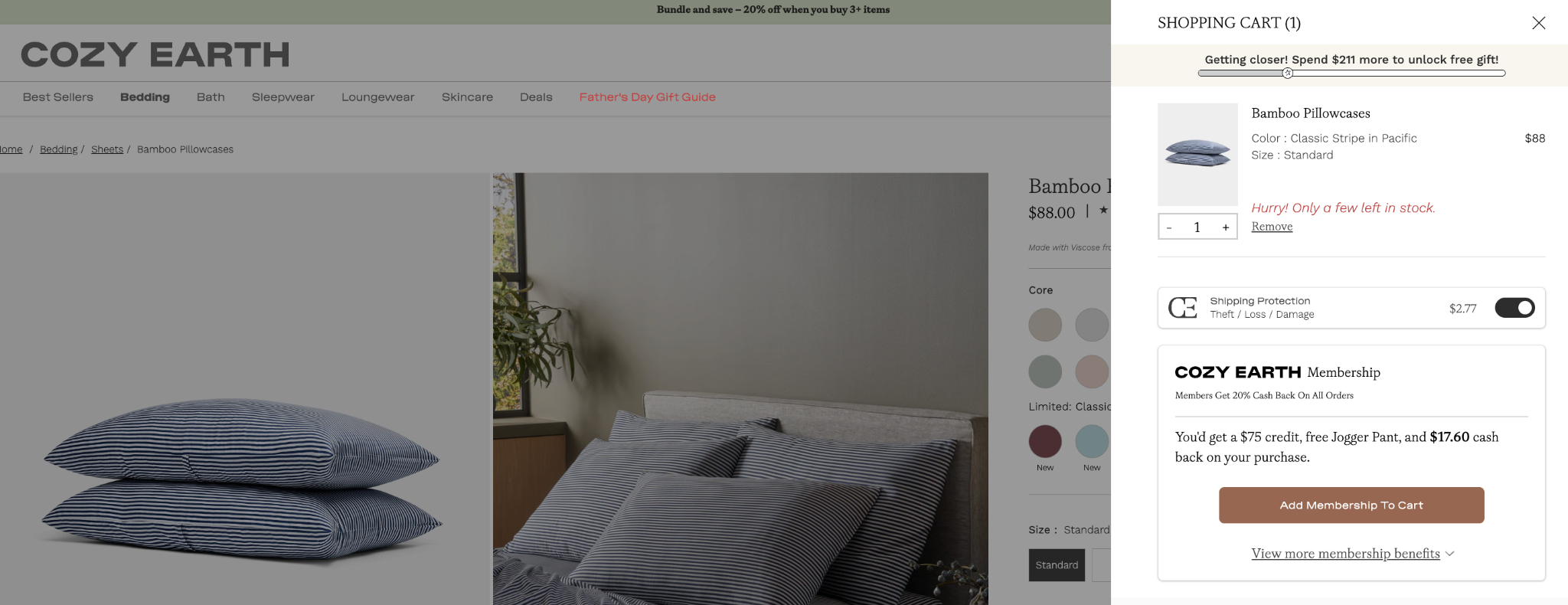
Then you have Cozy Earth. They used recommendations in the cart on cross-sell products, a subscription membership and badges that encourage customers to act fast and increase their cart value—all in exchange for a free gift.
Remember: With Aftersell, you can optimize carts that feel native to your store to reduce abandonment and build purchase confidence before checkout.
2. Checkout
Once a customer moves through the checkout page from the cart page, this is where the purchase intent reaches its highest point. The zenith, if you will.
At this stage, customers are fully bought into your ecommerce brand. It’s the perfect opportunity to generate revenue and deliver value to customers.
Key strategies
- Add-ons
- Product recommendations
- Upsells
- Complementary products
Pro tip: The key is to deliver relevance with checkout offers. The best offers should feel complementary to the items in the cart, and be an easy value-add that customers can add with one click.
Aftersell solutions
The genius of adding a tool like Aftersell for your checkout is you’re able to add product upsells, spend-threshold rewards, trust badges and testimonials without touching a line of code.
Another big takeaway is to test different cart layouts. Use these example cart layouts based on Aftersell data from 40,000+ fast-growing brands:
- Text + testimonials + cart controls + trust badges + images + upsells = $2.18 RPS
- Rewards + cart controls + images + upsells = $2.69 RPS
Try different combinations and test which performs best, since what works for one brand may not work for yours.
Case studies
Cozy Earth
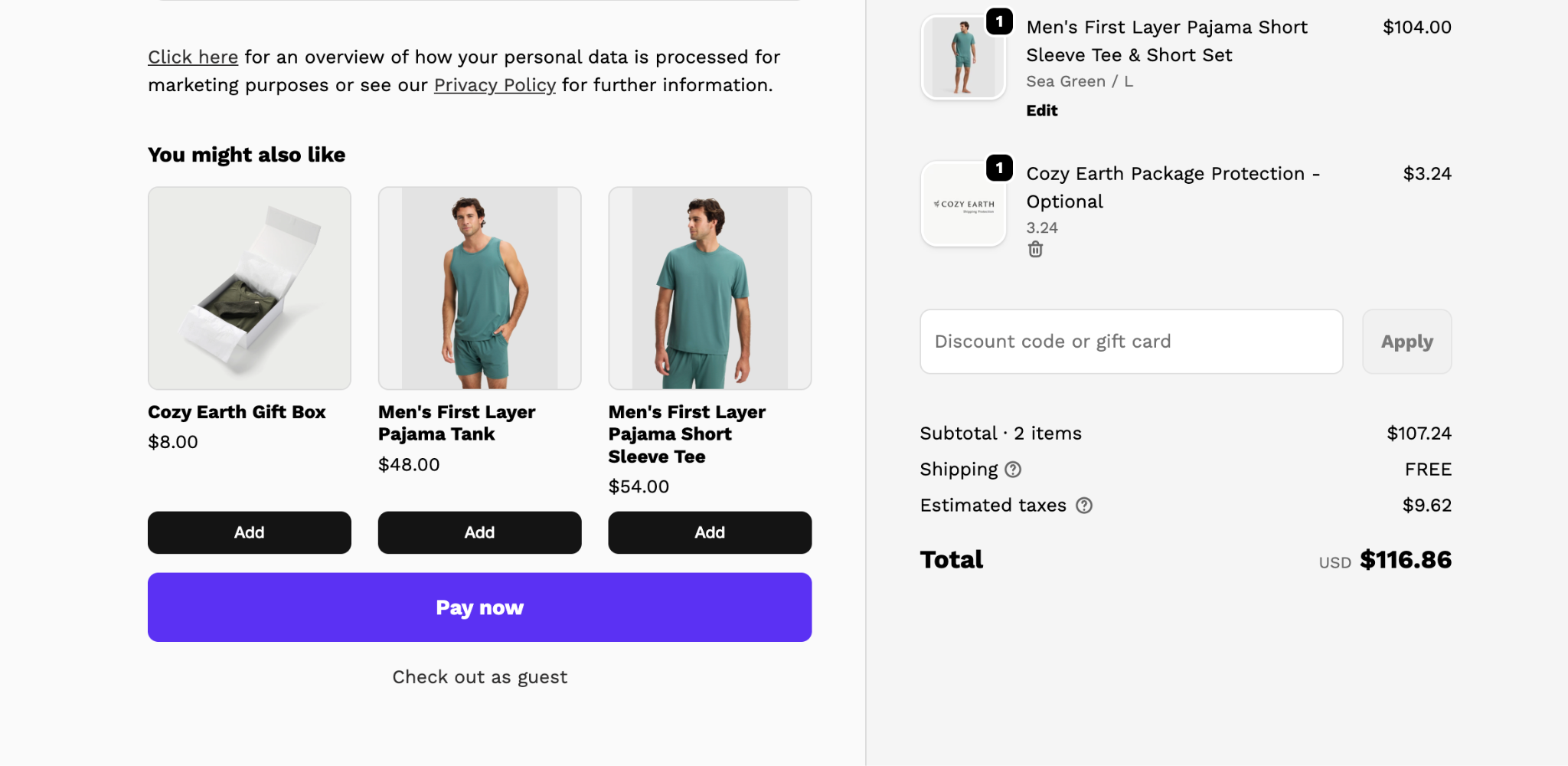
Cozy Earth once again provides a great example of key strategies in action. On their checkout page, Cozy Earth delivers product recommendations with cross-sell offers that complement what’s in your cart.
This example shows how customers can purchase a pajama tank to go with the cute shorts in their cart, or a gift box. The key is to deliver an easy enough value that customers can add to their order with no hesitation.
Jones Beauty
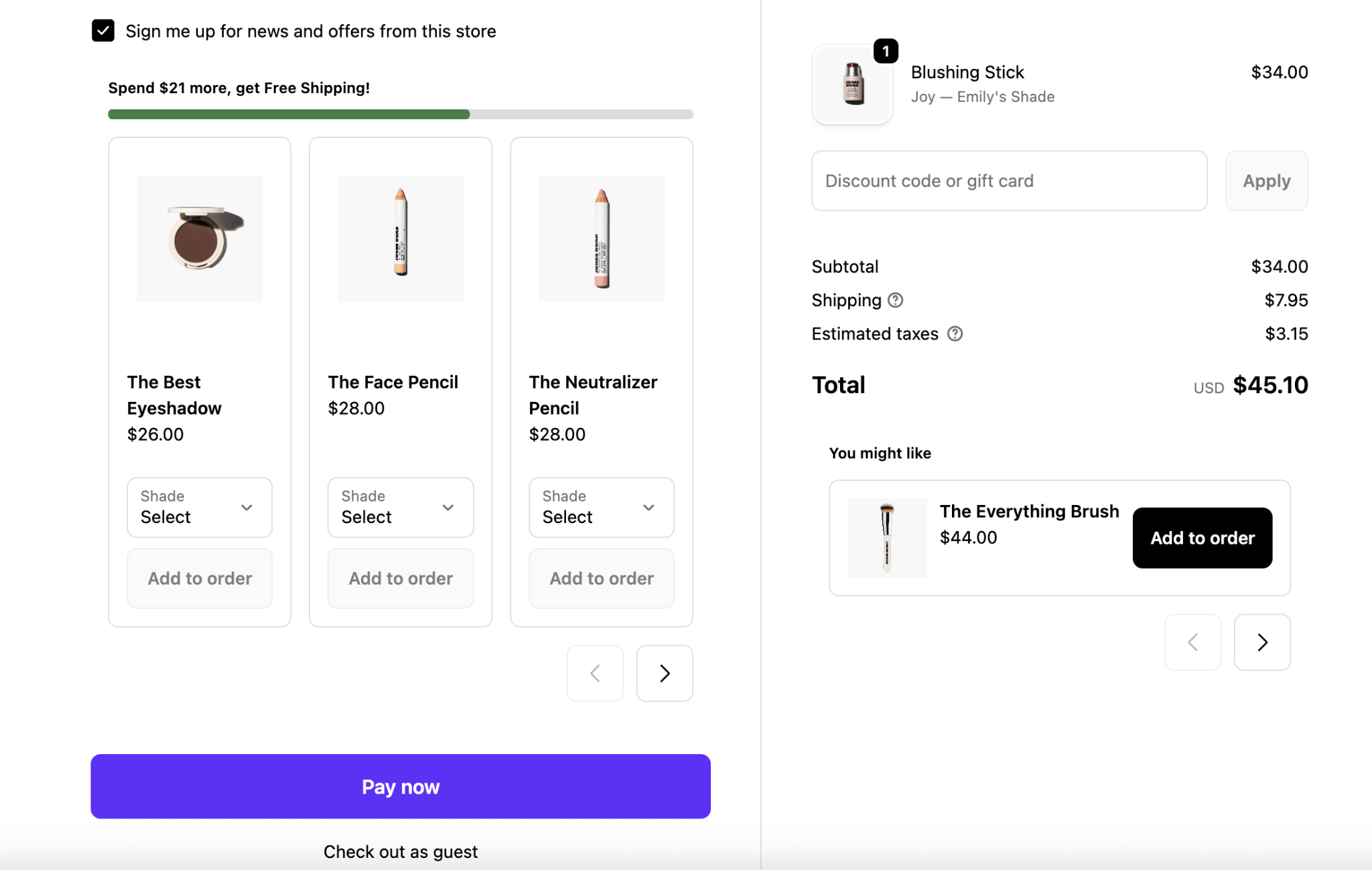
Jones Beauty delivers an outstanding checkout experience that maximizes revenue during checkout by:
- Encouraging customers to add more items to their cart to unlock free shipping with progress bars—a simple nudge that drives larger orders and boosts AOV without discounting
- Using cross-sells with product recommendations that feel natural to what’s in the cart and align with customer interests
- Having AI recommendations based on the cart items
3. Post-purchase
93% of consumers consider the post-purchase experience important.
So while the checkout page is where purchase intent is at its highest, the post-purchase stage is where your customer’s attention is at its highest.
At this stage in the checkout flow, ecommerce brands can see their biggest increase in revenue. Post-purchase offers can be a great strategy to increase AOV without any risk of cart abandonment since these offers are after a customer has already placed their order.
Post-purchase offers are like a really great after-credits scene in a movie. Your job is to give customers a tantalizing teaser worth sticking around for.
Key strategies
- Deliver a strong enough value and offer that customers can add to their order with one click with no risk of interrupting the conversion
- Approach A/B testing post-purchase offers differently from landing pages, product pages or homepage variables
- Why? → Unlike these other pages, checkout pages are places where customers have already made a purchase decision
Case study
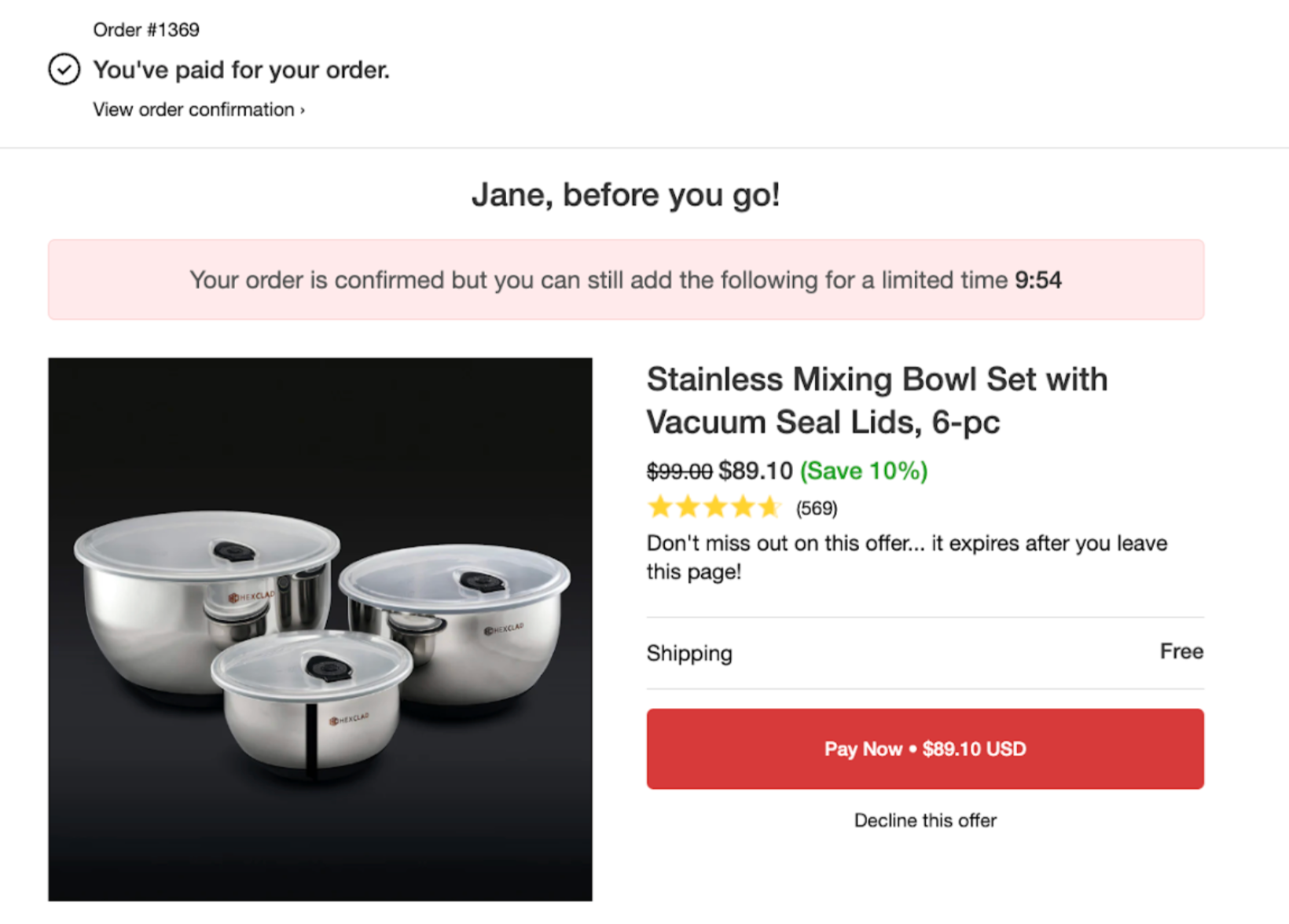
HexClad used post-purchase offers that were both an easy sell to customers and aligned with what they were interested in. Rather than forcing revenue into the front-end experience, monetization was placed after the transaction was complete.
The results? $2.4M in incremental post-purchase revenue, and a $4.91 in additional revenue per transaction
4. Thank-you page
Many ecommerce brands view the thank-you page as just a digital receipt. This is a mistake.
Don’t underutilize its potential as an evolving revenue channel. The customer’s attention remains high at this stage because they want to ensure the full transaction goes through.
This means you can capitalize on upselling high-value or premium products to maximize the customer’s attention and increase incremental revenue.
Key strategies
- Loyalty and subscription program offers
- Additional upsells
- Replenishment offers on their next order
- Educational content to help build community
Pro tip: Try communicating a sense of urgency to customers with buttons that show a limited-time offer.
Aftersell solutions
With Rokt Thanks, you can drive more revenue by adding dynamic native ads at checkout from premium websites that are exclusive to Aftersell’s network. It’s a cost-per-click (CPC) model that generates extra revenue for ecommerce brands.
All without sacrificing the customer experience, too.
Case study
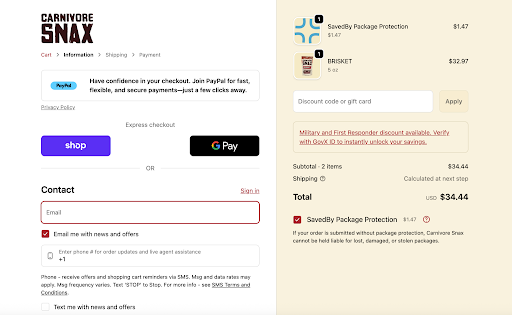
Carnivore Snax and their famous melt-in-your-mouth meat chips use Rokt Thanks in their checkout page. This adds a CPC ad tied to PayPal.
It’s a natural fit and doesn’t interrupt the customer experience. This is extra wise, since nobody wants to get in the way of a hungry person and their snacks.
The power of personalization
Personalization really is your best secret weapon when it comes to optimizing your checkout flow. Think of it as a lightsaber in your favourite colour—and definitely just as useful.
It’s no surprise that generic offers just… don’t perform well. Who wants to buy something that might not even be relevant to what you’re searching for or what’s already in your cart?
These bland recommendations will absolutely force-choke your conversions and limit how much you can maximize one transaction.
Luckily, personalization opportunities are available across the checkout flow. This means from cart recommendations and checkout page offers, to post-purchase and thank-you page offers.
Aftersell solutions
Aftersell’s Smart Funnel delivers AI-powered recommendations on post-purchase upsell offers. By analyzing your customers’ cart data, purchase history, and segments, you’ll get real-time shopping signals for you and your customer.
All so you can grow AOV without extra effort.
Case study
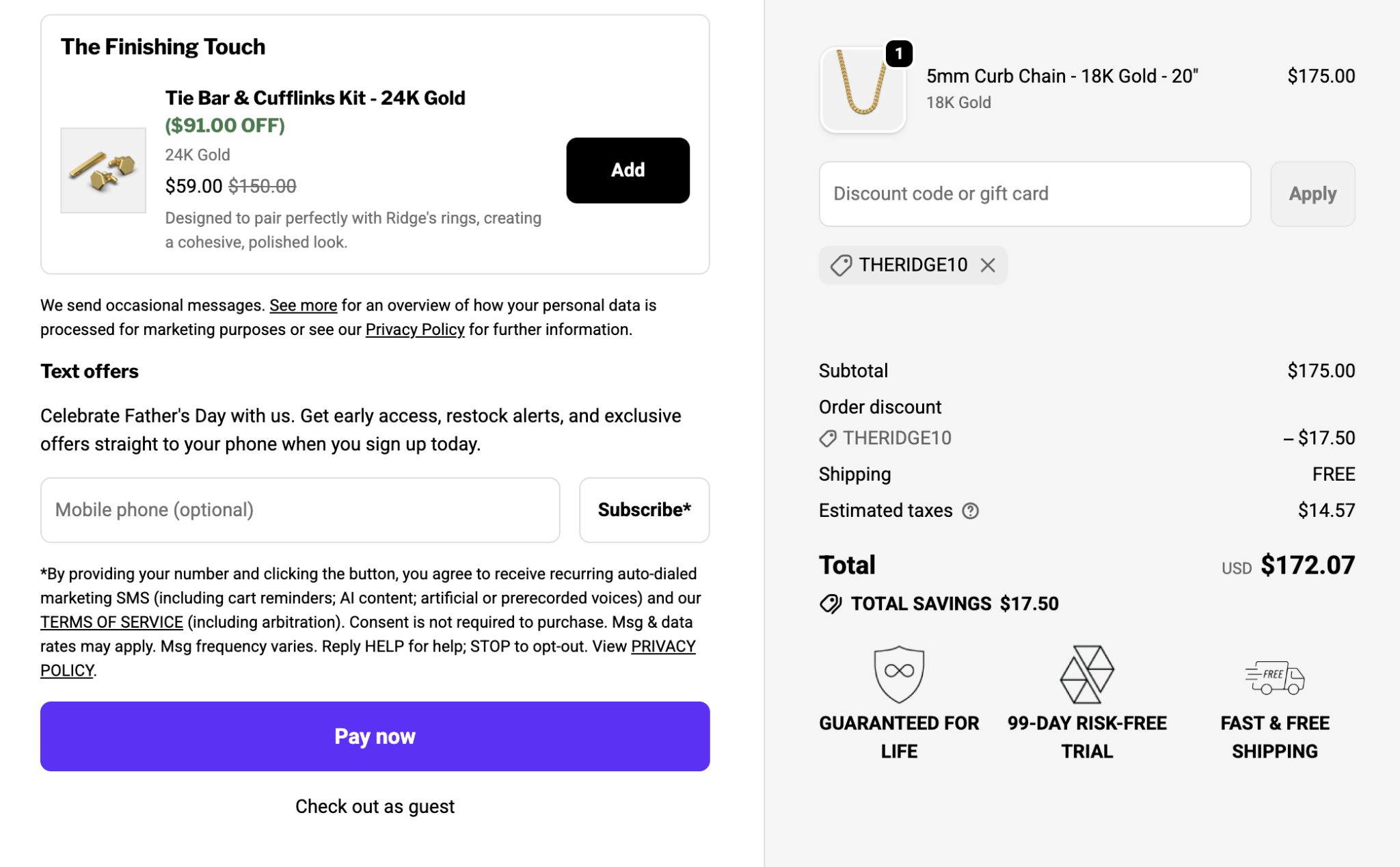
After minimalist wallet brand Ridge needed to reevaluate their stack, Aftersell delivered a tailored solution. Their customers see product recommendations based on their cart behavior to drive a cross-sell offer below the cart’s value—because sometimes it’s not just about recommending the most expensive product. It’s about those easy add-ons.
Turn your ecommerce checkout flow into a revenue engine
The best ecommerce brands know that checkout isn't just the end of a transaction, it’s the beginning of a brand new revenue journey.
By optimizing every stage of the ecommerce checkout flow from the cart to the thank-you page, you’ll be able to:
- Increase AOV
- Boost customer lifetime value
- Unlock more revenue from customers who are already ready to buy
Get ready to turn your checkout flow into a revenue engine with AI-powered recommendations and seamless upsell experiences with Aftersell.
Recommended Reading
.jpg)