More customers feels like the answer to everything — growth, scale, success.
But here’s the part no one likes to admit: you don’t need more new customers. You need bigger carts and larger purchases.
Increasing your average order value (AOV) helps drive more sustainable revenue growth. Higher revenue per customer means you’re not doubling down on ad spend, inflating customer acquisition costs (CAC), or relying on deep discounts just to bring in new traffic.
And yes, it sounds great. Because it is. It just makes sense. You’d rather someone order the full meal than just the fries, especially when the combo actually adds perceived value.
That’s the idea behind increasing AOV. By offering relevant add-ons, related products, and complementary products throughout the shopping journey, ecommerce brands capture more value from existing customers instead of endlessly chasing traffic.
Read on for eight proven marketing strategies to increase average order value in your ecommerce store and turn every purchase into a bigger total revenue opportunity.
Why improving AOV is important
Growing higher AOV is one of the fastest ways for ecommerce businesses to improve profitability. When you capture more value from a single transaction, revenue increases without increasing traffic, total orders, or operational complexity.
According to Shopify’s benchmark data, the electronics, apparel, fashion, and beauty industry has the highest customer acquisition costs (CAC) among other ecommerce categories. Higher AOV reduces pressure on acquisition, especially as CAC continues to rise.
Increasing cart value reduces pressure on acquisition, especially as CAC continues to rise across every Shopify store.
That’s where upselling comes in.
Think every time you’re at a Starbucks drive-thru, and you get asked if you want to try the new cake pop. Every “yes” moment adds up. When additional products, upgrades, or higher-priced options are positioned as genuine value-adds, customers feel like they’re getting more for their money.
Over time, these moments turn higher average order value into stronger customer lifetime value, better retention, and healthier profit margins.
8 ways to improve average order value in ecommerce
Check out these proven strategies to increase conversion rate, customer engagement, and repeat purchases.
Implement upsell strategies
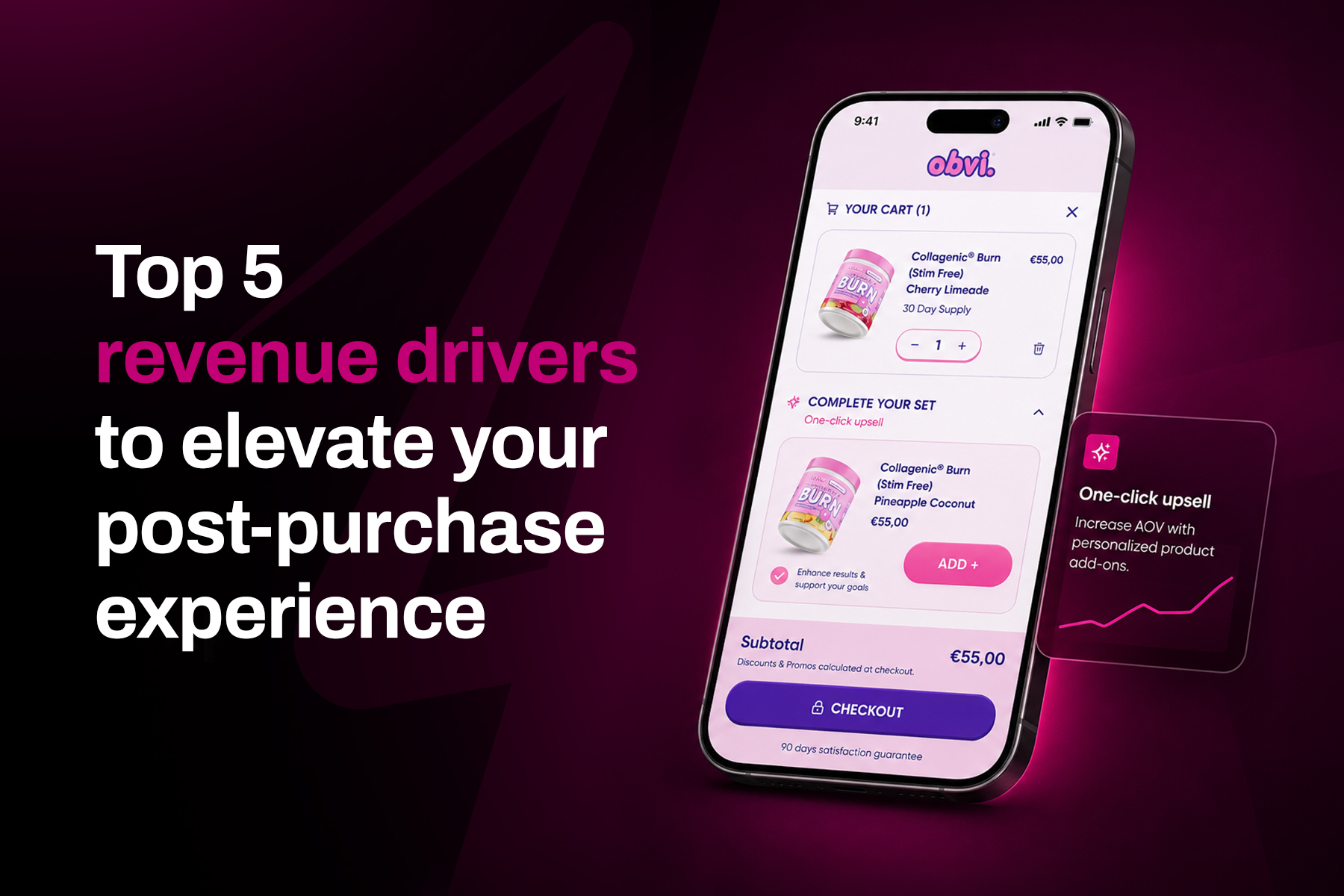
Upselling improves AOV because it builds on existing purchase intent. The customer is already in your shopping cart, already spending. Your job is to make the next “yes” feel easy.
That can mean recommending a higher-priced or high-value version of a product, or encouraging volume discounts like “buy more, save more.”
The most effective upsells show up while intent is high — not after it’s gone. That means placing upsell offers at key moments throughout the shopping journey, including:
- On product pages, where shoppers are still comparing options
- Inside the shopping cart, when customers are reviewing their order
- During checkout, where urgency and commitment are highest
- And immediately post-purchase, where there’s zero risk of disrupting the original sale
Each placement serves a different purpose. Product page upsells help guide customers toward higher-priced or premium versions of a product.
Cart and checkout upsells encourage shoppers to add additional products or upgrade quantities. Post-purchase upsells capture incremental revenue after the purchase decision has been made.
Upselling becomes even more effective when supported by A/B testing, which helps brands understand customer behavior and identify which offers drive higher AOV without hurting conversion rate.
Ecommerce brands using multiple upsell placements — on product pages, in-cart, and during checkout optimization — have seen revenue increase by as much as 20x compared to those using just one.
How True Classic puts this into practice
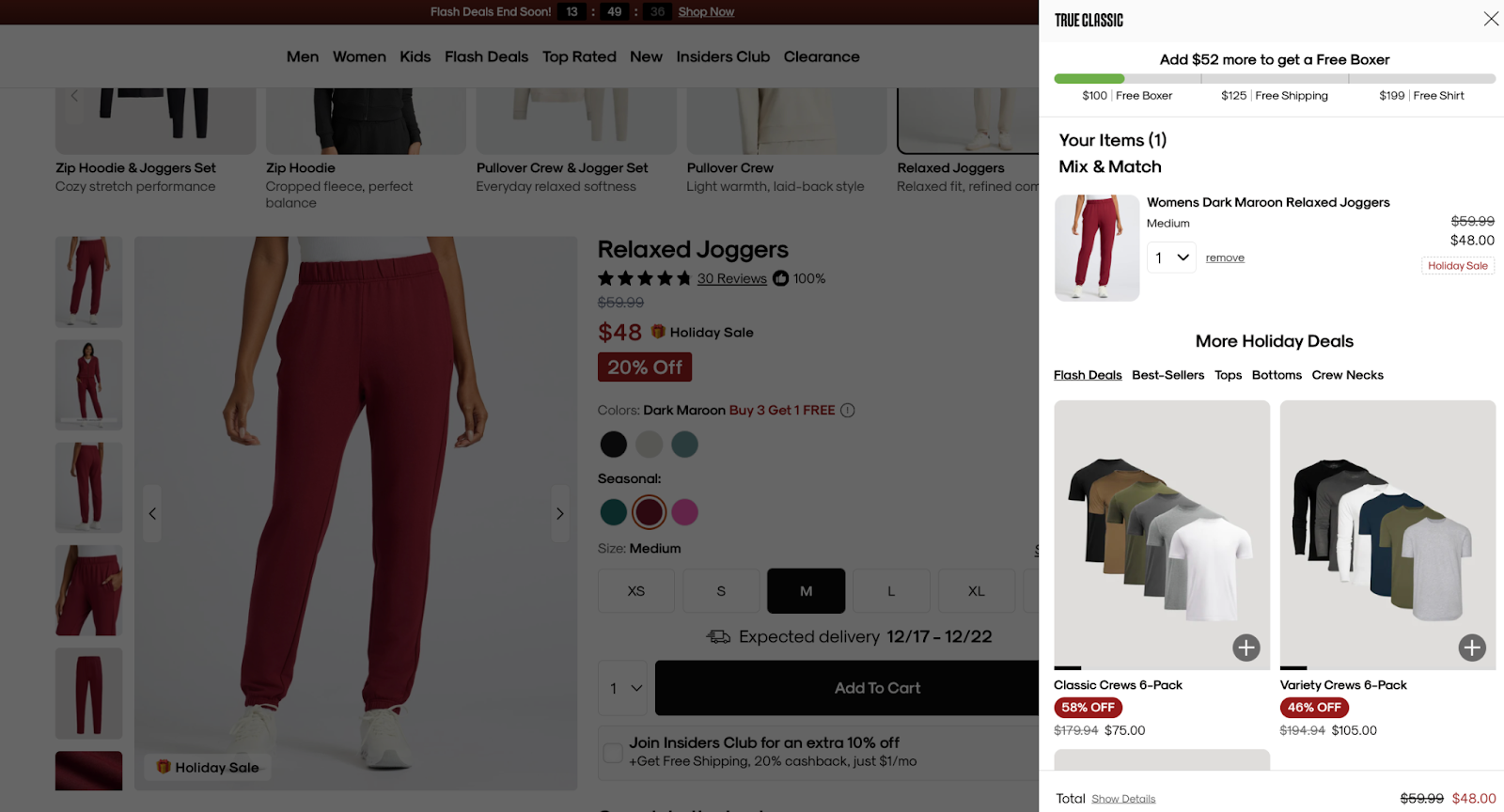
With Aftersell, the clothing brand implemented multiple upsell offers, allowing customers to browse flash deals and best-sellers across categories directly in the cart. Their initiative drove an impressive average upsell value of $35 per order without disrupting the checkout experience.
Cross-sell products
Cross-selling improves AOV by extending the customer’s original intent. When done right, product recommendations feel helpful, not pushy.
Effective cross-sells rely on purchase history, customer segments, and personalized recommendations to surface complementary products at the right moment. This strategy works especially well when recommendations appear in real-time on product pages, the shopping cart, or at checkout.
Lower-priced add-ons reduce friction and decision fatigue, helping customers move forward instead of abandoning their cart — a key tactic for reducing cart abandonment.
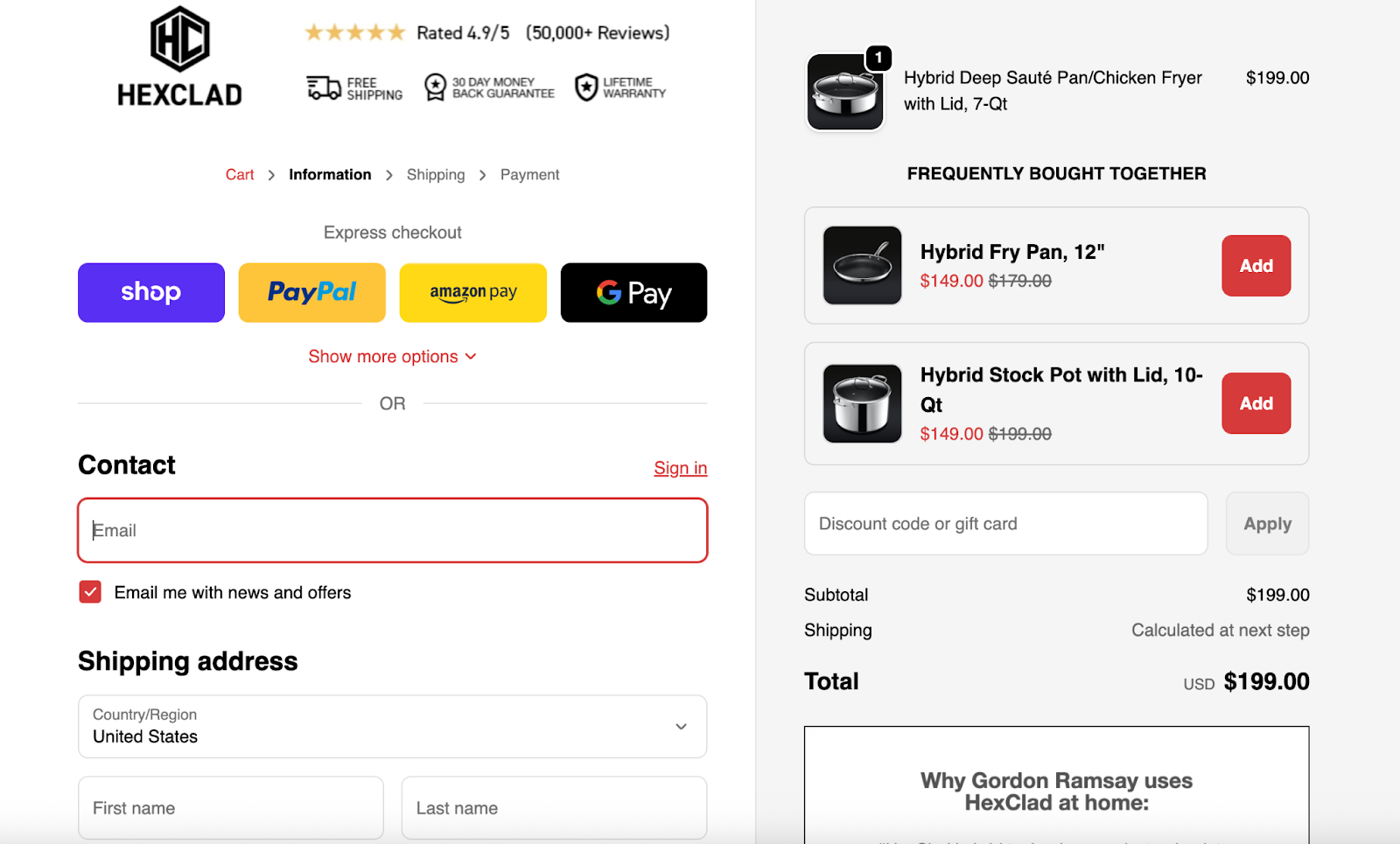
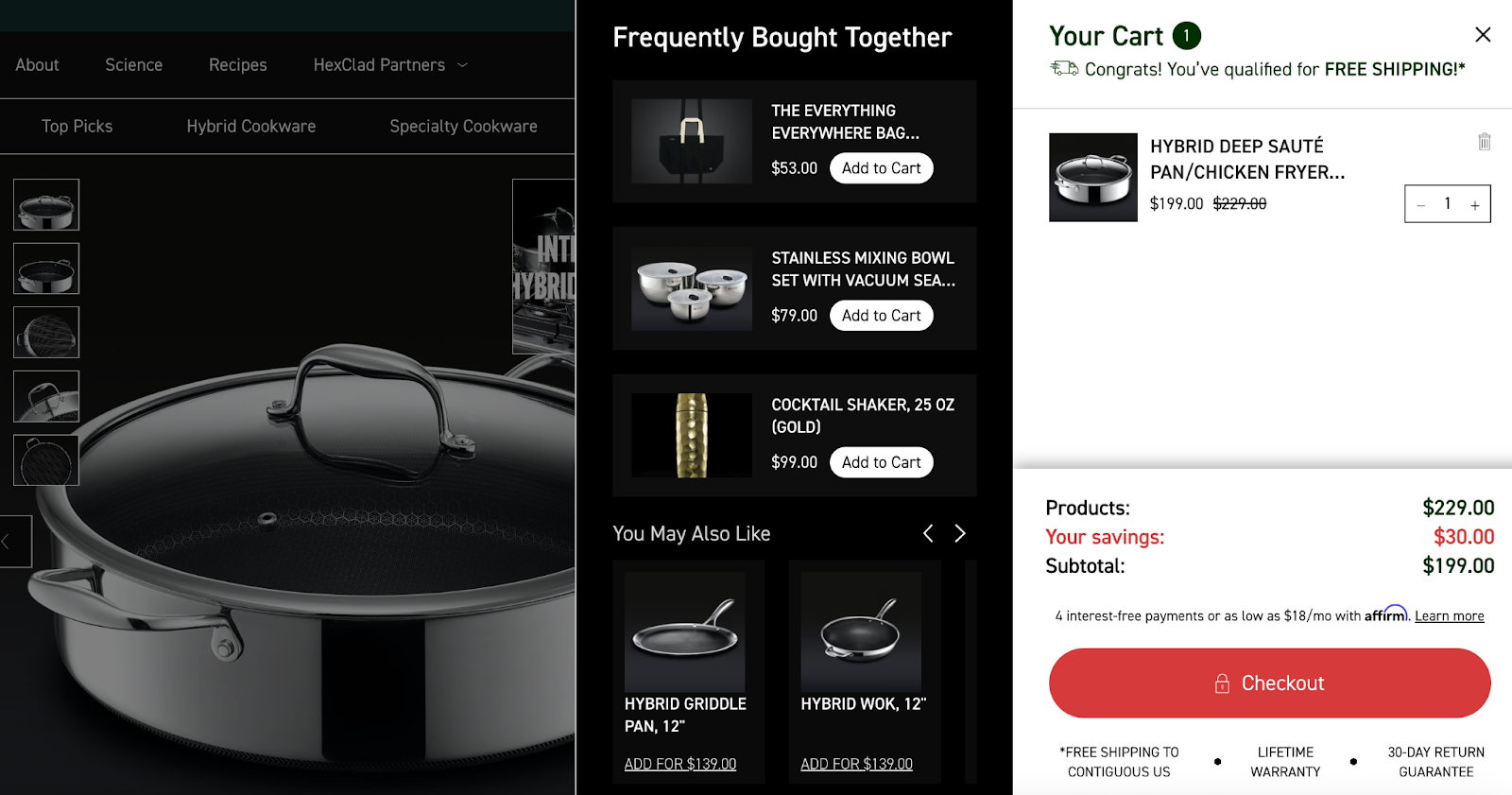
Cookware brand HexClad puts cross-selling into practice by surfacing complementary products in the “Frequently Bought Together” section of the cart and checkout.
Bundle products together
Product bundling encourages customers to purchase multiple items at once by simplifying decision-making. Instead of choosing item by item, shoppers see curated bundles framed as “complete the set” or “frequently bought together.”
A great example of this in action is DIBS Beauty.
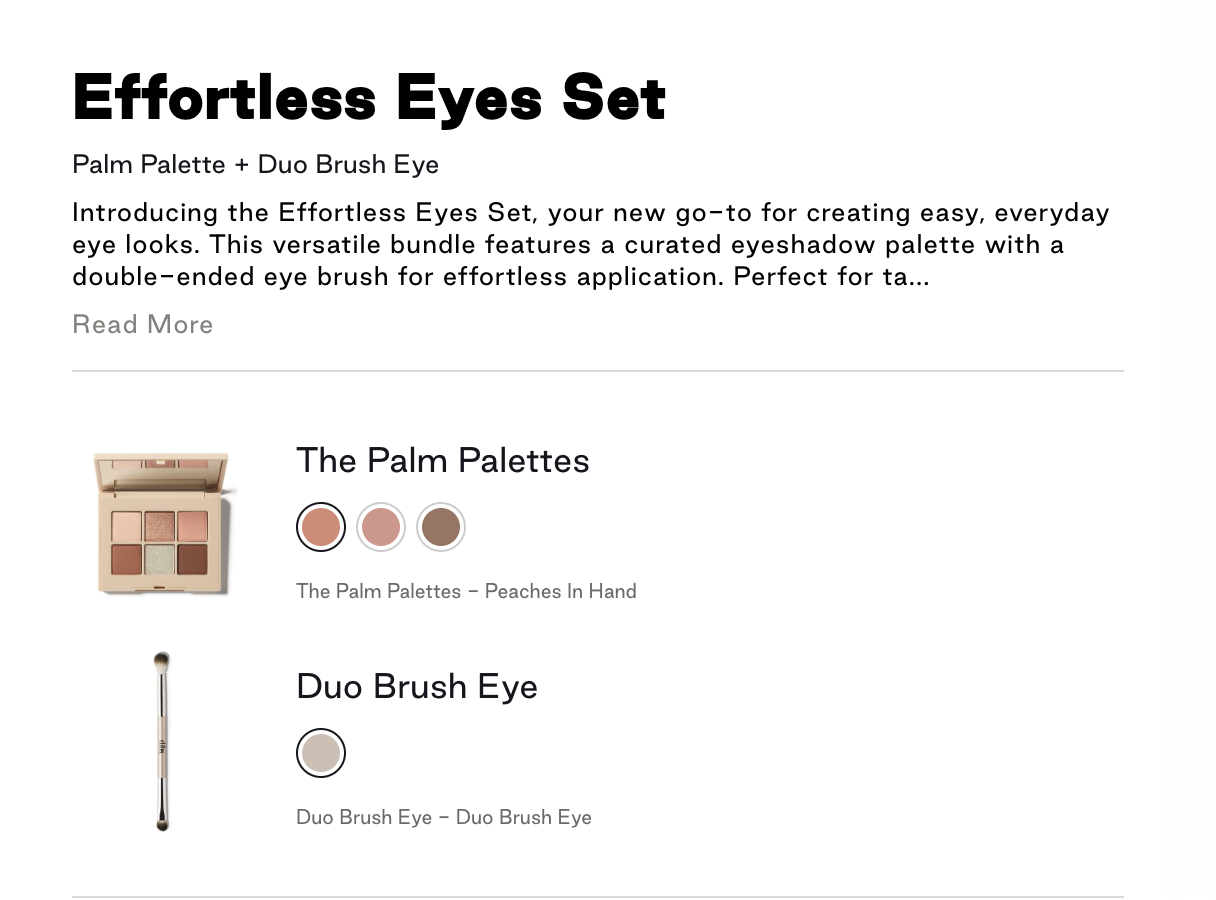
DIBS built a mix-and-match bundle experience that lets customers choose their own shades — without friction or confusion.
Shoppers aren’t locked into a pre-set kit. Instead, they can customize bundles based on what actually works for them, which is especially important in beauty where confidence drives conversion.
The results speak for themselves:
- 28% increase in AOV on bundle orders
- 13% decrease in bounce rate on bundle landing pages
- 10% lift in overall AOV across the site
What made this strategy so effective wasn’t just the bundle itself, but how it was implemented.
Bundles were designed to feel effortless on the frontend, with real-time visual feedback as shoppers selected shades, while staying operationally clean on the backend. That balance made it easy for customers to buy more — and easy for the brand to scale.
Beyond increasing AOV, bundling is a powerful learning tool. It helps ecommerce brands test which products belong together and which upsell strategies to implement. And over time, these insights turn simple bundles into repeatable revenue drivers.
Communicate urgency
Communicating urgency helps shorten the distance between interest and action. Whether it's a limited drop or a flash sale, it’s the scarcity mindset that pushes customers to act fast, driving conversion through a cart optimization strategy.
Think Amazon’s lightning deals: they have a countdown, and they feel more discounted and limited than regular sale items.
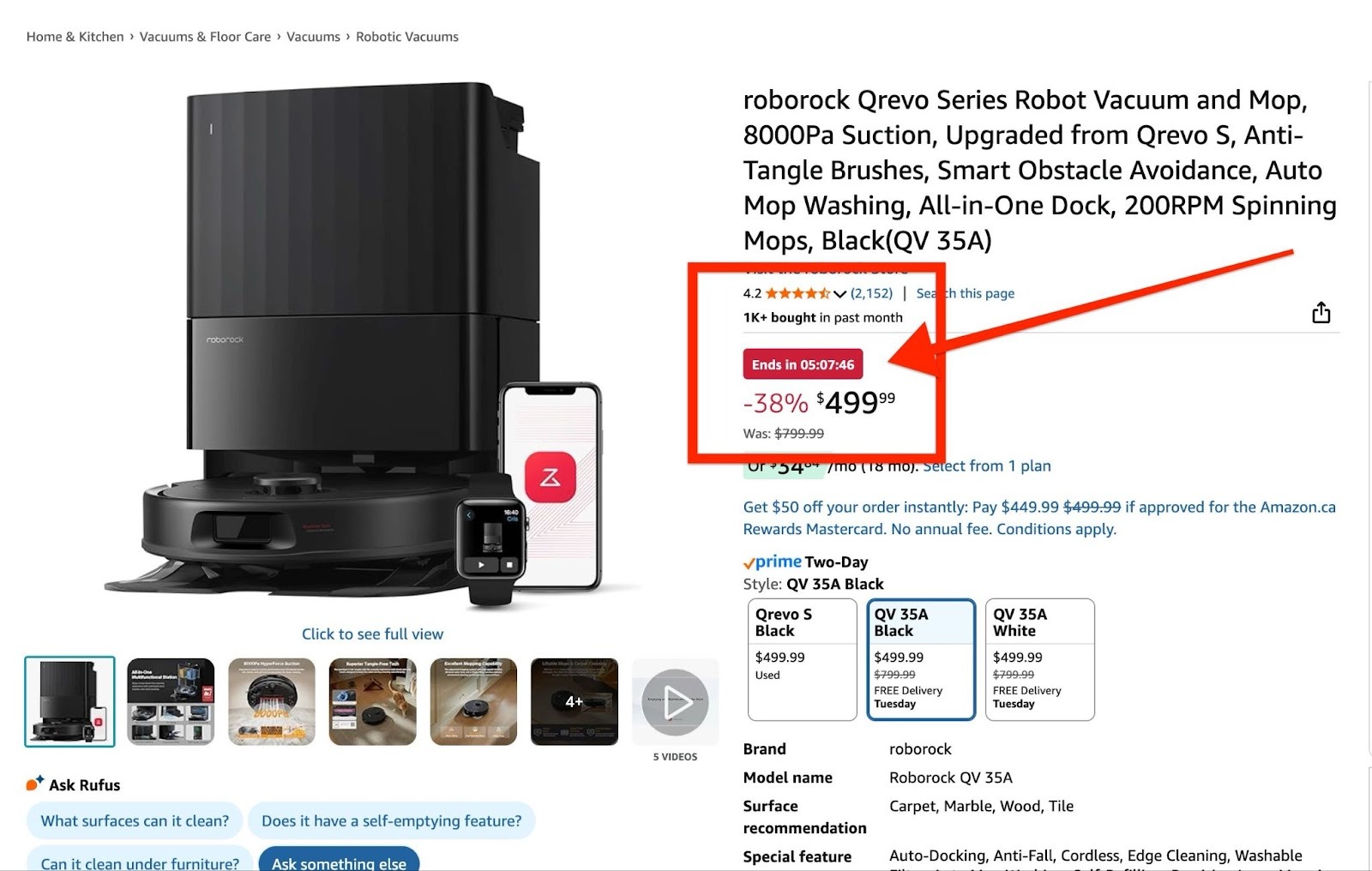
You can position urgency as a value-add by pairing it with a clear benefit. Show customers exactly why acting now matters, and communicate the urgency effectively so customers can move forward with confidence and quickly.
Offer free shipping
One of the easiest ways to improve AOV in ecommerce is to offer free shipping to customers.
When delivery costs disappear, spending a little more feels like saving instead of splurging. That shift alone makes free shipping an effective way to lift AOV.
Consumer expectations have caught up to this reality, often expecting free shipping, especially once their cart reaches a certain size. According to a report by FedEx, 75% of consumers prioritize free shipping over shipping speed, while 57% of consumers prioritize free shipping on online orders over finding the best deal.
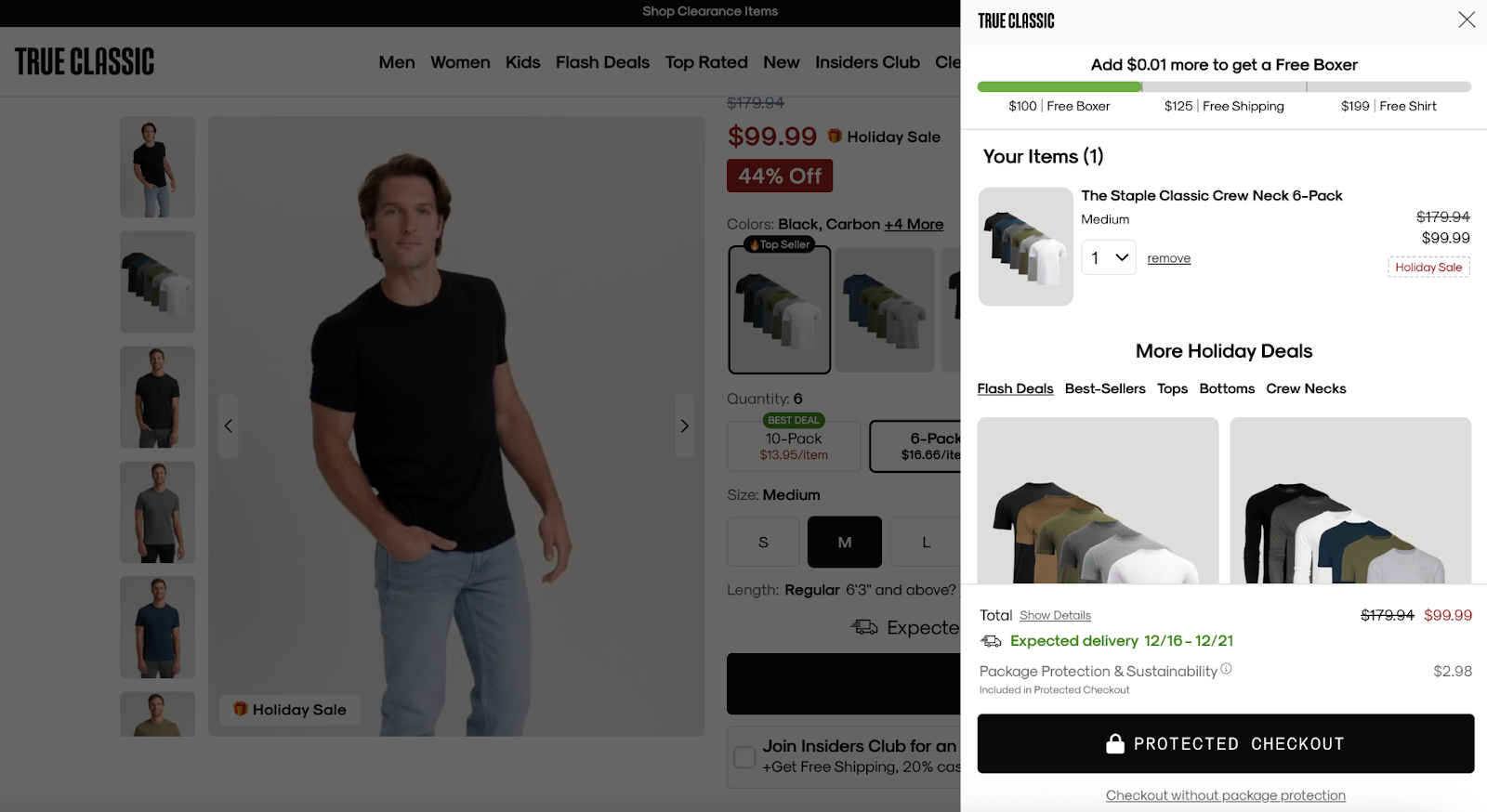
A powerful strategy is to show customers exactly how close they are to unlocking free shipping, often through progress bars. By doing this, brands give shoppers a clear, achievable goal that encourages them to increase cart size to secure the offer.
Apparel brand True Classic applies this strategy by offering free shipping on orders over $125 and reinforcing it with a visual progress bar in the cart. The result feels more like a nudge toward a better deal, increasing AOV while keeping the experience seamless.
Cart progress bars and rewards
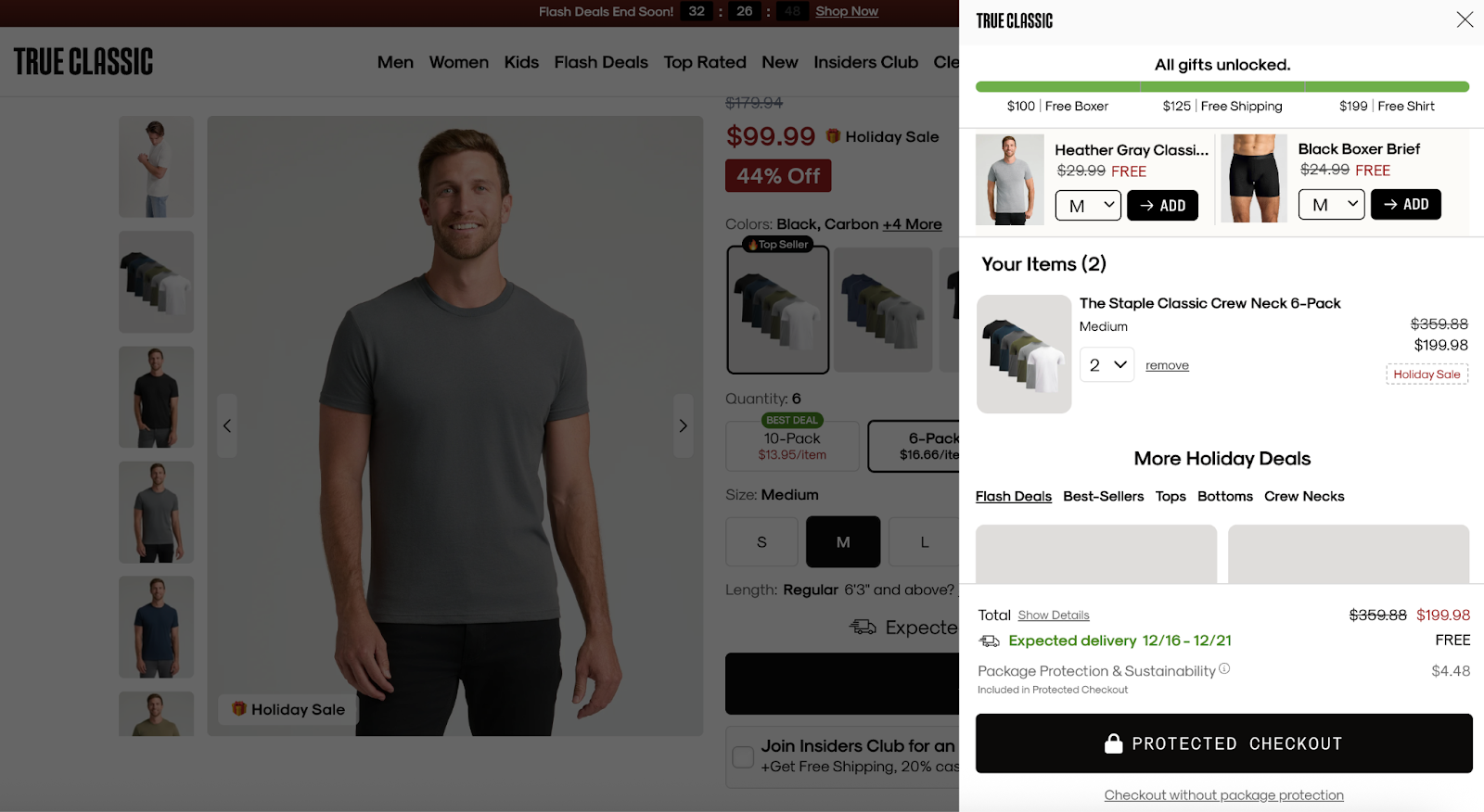
Cart progress bars turn upselling into a visual experience. They increase cart value by clearly showing customers how much more they need to spend to unlock perks like free shipping, bonus points, or a free gift.
As customers add items to their cart, progress bars update in real time, tapping into the psychology of gamification and the natural desire to complete a goal. And the data backs this strategy.
According to FedEx data, 81% of shoppers are willing to increase their spending to meet a retailer’s free shipping threshold. Buying a $15 item to unlock free shipping feels better than paying $10 for shipping.
Brands like True Classic take this a step further by layering rewards.
Their cart progress bar updates dynamically as items are added, allowing customers to unlock free products, like free boxers or a free shirt, alongside free shipping once spend thresholds are reached. The experience feels like earning real-time rewards, driving higher AOV without disrupting checkout.
Tie in a multi-tier loyalty program
Multi-tier loyalty programs turn higher spend into a long-term relationship.
Rather than simply asking customers to buy more, you offer a clear value proposition: every purchase counts toward future rewards.
By positioning loyalty points as a value-add, customers begin to see each order as an investment rather than a transaction. The more they spend, the more they earn.
Simple incentives like “earn 2× points on orders over $50” or “unlock a free reward after $100” encourage customers to increase their cart sizes.
Lust Minerals is a great example of this. By creating different levels in its loyalty program, they inspire customers to unlock new rewards whenever they return to shop.
Each tier unlocks carefully chosen products that their community wants. For example, moving from the “boarding pass” tier to the “runway ready” tier gives shoppers access to a double points day. The incentives increase as shoppers reach higher tiers.
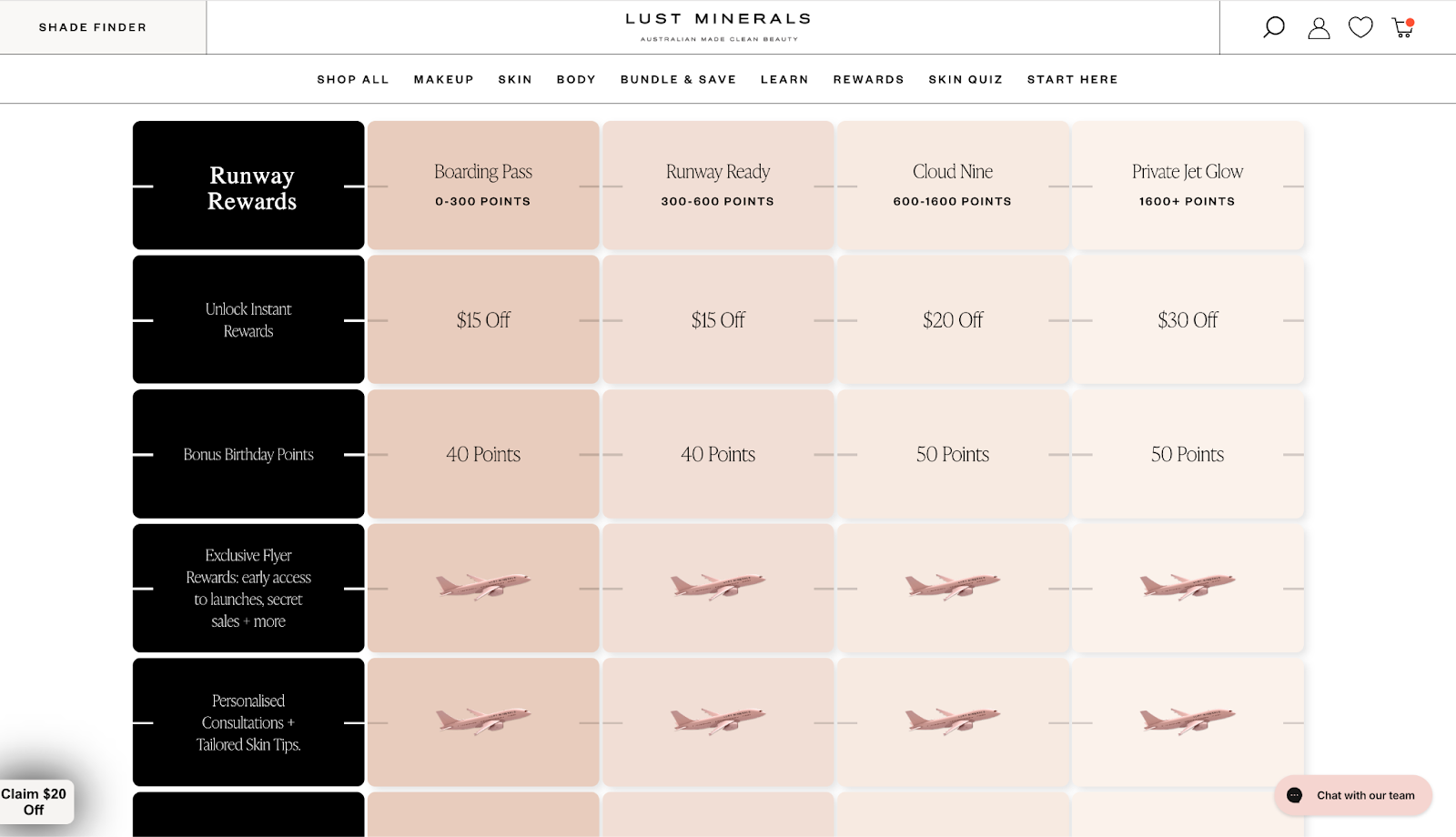
Tying loyalty programs directly to AOV builds customer lifetime value. Customers come back to shop for more than just the product. They now look for their built progress, creating a cycle of repeat purchases.
Implement post-purchase checkout offers
The post-purchase moment is the perfect place to generate additional AOV. After a customer completes their purchase, intent is at its highest, and there is zero risk of disrupting the original sale.
In fact, survey data shows that 93% of consumers say the post-purchase experience is important. And according to Aftersell’s recent industry report, brands that focus on primary upsells and single-product information offers see higher conversion rates and stronger revenue efficiency.
The key is to offer a clear incentive that makes adding the item feel like a no-brainer addition. These incentives can take the form of limited-time discounts or exclusive post-purchase pricing.
Offers are best displayed either directly at checkout or on the thank you page. Both approaches improve AOV by giving customers a timely opportunity to enhance their purchase with a relevant upgrade, either an upsell or cross-sell.
Want more about streamlining the checkout process? Aftersell’s got you.
Improving AOV in ecommerce improves profit margins
Reduce your CAC, strengthen your profit margins, and connect with the customer all through increasing AOV strategies.
Upsell strategies and post-purchase touchpoints allow brands to generate more revenue from the same customer without increasing acquisition spend.
Instead of chasing new customers, find ways to build on the carts of the customers who are already here and ready to buy.
Increasing AOV in ecommerce is an essential growth lever that enables brands to scale sustainably, increase profitability, and drive long-term growth.
Need help with your AOV? We’d love to learn more about you. Book a demo with Aftersell.
Recommended Reading
.jpg)