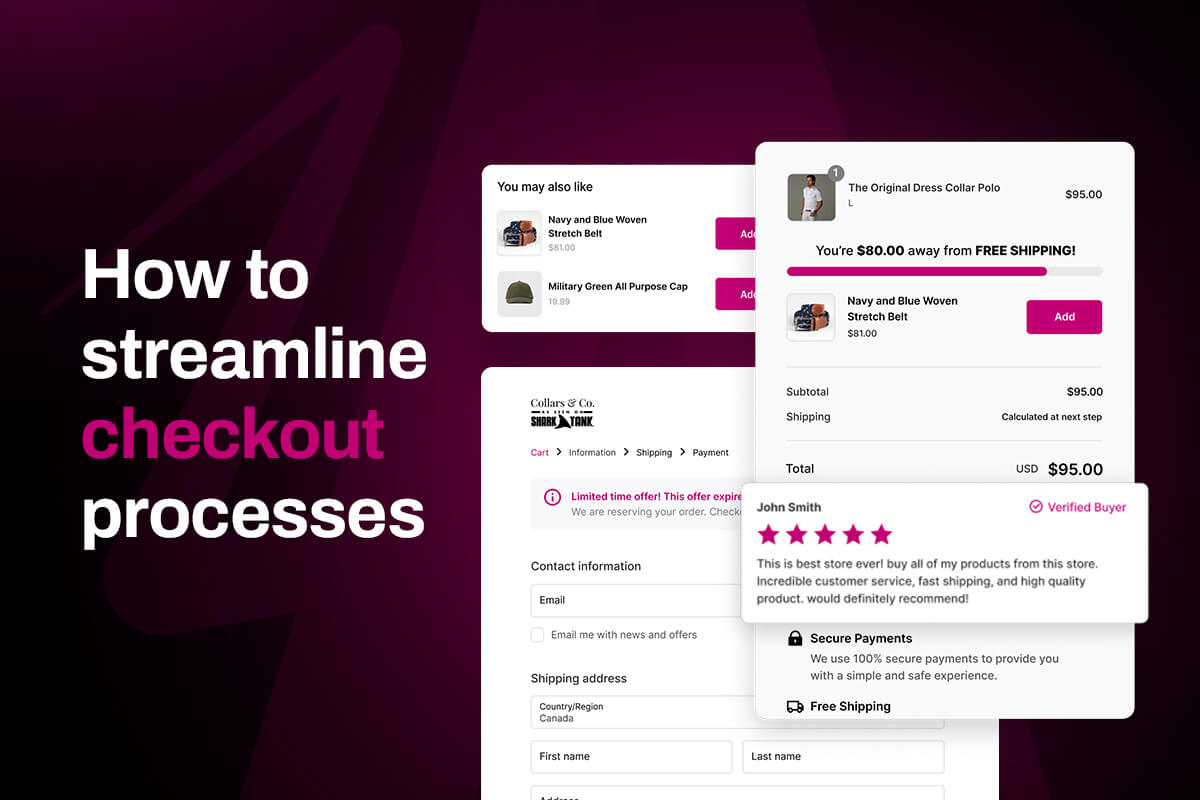
The ecommerce cart abandonment rate in 2025 is just over 70%.
That’s… a lot.
You can do everything right – promote your store, drive clicks, improve your product pages, and convince potential customers to add items to their shopping carts – and they’ll still bounce before buying.
It’s hard to get someone to convert, so when you can, you naturally want to maximize the value of that purchase through upselling, cross-selling, or strategic offers. But this can be quite the tightrope walk: try too hard, and you risk losing the sale entirely; discount too heavily, and you demolish your pricing margins.
With all this in mind, how do you move customers through the purchase funnel while still generating revenue and not sabotaging your margins?
No matter where you’re starting from, all roads lead to ecommerce checkout optimization.
What is ecommerce checkout optimization?
At a high level, checkout optimization is simple: remove the barriers that stop your customers from completing their purchase. In turn, this reduces cart abandonment and increases conversions (although that’s not the most important part – more on this later).
In practice, no two ecommerce sites are the same, so the most important tactics will vary. But nearly all checkout page optimization stems from one core principle: simplicity.
91% of shoppers say they’ll have a lower opinion of a brand whose site is hard to use. It makes sense they’d bounce, right? We’re not gamblers, but we don’t like those odds.
Long story short: optimized checkout is about making the checkout experience as user-friendly as possible – fewer interruptions, fewer decisions, fewer form fields, and fewer clicks.
If you’re interested in how to optimize Shopify checkout page performance and streamline your checkout flow on mobile devices or desktop, we’ve got you – we’re covering 12 of the most effective ways to improve your checkout page, reduce abandoned carts, and boost conversions.
But first: metrics!
Metrics that matter for ecommerce checkout
You might assume conversion rate is the most critical metric for evaluating checkout optimization.
It’s actually not.
Most ecommerce businesses brag about their conversion rate — you’ll see it highlighted in bold in case studies across every industry. Sure, claiming “our conversion rate hit 3%!” sounds great. But what were the margins?
We’ve audited brands running “successful” 3% conversion rates who were quietly bleeding money – their upsells were so poorly planned they might as well have registered as non-profits.
Make no mistake – discounting heavily will increase your conversion rate, but it’ll destroy your margins in the process.
Here’s the shift you need to make to actually measure success:
- Conversion rate = vanity.
- Revenue per visitor (RPV) = reality.
- Profit per visitor (PPV) = survival.
What do these mean?
- RPV tells you how much each visitor is actually worth in real dollars – not just how many said “yes.” It reflects order value and begins to reveal your true sales efficiency.
- PPV shows what’s left after costs, like shipping costs, payment processing, and incentives. It’s the only number that matters if you care about staying in business. You can sell all day long at razor-thin margins, but if PPV is weak, you’re basically working for free.
Anyone can grow revenue. But growing profitable revenue? That’s where smart checkout flow optimization comes in.
12 ways to increase checkout conversion on Shopify
Now that you know what to measure, it’s essential to understand how to improve these metrics.
You should always aim for a strong conversion rate supported by a healthy PPV – and the best way to do this is through checkout optimization.
If your goal is stronger ecommerce checkout optimization, these 12 strategies will help you build a seamless, high-converting checkout flow.
Here’s how.
#1 - Simplify the checkout experience
We said it earlier – the core concept of checkout optimization is simple: simplify.
A long, cluttered checkout only frustrates customers and increases the likelihood they'll bounce. This is especially true on mobile, where too many fields on a narrow screen can feel like an endless scroll.
These numbers speak for themselves – 18% of shoppers have abandoned an order because the checkout process was too complex and retailers can see a staggering 35.26% increase in their conversion rate with a stronger checkout design.
The key to this simpler, stronger design? Reduce, reduce, reduce:
- Reduce the number of form fields. Only keep what’s necessary (name, shipping address, billing address, phone number).
- Reduce noise throughout the checkout flow – no distracting pop-ups.
- Reduce friction with autofill and smart defaults.
- Use Google address autocomplete for instant validation of shipping fields.
- Use progress indicators or a progress bar to build trust and reduce anxiety.
- Pre-select “billing address same as shipping address” to hide the billing address fields by default
With a checkout process, less is more. That doesn’t mean you can’t upsell – but keep it complementary to the product. The right upsells can help increase your AOV per order, but pushing random products can just bloat the process and frustrate the customer.
Fun fact: There’s actually a way to make most of these simplifications at once – digital wallets. Which leads us to our next point…
#2 - Add multiple payment methods
Variety is the spice of life – and the key to a great checkout experience. Payment options matter.
Providing customers with options can make a huge impact – adding just one additional payment option beyond credit cards can increase conversions by around 7%. Letting customers pay how they want doesn’t just provide flexibility – it also speeds up the checkout process.
One-tap options like Shop Pay, Apple Pay, and Google Pay auto-fill customer details and allow checkouts to complete almost instantly – no manual entry required. Shop Pay, in particular, has been found to both reduce cart abandonments and increase conversion rates on Shopify stores.
These payment methods:
- Auto-fill customer information
- Reduce errors
- Improve mobile-friendly checkout flows
- Speed up the entire customer journey
There’s one more payment method that you should implement: buy now, pay later.
Shop Pay and Klarna are key providers in this space, and more vendors, like PayPal, are getting on board. Buy now, pay later options are especially useful if you’re selling big-ticket or luxury items because they can help reduce the cost-related anxiety that comes with a big purchase.
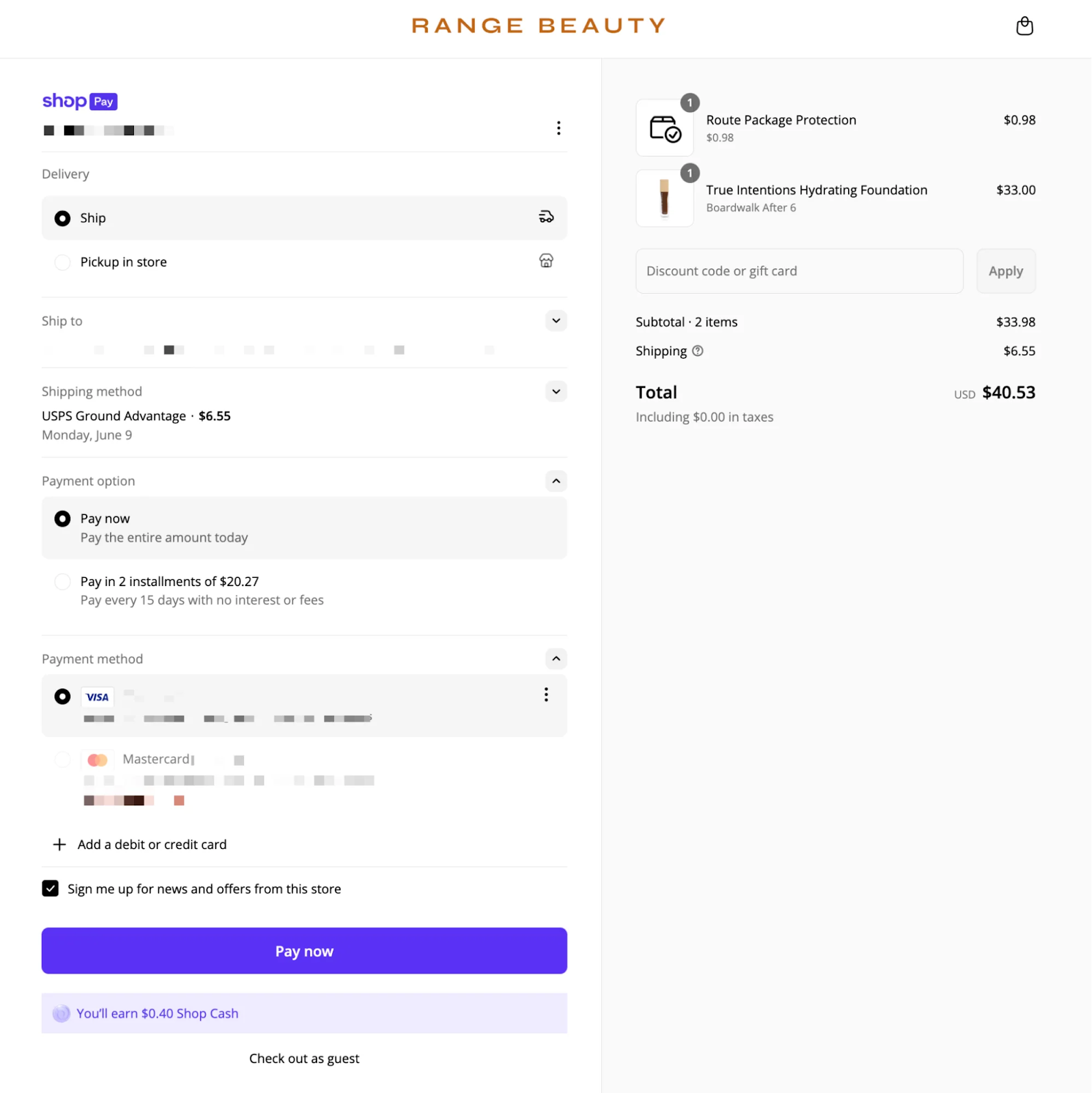
More options mean faster checkouts and fewer opportunities for customers to bounce.
#3 - Offer incentives without adding noise
Providing incentives during checkout can be a great way to boost conversions – as long as they don’t get in the way.
When offers bloat the checkout flow, it can be an annoying experience and start to feel spammy. That’s exactly why we built Rokt Pay+, a way to introduce incentives without disrupting the customer experience.
Rokt Pay+ is an industry-first monetization layer for the Shopify payments page that lets you earn incremental revenue whenever a shopper uses a digital wallet – without impacting your checkout experience.
Here’s how it works:
- Native wallet banners: Subtle, non-clickable banners appear directly beside digital wallet buttons.
- Wallet-funded incentives: Wallet providers pay merchants to increase their usage. The banners reinforce that behavior with promotions like:
- Win $200 toward your cart with PayPal
- Get $5 credit with Apple Pay
- No conversion disruption: No popups. No redirects. No extra steps. These banners are purely informational.
- Merchant payout: Every impression generates a small payout that scales quickly – often $0.15–$0.25 per transaction.
Carnivore Snax was one of our earliest Pay+ beta partners. They had an appetite for incremental revenue, but were concerned about their checkout experience taking a hit.
Their must-haves when implementing Pay+ were:
- No drop in conversions
- A fully native look
- Fast implementation and clean measurement
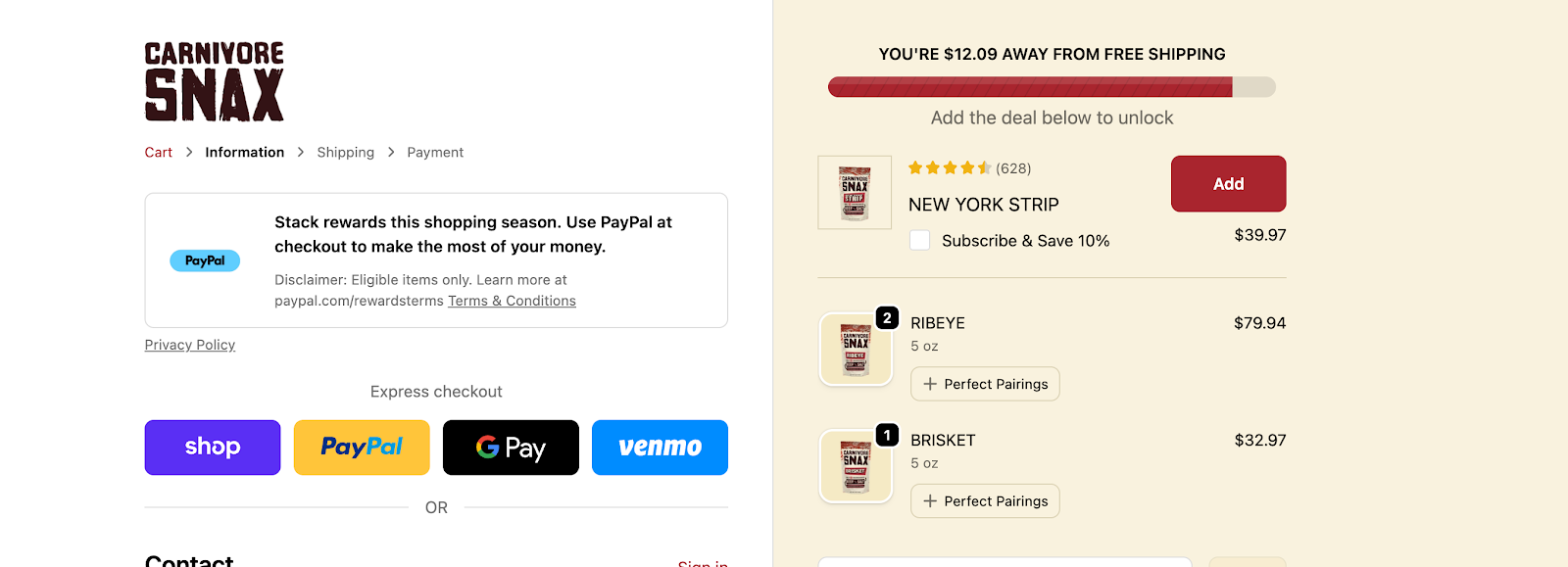
After a one-month test period, Carnivore Snax saw results strong enough to satisfy even the deepest incremental revenue hunger:
- $4,500+ incremental revenue to date
- $0.15 - $0.16 average profit per transaction (RPT)
- No conversion loss
With Pay+ you can increase the value of your conversions with no hit to your checkout flow – and your customers get rewarded in the process. Everyone wins!
#4 - Use logic to customize your checkout offers
Speaking of offers getting in the way – the same applies to your own upsells. It’s tempting to promote high-margin or slow-moving products at checkout, but irrelevant upsells can frustrate shoppers and increase abandonment.
With Aftersell’s checkout triggers, you can ensure your upsells are relevant and timely. Instead of guessing what might appeal to a customer, you can use logic-based rules to ensure that only sensible, context-aware upsells appear.
You can tailor offers based on:
- What product(s) a customer has in their cart
- Their cart total
- If there’s a discount applied
- The discount amount
- The customer’s country or shipping options
- Any combination of the above
This ensures every upsell feels natural, timely, and complementary.
Get creative and let checkout triggers increase your upsell conversions – not your cart abandonment rate.
#5 - Highlight helpful upsells without being pushy
Sticking with the topic of upsells, there are ways to offer upsells without overwhelming your customers. In fact, when done right, they can feel genuinely helpful.
For example:
- Show customers how close they are to free shipping or other cart-size perks
- Highlight limited-time offers relevant to their order
- Display their reward points balance and how many points they’ll earn
Tactics like these feel more like helpful nudges than desperate pleas to sell more stuff. And they work – 58% of shoppers will add products to their cart to meet a free shipping threshold, and 64% have said they’ll buy limited-time offers at times they wouldn’t have purchased anything otherwise.
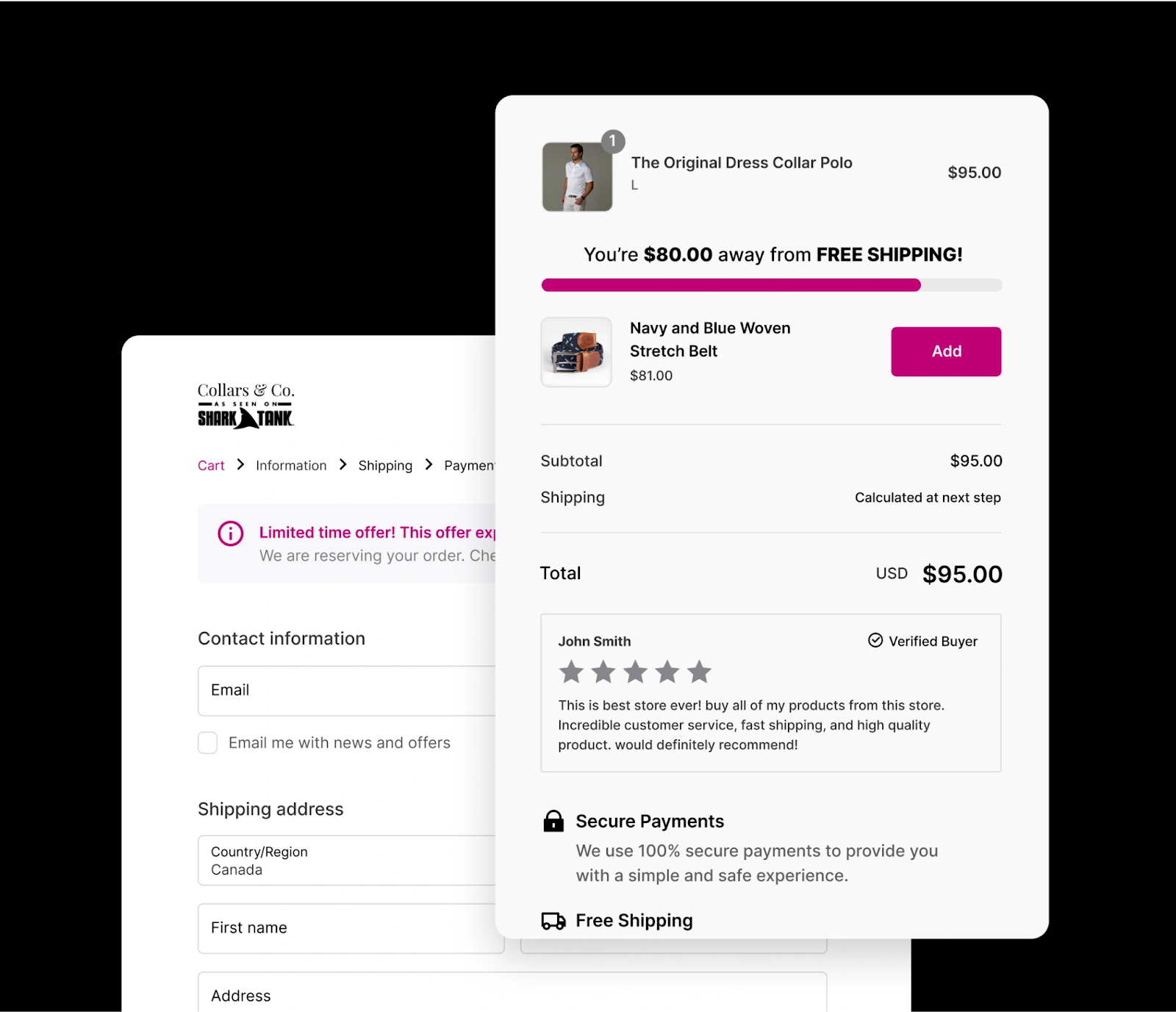
Aftersell lets you achieve these non-pushy upsells in an on-brand way. Our widgets come in a few flexible configurations:
- Single product upsell: Offer one product to your customer.
- Multi-product upsell: Show multiple products in either a stack or carousel layout. Allows customers to accept multiple offers.
- Checkmark upsell: Upsell a single product with a checkbox instead of an add to cart button. Useful for cheap add-ons like shipping protection.
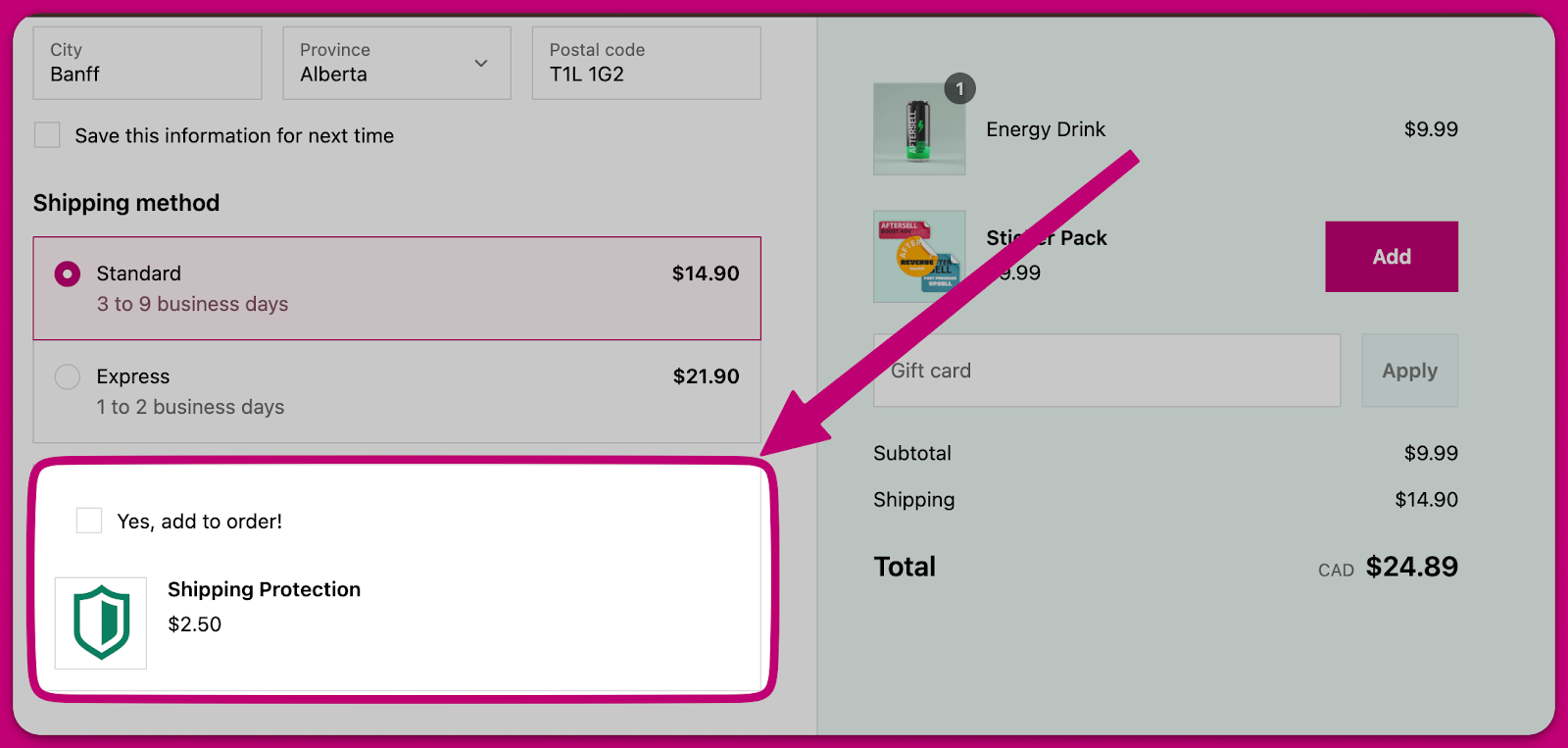
Using these strategies in combination with the logic of our checkout triggers allows you to tactfully upsell without ever being too aggressive.
Don’t push harder – push smarter. This improves AOV, conversion, and repeat purchases.
#6 - Keep it fast to load
A slow checkout is one of the fastest ways to lose a customer.
Check your core web vitals and ensure nothing is slowing down your checkout process – loading too many images or assets is a common culprit. Your benchmark INP should be under 200 milliseconds, so every click or tap on “pay now” feels instant.
Once you meet that bar, focus on making sure the rest of your checkout journey stays within Google’s “Good” thresholds:
- Largest Contentful Paint (LCP) below 2.5 seconds for fast page loads
- Cumulative Layout Shift (CLS) under 0.1 seconds for rock-steady layouts
Here’s a handy checklist for fixing the basics:
- Profile long tasks with Google Lighthouse, PageSpeed Insights, or the Shopify online store speed report. Break up any JavaScript blocking the main thread for more than 50 ms.
- Lazy-load noncritical scripts (heat maps, chat widgets, A/B test frameworks) until after the load event.
- Swap GIF/MP4 banners for compressed WebP or streamed HLS to hit the LCP benchmark.
Optimize for speed, and your customers will move from cart to “Order confirmed” at such a rapid pace they won’t even have a chance to rethink their purchase.
#7 - Add trust badges
“Wait… is this legit?”
We’ve all been there. You’re 75% through a checkout process, and then you’re hit with that wave of anxiety. “Can I trust this site?”
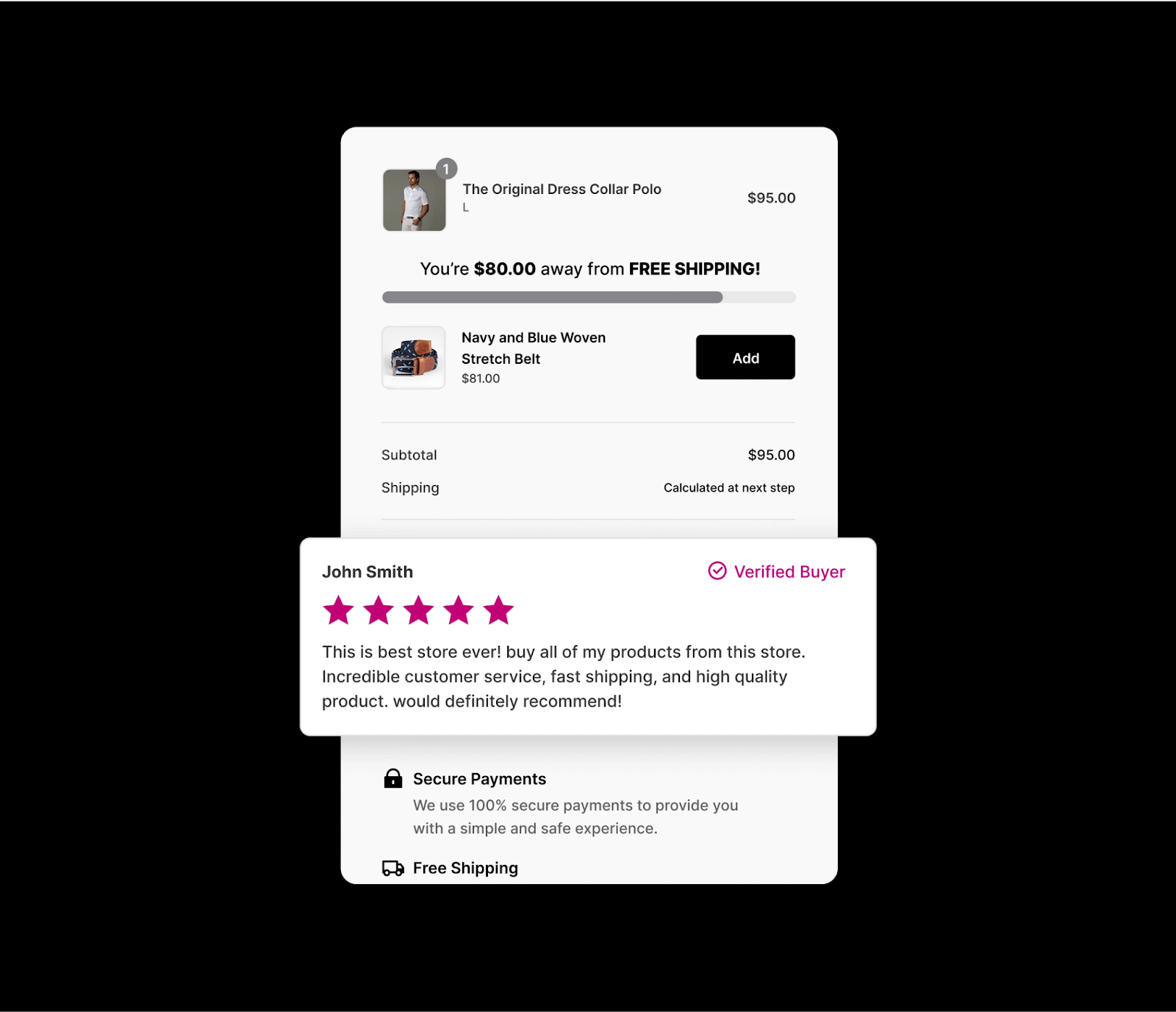
You don’t want people second-guessing the legitimacy of what you have to offer or the security of your site. The solution to this is trust badges – 83% of customers feel more likely to trust a site that displays third-party badges versus one that doesn’t.
Some options to highlight during checkout include:
- Product reviews
- Store ratings
- Secure checkout badges
- SSL certificates
- Payment processor logos
19% of customers have abandoned a cart because they didn’t trust the store with their credit card. Give them something to trust – adding trust badges in a non-noisy way can help drive certainty, reduce hesitation, and keep conversions high.
#8 - Integrate with live chats and LLMs
You can’t get much easier than letting customers purchase without ever actually visiting your site. By allowing them to purchase directly from LLMs like ChatGPT, that dream becomes reality.
Your customers are already using LLMs to search for products – 39% of them actually – why not let them buy from there too? Shopify and Etsy both have OpenAI integrations that make this seamless.
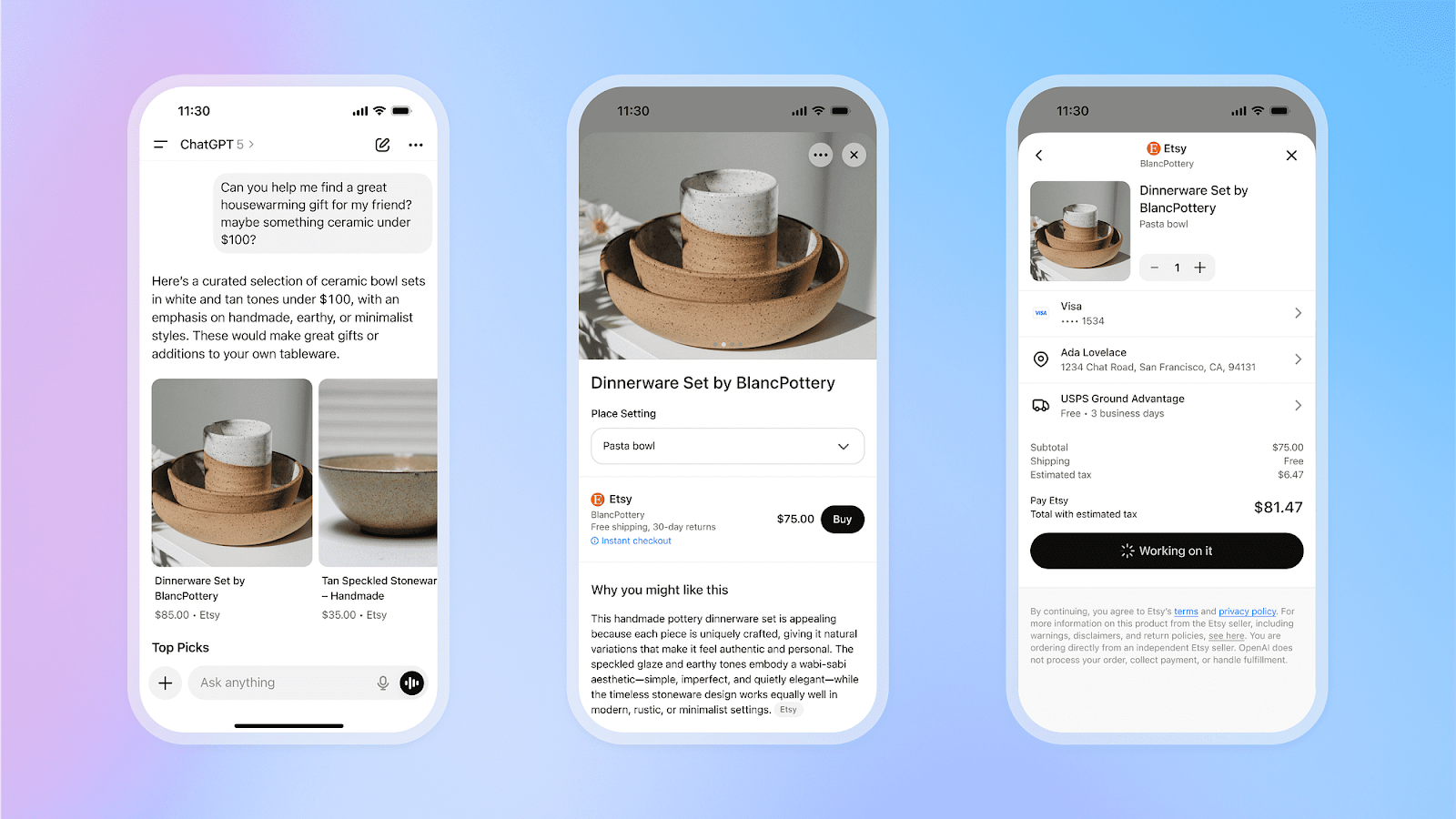
If shoppers are already on your site, you can offer the same convenience through live chat. Letting customers check out directly from support conversations provides a seamless purchase experience. Just make sure your live chat is integrated with your checkout page so it’s easily accessible.
Nothing streamlines a checkout more than letting customers stay in the chat they’ve already started for the entire purchase funnel.
#9 - Allow guest checkout
We know – having customers log in is good. But don’t force it.
Forcing account creation/login is one of the biggest drivers of cart abandonment – 26% of customers will bounce if they’re forced to create an account. That’s more than one in four people who would have checked out but didn’t want the extra steps.
If you want to encourage account creation, offer it after the purchase as a convenience feature (“Track your order easily!”).
Keep the momentum going during checkout – don’t build a sign-up wall to block your sales.
#10 - Be transparent about extra costs
It had to come up eventually. The number one reason for cart abandonment? The dreaded surprise costs at checkout.
An eye-watering 47% of carts are abandoned due to extra costs like shipping, taxes, and duties being too high. The fix is simple: be upfront. Display costs as early and as clearly as possible so customers aren’t blindsided at the finish line. This zero-cost, crucial optimization can make a big impact on your conversion rate and PPV.
Here’s how Glossier is transparent on its checkout page, ensuring there will be no additional costs to customers:
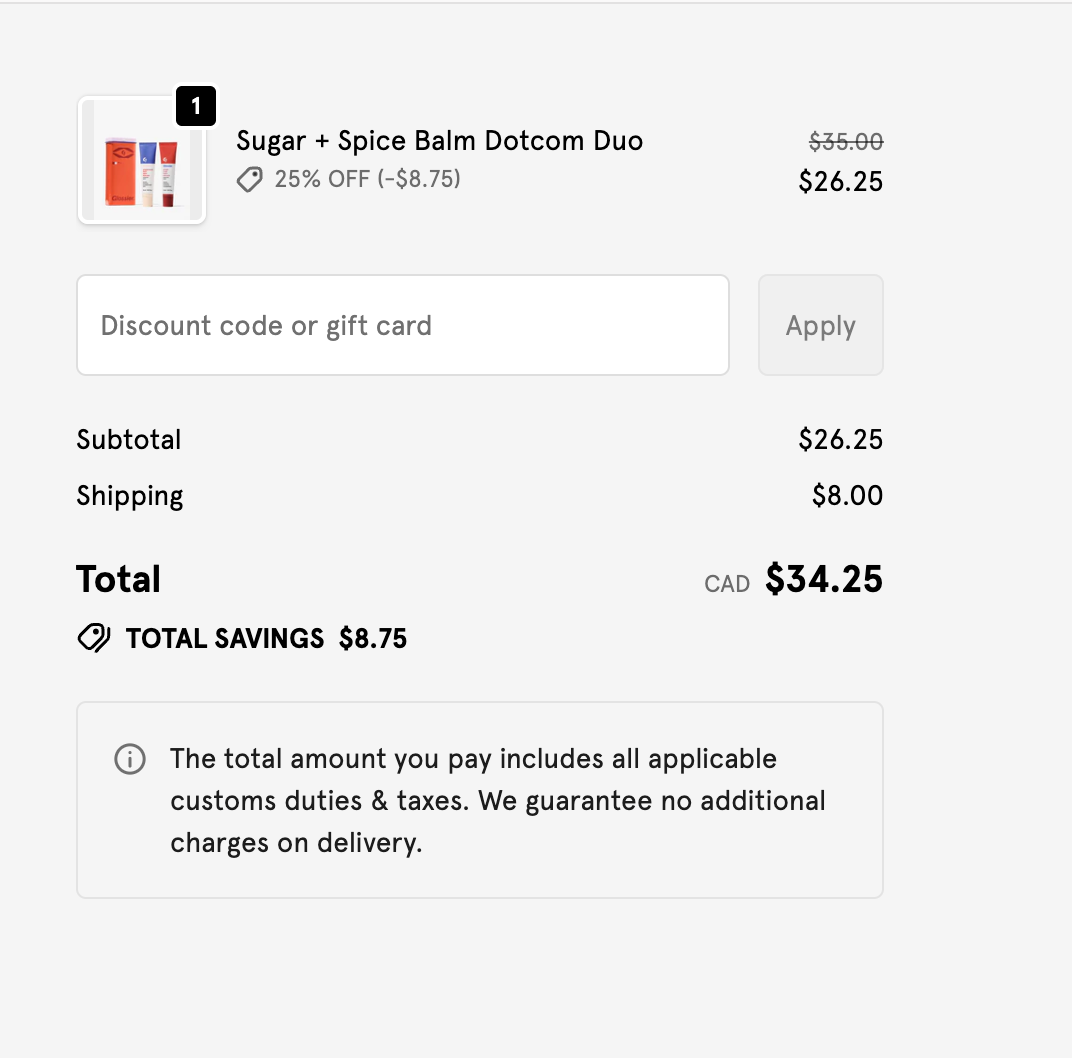
While you’re on this transparency kick, be forthcoming about the shipping timeline too. Two-thirds of shoppers have an expectation of receiving orders within 24 hours, and 45% look for businesses that clearly show estimated delivery times.
We can’t all be Amazon – and that’s okay. Transparency builds trust. Ambushing customers with extra costs does the opposite.
#11 - Add customized delivery options
Everyone shops differently, so your checkout process should deliver… delivery differently too (say that 5 times fast).
Shipping and delivery expectations don’t follow a one-size-fits-all model. Offering flexible, customizable delivery options gives shoppers a sense of control and makes checkout feel tailored to their needs.
Some common options include:
- Ship or pick up in-store
- Standard or expedited shipping
- Gift options like gift wrapping or messaging
Take a look at how Glossier sets it up here:
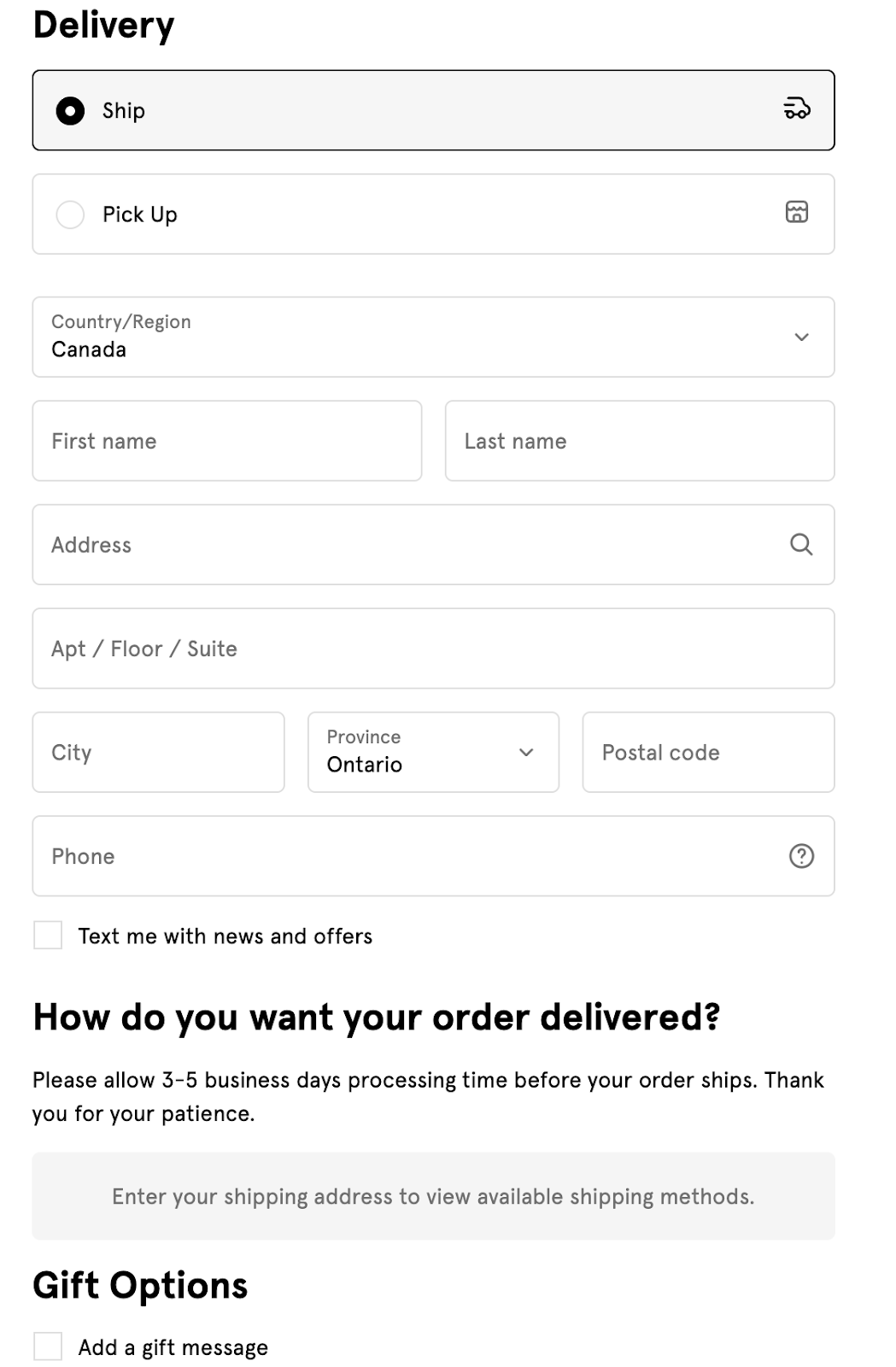
Over half of shoppers say multiple shipping and delivery options increase their likelihood of making a purchase – more choices equal more conversions.
#12 - A/B test your checkout offers and content
Not sure which offers or checkout content will actually increase conversions? A/B test it!
A/B testing can improve conversion rates for ecommerce brands by 10 - 25%, but it can easily become a lot of work.
Thankfully, Aftersell makes A/B testing a breeze – you can run a variety of tests to see what works and streamline your checkout process as much as possible.
Some common tests you can run with Aftersell:
- Duplicate content: The classic A/B test. Use this to compare two versions of identical/nearly identical content to see how slight variations impact engagement and performance metrics.
- New content: Test different products to compare performance and determine which yields better results (higher sales, customer engagement etc.).
- Blank (skip): Use an empty or unchanged variant as a control to compare against other versions with alterations. This helps evaluate how changes impact user behaviour or outcomes.
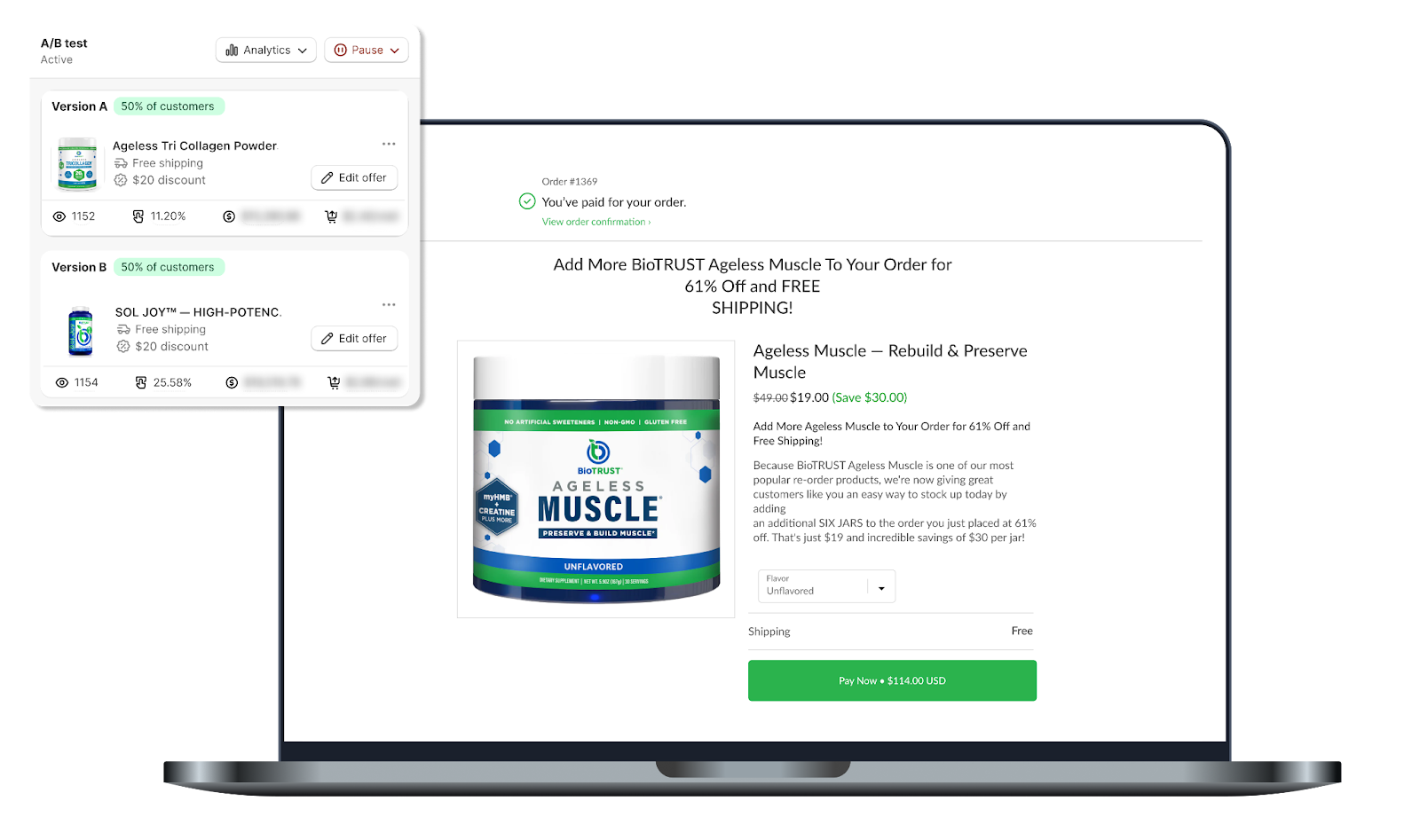
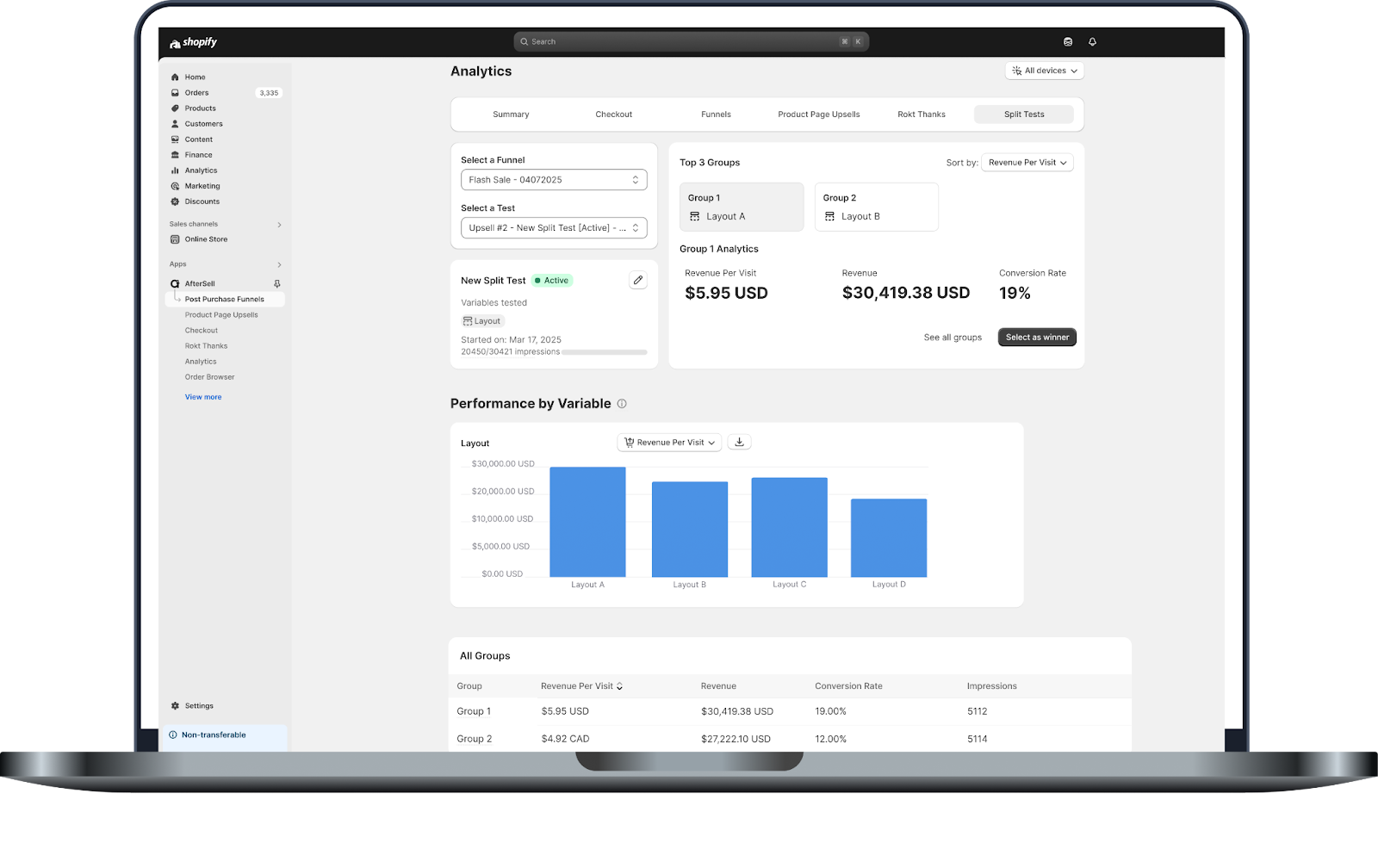
A/B testing is one of the most reliable ways to understand how to optimize Shopify checkout page performance based on real user behavior instead of guesswork.
Increase your checkout conversion with Aftersell
Your checkout experience is the final gauntlet between a shopper and a completed purchase. With 18% of customers abandoning their cart due to a lengthy or complex checkout, it’s crucial to implement as many of these as possible to streamline your checkout process without sacrificing PPV.
The 12 strategies we’ve covered are all achievable with Aftersell – each one works together to create a faster, cleaner and more profitable checkout flow.
If you’re interested in improving your checkout process optimization and driving PPV, try Aftersell for 30 days or book a call with us to get started.
Frequently Asked Questions
How do I know if my checkout process needs optimization?
If you see high abandonment at the payment or shipping steps, low PPV, slow page loads, or high support inquiries during checkout, those are all signs the flow needs work.
How often should I A/B test my checkout page?
Most brands benefit from testing quarterly, but fast-moving ecommerce stores may test monthly – especially during peak seasons or after major changes.
What’s the benefit of offering live chat during the checkout process?
It removes the need for shoppers to leave the checkout flow for answers. Faster resolutions mean fewer abandoned carts.
Should I show discount code fields during checkout?
It depends. Visible discount fields can hurt conversions by encouraging shoppers to leave checkout in search of promo codes. Many brands collapse or minimize these fields to prevent unnecessary exits while still allowing for code entry when relevant.
Should I retarget abandoned carts?
Absolutely. While the goal of these strategies is to drive conversions and reduce cart abandonments, they’re still going to happen. Pairing retargeting with an optimized checkout experience maximizes both new and recovered revenue.
Recommended Reading
.jpg)